A New Study Challenges Decades-Old Narrative on the Extinction of Hawaiian Waterbirds, Pointing to Broader Ecological Shifts

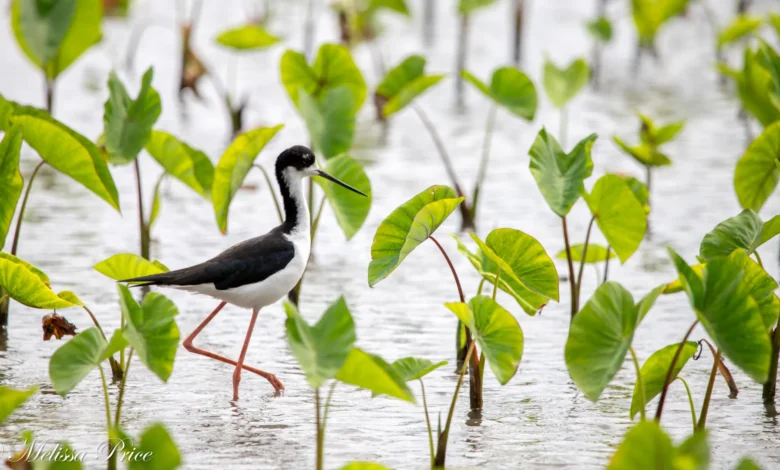
A groundbreaking study emerging from the University of Hawaiʻi at Mānoa is poised to fundamentally reshape a long-standing scientific and public understanding concerning the disappearance of Hawaiʻi’s native waterbirds. For decades, a prevalent narrative has attributed the decline and extinction of these species to the hunting practices of the islands’ Indigenous Polynesian inhabitants. However, new research, published in the esteemed journal Ecosphere, presents a comprehensive re-evaluation, asserting that there is a distinct lack of scientific evidence to support this direct causal link. Instead, the study proposes a more nuanced and multifaceted explanation for the avian losses, encompassing a confluence of environmental and societal changes that transpired over centuries.
The research team, meticulously examining existing ecological data and historical records, found no conclusive signs of widespread overhunting by the earliest Polynesian settlers or their descendants. This absence of evidence directly challenges the entrenched assumption that Indigenous People were the primary drivers of these extinctions. The prevailing hypothesis now advanced by the researchers centers on a complex interplay of factors. These include the pervasive impacts of climate change, the introduction and proliferation of invasive species, and significant shifts in land use patterns. Intriguingly, many of these transformative environmental alterations appear to have occurred either preceding the arrival of Polynesians in the Hawaiian archipelago or during periods when traditional Indigenous land management practices were significantly disrupted.
Furthermore, the study offers a compelling counterpoint to the narrative of perpetual decline, suggesting that several waterbird species now critically endangered may have, in fact, experienced their peak population numbers in the period immediately preceding European contact. This era, the researchers highlight, coincided with a time when the meticulous management of wetland ecosystems was an integral and highly valued component of Kānaka ʻŌiwi (Native Hawaiian) society. This perspective reframes the role of Indigenous stewardship, suggesting it was not a cause of ecological devastation but rather a vital element in maintaining biodiversity.
Rethinking Conservation Assumptions: Dispelling the Myth of Indigenous Guilt
The implications of this research extend far beyond academic circles, directly impacting the foundational principles of conservation science and the historical understanding of human-environment interactions. Dr. Kawika Winter, an associate professor at the UH Mānoa Hawaiʻi Institute of Marine Biology (HIMB) and director of the Heʻeia National Estuarine Research Reserve (NERR), and a co-author of the paper, articulated the profound bias he believes has permeated scientific thought.
"So much of science is biased by the notion that humans are inevitable agents of ecocide, and we destroy nature wherever we go," Dr. Winter stated. "This idea has shaped the dominant narrative in conservation, which automatically places the blame for extinctions on the first people – the Indigenous People – of a place. Even where there is zero scientific evidence to support it, the myth of Hawaiians hunting birds to extinctions took root in Hawaiʻi and for decades has been taught as if it was a scientific fact."
Dr. Winter’s assertion underscores a critical examination of anthropocentric biases within scientific inquiry. The study’s findings are presented as a direct challenge to this pervasive viewpoint, advocating for a more objective and evidence-based approach to understanding ecological histories. The researchers argue that the persistent narrative of Indigenous culpability has not only skewed scientific understanding but has also, historically, contributed to the marginalization of Native Hawaiian voices in conservation efforts.
The research methodology involved a critical re-examination of existing scientific literature and archaeological findings, deliberately setting aside the pre-conceived notion that human presence invariably leads to ecological destruction. This deliberate reframing allows for a more comprehensive and balanced interpretation of the ecological trajectory of the Hawaiian Islands. By doing so, the study aims to foster a more accurate understanding of historical ecology, which in turn, can inform more effective and equitable approaches to addressing contemporary ecological challenges.
Kristen Harmon, the lead author of the paper and a recent PhD graduate from UH Mānoa’s College of Tropical Agriculture and Human Resilience (CTAHR) Department of Natural Resources and Environmental Management, emphasized the evolving nature of scientific training. "Science has matured to a point where graduate students are being trained to challenge its own long-standing world view," Harmon noted. "Our interpretation of historical ecology, how ecological systems change over time, influences our approaches to solving global-scale ecological problems. Bringing together information from different disciplines and knowledge systems can yield a more accurate picture of reality, which is ultimately the goal of every scientist." This commitment to interdisciplinary collaboration and critical self-reflection is a hallmark of the study’s innovative approach.
A Timeline of Ecological Change and Indigenous Stewardship
To fully appreciate the study’s findings, understanding the historical context of human arrival and environmental change in Hawaiʻi is crucial.
- Circa 300-800 CE: The first Polynesian voyagers, likely from the Marquesas Islands, arrive in Hawaiʻi. They bring with them domesticated plants and animals, and begin to adapt their land management techniques to the unique Hawaiian environment. Early impacts on native flora and fauna would have been present, but likely not to the extent of widespread extinctions.
- Pre-European Contact Era: Native Hawaiian society develops sophisticated systems of agriculture and resource management, including the construction and maintenance of extensive wetland systems (lōʻi). These systems are crucial for food production and, as the study suggests, likely supported diverse populations of native waterbirds. During this period, traditional ecological knowledge is passed down, emphasizing sustainability and reciprocal relationships with the environment. Archaeological evidence from this period does not point to significant declines in waterbird populations directly attributable to hunting.
- 1778: Captain James Cook’s arrival marks the beginning of sustained European contact. This period ushers in significant changes, including the introduction of new diseases to which Native Hawaiians had no immunity, the influx of foreign technologies, and the disruption of traditional social and economic structures.
- 19th Century: The Kingdom of Hawaiʻi experiences rapid modernization and significant land alienation. Traditional land management practices, including the maintenance of lōʻi, are increasingly abandoned or altered due to economic pressures and changing land ownership. Invasive species, introduced unintentionally or intentionally, begin to proliferate, outcompeting native flora and fauna. The decline of native waterbird populations accelerates during this period, coinciding with these dramatic societal and environmental shifts.
- 20th Century to Present: The Hawaiian Islands become a U.S. state, and conservation efforts often proceed with a pre-existing, and now questioned, understanding of historical ecological impacts. The focus on the "myth" of Indigenous overhunting continues to influence conservation strategies, potentially overlooking the critical role of habitat restoration and the reintegration of traditional practices.
This chronological perspective underscores the complexity of ecological transformations. The study argues that the significant pressures on native waterbirds emerged not from the initial arrival of humans, but from later periods of rapid societal upheaval and the introduction of novel environmental stressors, many of which were introduced by non-Indigenous populations.
Supporting Data and the Case for Restoration
While the study itself focuses on reinterpreting existing data, the broader scientific community has been accumulating evidence that supports the importance of habitat and traditional management for waterbird survival. For instance, studies on wetland ecosystems globally have consistently demonstrated their critical role as breeding grounds, foraging areas, and stopover sites for migratory birds. The intricate design of Hawaiian lōʻi, with their carefully managed water flow and vegetation, provided ideal conditions for species like the ʻalae ʻula (common gallinule) and the ʻaeʻae (Hawaiian stilt).
The study’s assertion that these birds may have thrived during periods of robust Indigenous stewardship aligns with ecological principles. Traditional agro-ecosystems, such as the lōʻi, often create a mosaic of habitats that can support a greater diversity of species than monocultures or completely naturalized landscapes without human intervention. The careful cultivation of taro (kalo) and other wetland crops, combined with practices that maintained water quality and flow, inadvertently created ideal conditions for waterbirds.
Melissa Price, an Associate Professor who directs the Wildlife Ecology Lab at CTAHR, supports this perspective, stating, "Recent studies support what Hawaiians have always known – that restoration of lōʻi (wetland agro-ecosystems) is critically important to bring these waterbirds into abundance again. If we wish to transform our islands from the ‘Extinction Capital of the World’ into the ‘Recovery Capital of the World,’ we need to restore relationships between nature and communities." This statement highlights a growing consensus that ecological recovery is intrinsically linked to cultural revitalization and the re-establishment of symbiotic relationships between people and their environment.
Official Responses and Broader Impact on Conservation
The findings of this study have the potential to initiate a significant paradigm shift within the conservation sector, particularly in Hawaiʻi. The long-held narrative of Indigenous blame has, as Ulalia Woodside Lee, Hawaiʻi and Palmyra Executive Director for The Nature Conservancy, points out, contributed to a breakdown in trust and the exclusion of Native Hawaiians from critical conservation decision-making processes.
"For generations, Native Hawaiians have been criticized for causing the extinctions of our precious native birds," Lee commented. "This has contributed to a breakdown in trust between the Hawaiian community and conservationists, and the exclusion of Native Hawaiians from important conservation decisions. This study will help us to move past those untruths, so that we can all move together into a brighter future where our native species are thriving again."
This sentiment suggests a pathway towards more inclusive and collaborative conservation models. By dispelling the myth of Indigenous culpability, the study opens doors for Native Hawaiian communities to reclaim their role as stewards of the land and waters, drawing upon their ancestral knowledge and practices. This collaborative approach is seen as essential for the effective recovery of endangered species and the restoration of ecological health across the islands.
The implications of this research extend globally. The tendency to blame Indigenous populations for environmental degradation is a pattern observed in many parts of the world. This study from Hawaiʻi offers a crucial counter-narrative, demonstrating the vital role of Indigenous knowledge and stewardship in conservation and challenging the often-unquestioned assumption of human destructiveness. It underscores the need for a more critical and evidence-based approach to understanding the complex drivers of biodiversity loss and for recognizing the invaluable contributions of Indigenous communities to ecological sustainability.
Ultimately, this research serves as a potent reminder that ecological histories are rarely simple, and that scientific understanding must continually evolve through rigorous inquiry, open-mindedness, and a willingness to challenge long-held assumptions. The future of conservation in Hawaiʻi, and indeed worldwide, may well depend on embracing this more nuanced and collaborative approach, one that honors both scientific evidence and the enduring wisdom of Indigenous peoples.
Related posts: