Pedro Pascal Leads Tony Gilroy Musical Drama Behemoth as First Look Images Reveal Transformation into Prodigal Cellist

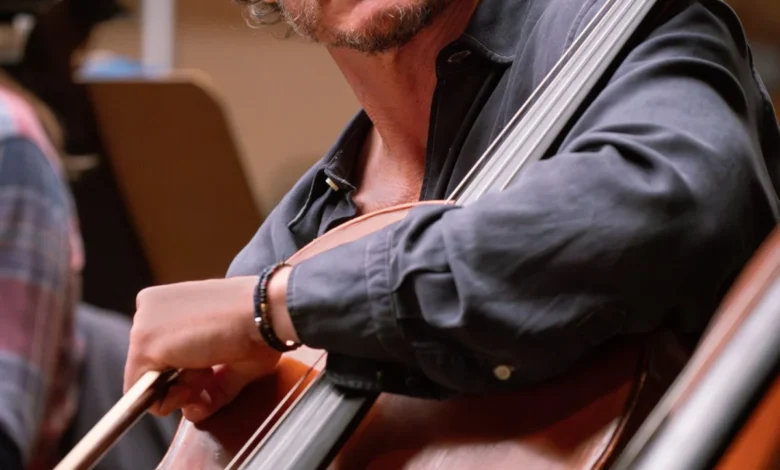
Searchlight Pictures has officially unveiled the first look at Behemoth!, a sprawling musical drama that marks a significant stylistic departure for both its lead actor, Pedro Pascal, and its Academy Award-nominated writer-director, Tony Gilroy. The production, which spans a narrative timeline of approximately 25 years, positions Pascal in the role of Alex, a world-class cellist who returns to the modern landscape of Los Angeles after decades spent in the rigorous world of international symphonic performance. As the film transitions from the high-stakes environment of classical music to the commercial pressures of Hollywood film scoring, it offers a deep dive into the evolution of an artist, both through internal character development and a meticulously crafted visual aesthetic.
The project represents a major milestone in Pascal’s career, coming at a time when the actor has reached a zenith of global popularity through his roles in The Last of Us, The Mandalorian, and the upcoming Fantastic Four. However, Behemoth! appears to offer a more grounded, intimate, and technically demanding performance than his recent genre-heavy work. The first-look images released by the studio highlight the physical transformation Pascal has undergone to portray Alex across two and a half decades, emphasizing a sophisticated, period-fluid aesthetic that has already generated significant discussion among industry observers and fashion critics alike.
Narrative Architecture and Character Evolution
At the heart of Behemoth! is the character of Alex, a man whose life is defined by the four strings of his cello and the weight of his own prodigal talent. The story begins with Alex as a younger man immersed in the classical music circuits of Europe and the elite symphonic halls of the United States. According to production notes, the film explores the psychological toll of such a singular focus, eventually following Alex as he relocates to Los Angeles to navigate the world of Hollywood scoring—a transition often viewed with skepticism by the classical purists of his past.
The 25-year timeline allows Gilroy to examine the aging process of a public figure and the shifting trends of the entertainment industry. This chronological breadth is reflected in Pascal’s physical appearance, which serves as a visual shorthand for the character’s journey. The initial images showcase a refined, "elite" hairstyle that balances classical elegance with a modern edge. The look features chestnut brown curls, pushed back from the face with a natural wave and a subtle "salt-and-pepper" texture that suggests the passage of time and the stress of a high-level artistic career.
Industry stylists have noted that the hair design in Behemoth!—which includes a slight "mullet" silhouette in certain sequences and a single, carefully placed strand across the forehead in others—is more than a cosmetic choice. It is a deliberate piece of character building, intended to evoke the "cherubic" yet weathered nature of a musician who has spent his life in the spotlight.
The Rigors of Musical Preparation
To prepare for the role of Alex, Pedro Pascal engaged in an intensive training regimen that lasted several months. Playing a cellist at a professional level on screen requires more than just convincing finger placement; it demands the physical posture, bowing technique, and rhythmic breathing of a virtuoso. In a recent interview regarding the production, Pascal described the process of learning the cello as the "hardest, hardest, hardest thing" he has ever had to do for a role.
The difficulty lies in the complexity of the instrument itself. Unlike the piano or guitar, which have frets or fixed keys, the cello requires a precise, muscle-memory-based approach to intonation. Pascal noted that performing pieces by composers such as Tchaikovsky required a level of physical discipline that surpassed his previous action-oriented roles. This dedication to authenticity is a hallmark of Tony Gilroy’s directorial style, which often emphasizes the technical minutiae of professional lives, whether they be corporate fixers (Michael Clayton) or intelligence officers (The Bourne Legacy).
Tony Gilroy’s Return to Feature Film
Behemoth! marks Tony Gilroy’s first feature film as a director since the release of the Bourne series spin-offs and his extensive work on the Star Wars prequel series Andor. Gilroy, known for his sharp, dialogue-driven scripts and interest in the mechanics of power and professional excellence, seems to be applying his analytical lens to the world of high art and commercial music.
Collaborating with Searchlight Pictures, a studio renowned for its success with prestige dramas and "awards bait" contenders, Gilroy is positioned to make a significant impact on the 2025-2026 film season. Analysts suggest that Behemoth! follows a trend of "musical procedural" films, such as Todd Field’s Tár or Bradley Cooper’s Maestro, which treat the world of classical music with the intensity of a thriller. By casting Pascal—an actor currently synonymous with "everyman" heroism—Gilroy is subverting expectations, placing him in a role defined by intellectualism and artistic vulnerability.

Visual Identity and Grooming Trends
The cultural reaction to the first-look images of Behemoth! has highlighted an interesting intersection between cinema and men’s grooming trends. Pascal’s look in the film—characterized by textured, medium-length curls and a refusal to adopt a "slicked-back" or overly manicured style—is being cited as a benchmark for modern masculine aesthetics.
Fashion analysts point out that the "Alex" look relies on natural volume and texture, utilizing products like curl creams and lightweight mousses to maintain shape without sacrificing movement. The inclusion of grey highlights reflects a growing trend in Hollywood where "salt-and-pepper" hair is embraced as a sign of distinguished maturity rather than something to be concealed. This aesthetic choice aligns with the film’s themes of longevity and the evolution of a career over decades.
For audiences looking to replicate the look, stylists suggest a "long-on-top" cut with weight maintained on the sides and back to prevent the style from appearing too "neat" or corporate. The goal, as seen in the Behemoth! stills, is a look that appears effortless despite being the result of professional precision—much like Alex’s cello performances.
Chronology of the Production
The development of Behemoth! has been a closely guarded secret for much of its production cycle. Below is a timeline of the project’s trajectory:
- Late 2023: Tony Gilroy completes the script for Behemoth!, initially described as a "musical odyssey." Searchlight Pictures wins a competitive bidding war for the distribution rights.
- Early 2024: Pedro Pascal is cast in the lead role. He begins private cello lessons immediately, working with world-class tutors to achieve the physical fluidity of a professional musician.
- Mid 2024: Principal photography begins in Los Angeles and various locations in Europe to capture the symphonic halls of Alex’s youth.
- Late 2024: First-look images are released, showcasing the character’s 25-year visual evolution.
- Projected 2025/2026: The film is expected to hit the festival circuit (possibly Venice or Telluride) before a wide theatrical release aimed at the 2026 awards season.
Industry Implications and Awards Potential
The partnership between Pascal, Gilroy, and Searchlight Pictures is a formidable one. Searchlight has a history of guiding character-driven dramas to Academy Award success, including Nomadland, The Shape of Water, and Birdman. Behemoth! fits perfectly into this pedigree, offering a transformative lead performance and a high-concept narrative centered on the arts.
For Pedro Pascal, the film represents a strategic move toward "prestige" cinema. While his work in television has earned him critical acclaim and Emmy nominations, a leading role in a Gilroy-directed drama provides the kind of showcase that often leads to Best Actor nominations at the Oscars. The technical feat of learning the cello, combined with the emotional range required to play a character across 25 years, makes Alex a quintessential "awards-caliber" role.
Furthermore, the film’s exploration of the Hollywood film scoring industry provides a meta-commentary on the movie business itself. By depicting the tension between "pure" art and commercial success, Gilroy is likely to resonate with Academy voters, many of whom navigate those same tensions in their own careers.
Official Responses and Anticipation
While official statements from the studio have been brief, focusing on the "unparalleled dedication" Pascal has shown to the role, the buzz within the industry is palpable. Representatives for the film have hinted that the soundtrack will be a major component of the marketing campaign, featuring both classical staples and original compositions that reflect Alex’s transition into film scoring.
Critics have already begun comparing the project to other "prodigy" dramas, noting that Gilroy’s involvement ensures the film will avoid the clichés of the "tortured artist" trope in favor of something more analytical and grounded. As Pascal continues to dominate the pop culture landscape, Behemoth! stands as a testament to his versatility and his willingness to tackle the "hardest thing" in pursuit of a definitive cinematic performance.
As the production moves into the post-production phase, the focus remains on how Gilroy will weave the 25-year timeline into a cohesive narrative. If the initial reactions to the film’s visual style and Pascal’s transformation are any indication, Behemoth! is set to be one of the most discussed and analyzed films of the coming year, proving that sometimes, the most powerful tool in an actor’s arsenal is the ability to change—not just their clothes or their hair, but the very way they hold a bow and command a stage.