Trump Administration Considers Government Stake in AI, Sparking Intense Debate Over Economic Models and National Security

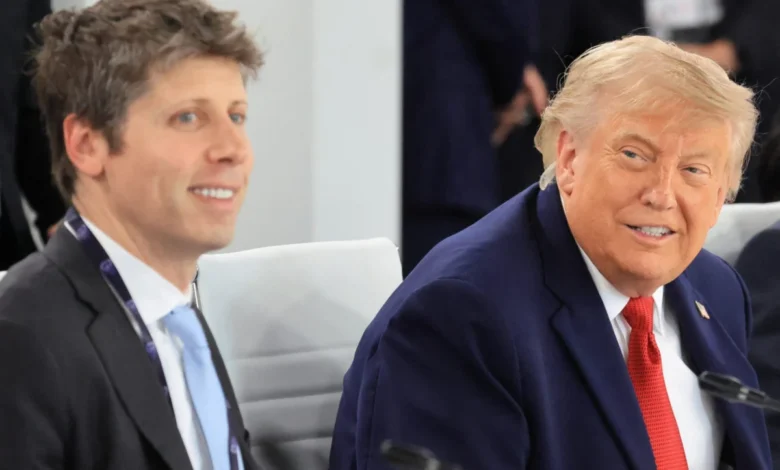
The foundational agreement that has largely underpinned the American artificial intelligence boom—a pact rooted in private sector innovation and risk-taking—is exhibiting considerable strain, leading to a radical proposal from the Trump administration to consider direct governmental equity in AI companies. This potential pivot away from a purely free-market approach has ignited a fervent debate among policymakers, industry leaders, and economic thinkers, epitomized by the sharp condemnation from billionaire former New York City Mayor Michael Bloomberg. The evolving landscape of AI, marked by escalating development costs, intensified global competition, and its undeniable emergence as a national security imperative, has forced a re-evaluation of how the United States fosters and controls this transformative technology.
The Original American AI Bargain Under Pressure
For decades, the standard operating procedure for groundbreaking technological advancements in the U.S. has been a clear division of labor: private investors assume the financial risks, funding research and development; private companies, in turn, initially reap the benefits of these breakthroughs, eventually distributing their gains to public markets through IPOs and stock offerings. The government’s role, traditionally, was to act as a regulator, establishing frameworks after the technologies had matured and their societal impacts became clear. This model, often lauded for its agility and capacity for rapid innovation, contrasted sharply with the approach taken by geopolitical rivals like China, where the government frequently provides essential infrastructure, such as computational power, allowing companies to compete for investment and customers within a state-supported ecosystem.
However, this American bargain is now showing significant signs of collapse. The sheer scale of investment required to develop and train cutting-edge AI models has reached unprecedented levels. Industry analysts estimate that training a single state-of-the-art large language model can cost anywhere from several hundred million to over a billion dollars, with these figures escalating dramatically year-over-year. This capital intensity far outstrips typical venture capital cycles and places immense pressure on even the most well-funded private entities. Simultaneously, Chinese competitors, bolstered by state support, are rapidly gaining ground, challenging American dominance in key AI subfields. Moreover, Washington’s perception of AI has shifted profoundly, moving from a purely commercial innovation to an undeniable national-security asset, critical for defense, intelligence, and maintaining global technological leadership.
Chronology of a Shifting Landscape
The journey of artificial intelligence from academic curiosity to a global strategic imperative has been swift and marked by several key developments:
- Early 2000s – 2010s: Foundational Research and Initial Commercialization: This period saw significant advancements in machine learning algorithms, particularly deep learning. Companies like Google, Facebook, and Amazon began integrating AI into their core products, largely funded by private capital and public stock offerings. Government involvement was primarily through grants for basic research at universities.
- Mid-2010s: The AI Explosion and Escalating Investment: Breakthroughs in neural networks and the availability of massive datasets led to rapid progress in areas like image recognition and natural language processing. Venture capital poured into AI startups, with global investment surging from under $10 billion in 2015 to over $50 billion annually by the end of the decade.
- Late 2010s – Early 2020s: Geopolitical Awareness and National Security Concerns: The strategic implications of AI became increasingly apparent. Nations, particularly the U.S. and China, began to view AI as a critical component of future economic and military power. Reports from various think tanks and government advisory boards highlighted the need for the U.S. to maintain its lead, particularly in the face of China’s aggressive national AI strategy. Executive orders were issued, urging federal agencies to prioritize AI research and development.
- 2023-2024: The LLM Revolution and Unprecedented Costs: The advent of highly capable large language models (LLMs) like GPT-4 and others brought AI into the mainstream consciousness but also underscored the astronomical costs associated with their development, training, and deployment. The demand for specialized hardware, like NVIDIA’s GPUs, skyrocketed, leading to supply chain constraints and further cost increases.
- Present Day: The Proposal for Government Equity: Against this backdrop of soaring costs, intense international competition, and elevated national security concerns, President Donald Trump’s administration began to openly consider a governmental stake in leading AI companies. This proposal represents a significant departure from established U.S. economic policy regarding emerging technologies.
President Trump’s Proposal and Its Diverse Support
The precise mechanisms of President Trump’s proposed governmental stake remain under discussion, but the core idea involves direct public investment in private AI enterprises. This could manifest as equity purchases, convertible notes, or other financial instruments that would grant the government a direct ownership interest and, presumably, a say in the strategic direction of these crucial companies.
The proposal has found an unusual coalition of supporters. Elements from both the populist left and the populist right have lauded the idea. From the left, the argument often centers on ensuring that the public benefits from a technology that has been partly funded by public research (via grants) and will profoundly impact society. They might advocate for public ownership to prevent monopolization, ensure equitable access, or direct AI development towards societal good rather than purely corporate profit. From the right, particularly the nationalistic wing, the focus is on securing American technological supremacy and preventing strategic assets from falling under foreign influence or failing due to lack of capital. They view it as a necessary step to win the "AI race" against China.
Perhaps more surprisingly, some within the AI companies themselves have reportedly welcomed the proposal. Faced with the staggering costs of R&D and the increasing difficulty of raising sufficient private capital for the next generation of models, a substantial government capital injection could be seen as a lifeline. It could de-risk ambitious projects, accelerate development, and provide a stable funding source independent of volatile market sentiments. The promise of maintaining a competitive edge against state-backed rivals abroad is also a powerful incentive for these companies.
Michael Bloomberg’s Vehement Opposition: A Warning Against Cronyism and Central Planning
Amidst this chorus of approval, one prominent voice stands in stark opposition: billionaire media mogul and former New York City Mayor Michael Bloomberg. In an opinion column published in Bloomberg Opinion on Monday, Bloomberg launched a scathing attack on the proposal, articulating a classic free-market critique.
Bloomberg argued that such a move would fundamentally corrupt the relationship between Washington and the tech industry. By becoming an investor, the government would transition from an impartial regulator, focused on public interest and market fairness, into a profit-motivated stakeholder. This inherent conflict of interest, he contended, would inevitably lead to "cronyism," where political considerations, rather than market efficiency or innovation, would dictate resource allocation and strategic decisions.
"Somewhere, Karl Marx is smiling," Bloomberg wrote, evoking the specter of a centrally planned economy that stifles innovation and breeds inefficiency. He further warned of the profound propaganda possibilities that would arise from government control over such powerful informational tools, suggesting it would "make George Orwell blush." This allusion highlights concerns about potential censorship, manipulation of information, or the use of AI for surveillance and control, if the government were to directly own and operate these platforms.
Bloomberg dismissed the notion that government ownership is necessary for the American public to share in the technology’s gains. He posited two primary avenues for public benefit:
- Public Market Participation: Once AI companies go public, ordinary citizens can purchase shares, directly participating in their financial success. This aligns with the traditional American model of wealth creation and distribution.
- Indirect Societal Benefits: He emphasized that consumers and businesses are already deriving immense value from AI through a myriad of applications, including advanced fraud detection, accelerated medical research and drug discovery, streamlined bookkeeping and financial analysis, and countless other helpful tools that enhance productivity and quality of life. The resulting economic growth, he argued, would naturally generate increased tax revenues, which could then be channeled into public services without the government needing to own the underlying companies.
Bloomberg offered an alternative solution if current AI companies are perceived as not contributing enough to the public good: "Washington should fix the tax code to serve the public; not buy them." This suggestion points to progressive taxation, closing loopholes, or implementing specific levies on highly profitable tech companies as a more appropriate and less market-distorting mechanism for wealth redistribution and public benefit. He ultimately predicted that federal shareholders would likely transform the market into a "smoke-filled backroom," implying a landscape rife with political bargaining, backroom deals, and corruption, rather than transparent, merit-based competition.
Broader Impact and Implications
The debate over government ownership of AI companies carries profound implications across economic, political, and international spheres.
Economic Implications:
- Market Distortion and Innovation: Direct government investment could disrupt competitive dynamics. While it might provide a much-needed capital injection, it could also deter private venture capital, which might be reluctant to compete with a state-backed entity. The fear is that political priorities, rather than market demand or technological merit, could drive innovation, potentially leading to less efficient resource allocation and stifled creativity.
- Fiscal Burden: Acquiring significant stakes in leading AI companies would represent a massive financial outlay for the government, diverting funds that could otherwise be used for public services, infrastructure, or deficit reduction.
- Exit Strategy and Privatization: Once the government is an owner, establishing a clear exit strategy becomes complex. Privatizing these assets later could be politically challenging and fraught with accusations of selling off public assets at undervalued prices.
Political and Governance Implications:
- Cronyism and Corruption: Bloomberg’s central concern about cronyism is significant. Government officials would be tasked with both regulating and financially benefiting from the industry, creating inherent conflicts of interest. This could lead to favoritism, political patronage, and a lack of accountability.
- Centralized Control and Bureaucracy: Government ownership could introduce layers of bureaucracy, slowing down the agile development cycles typically seen in the tech sector. Decisions might be subject to political cycles and public opinion rather than purely scientific or market-driven considerations.
- Freedom of Speech and Information Control: If the government were to own platforms that control powerful AI models capable of generating text, images, and other content, concerns about censorship, propaganda, and the manipulation of information would escalate dramatically, echoing Bloomberg’s "Orwell" reference.
National Security and Geopolitical Implications:
- Maintaining Technological Edge: Proponents argue that government ownership is essential to ensure the U.S. maintains its lead against rivals, particularly China, which employs a state-capitalist model for strategic technologies. They believe direct control over key AI capabilities is vital for defense and intelligence.
- International Norms and Competition: Such a move could set a precedent for other nations, potentially accelerating a global trend towards nationalizing critical tech sectors. This could further fragment the global tech ecosystem and intensify techno-nationalism.
- Supply Chain Resilience: Government involvement could, in theory, help secure critical supply chains for AI hardware and software, reducing reliance on potentially hostile foreign entities.
Alternative Policy Approaches
Beyond direct government ownership, several alternative policy approaches could address the challenges facing the U.S. AI sector:
- Tax Code Reform: As Bloomberg suggested, adjusting the tax code to ensure AI companies contribute adequately to public coffers, perhaps through higher corporate taxes or specific innovation taxes, could generate revenue for public services without direct ownership.
- Public-Private Partnerships (PPP): Expanding existing models of PPPs, where the government funds specific research initiatives or infrastructure projects (like national AI supercomputing centers) while leaving commercialization to private entities, could provide support without equity stakes.
- Antitrust Enforcement: Robust antitrust measures could prevent monopolistic practices, fostering competition and ensuring that the benefits of AI are broadly distributed across the economy.
- Increased Research Grants: Significantly boosting funding for basic and applied AI research through agencies like the National Science Foundation (NSF) and DARPA could fuel foundational innovation without government commercial entanglement.
- Regulatory Frameworks: Developing proactive, adaptable regulatory frameworks that address AI’s ethical implications, safety concerns, and societal impact could ensure responsible development while preserving market freedom.
The debate over government intervention in the AI sector is not merely an economic dispute; it is a fundamental discussion about the future of American capitalism, the role of the state in a rapidly evolving technological landscape, and the preservation of democratic values in the age of artificial intelligence. The decisions made in the coming months will likely shape the trajectory of AI development in the United States for decades to come, with profound global ramifications.