Sound Check for Survival: How Austin’s Musician Community Fights for Healthcare in an Unforgiving Economy


AUSTIN, Texas — For musician Zack Morgan, the transition from the corporate cubicle to the stages of the “Live Music Capital of the World” felt less like a leap of faith and more like walking off a precipice. For years, Morgan maintained a precarious balancing act, spending his days working a conventional tech job and his nights pounding out rhythms as a funk keyboardist. When he was laid off in 2015, the rug was pulled out from under him, forcing a fateful choice.
“Maybe this is my sign to try the full-time music thing,” Morgan recalled thinking. But reality quickly set in, bringing with it an immediate and pragmatic priority: “Step one in that was: Get health insurance again.”
In a city that markets itself globally as a haven for artists, songwriters, and performers, the economic reality on the ground is starkly different. While Austin’s thriving music scene drives millions of dollars in tourism and forms the bedrock of the region’s cultural identity, the artists generating that cachet are frequently priced out of the very community they enrich. Today, Morgan navigates this precarious existence by patching together income from various bands, relying heavily on a local nonprofit lifeline known as the Health Alliance for Austin Musicians, or HAAM, to keep himself medically insured.
“That’s part of being able to make this whole thing work,” Morgan said.
Behind the neon lights of Austin’s legendary Sixth Street and the bustling festival stages, a quiet healthcare crisis is unfolding. As cost-of-living pressures mount across the Lone Star State, grassroots organizations like HAAM are increasingly serving as the primary shield protecting creative workers from financial ruin. Yet, even as these regional models gain national attention for their innovative approaches, they face monumental headwinds from shifting federal policies, soaring medical inflation, and stubborn state-level political gridlock.
The Evolution of HAAM: From Clinic Care to Marketplace Coverage
Texas has long held the dubious distinction of leading the nation in its uninsured rate, with approximately 19% of residents aged 64 and under lacking coverage as of 2024. Against this challenging backdrop, HAAM was founded more than two decades ago to bridge the healthcare gap for local artists. In its early years, the organization focused primarily on connecting low-income musicians with free or low-cost care through a network of local clinics and hospitals in Austin and surrounding Travis County.
However, that patchwork system left significant vulnerabilities. Prior to the launch of the Affordable Care Act (ACA) marketplace in 2014, roughly 85% of HAAM members remained entirely uninsured. While they could receive localized treatment for routine ailments, a major accident or illness while touring out of town could easily trigger catastrophic bankruptcy.

“When the Affordable Care Act came out, and we knew it was here to stay, it really made sense for us to start getting our musicians fully insured,” said Rachel Blair, HAAM’s chief strategy officer.
Recognizing that simply directing musicians to online enrollment portals was insufficient, HAAM took a bold step: it began subsidizing monthly insurance premiums for local artists purchasing ACA plans. The average HAAM member earns roughly $30,000 a year—an income that makes dedicating a third or more of monthly earnings to healthcare premiums completely impossible. By covering these costs, HAAM watched its membership surge by 77%, expanding to more than 3,300 active participants. Today, over 90% of HAAM members maintain health insurance coverage.
A Unique Public-Private Partnership
The mechanics of HAAM’s success rely on a tightly integrated public-private partnership. The organization operates a roughly $4 million annual program funded through a combination of philanthropic donations, corporate sponsorships, and a vital institutional partnership with Central Health, Travis County’s public hospital district.
Under Texas law, hospital districts are tax-funded entities charged with maintaining a healthcare safety net for low-income residents. Central Health also operates Sendero Health Plans, a nonprofit insurance provider offering marketplace coverage tailored to Travis County.
To qualify for the HAAM subsidy, participating musicians must enroll in a silver-level benchmark plan offered by Sendero. For members whose household incomes fall between 100% and 200% of the federal poverty level, Central Health covers the remainder of the monthly premium after federal tax credits are applied. For artists earning slightly above that threshold, HAAM steps in to cover half of the remaining balance. Many qualified musicians ultimately pay $0 out-of-pocket for their monthly premiums.
Kit Abney Spelce, vice president of operations for Central Health, emphasizes that building trust is just as important as securing funding. Merely announcing that free or subsidized insurance is available does not automatically translate to enrollment among independent-minded artists.
“We are very much dependent on our partner entity to go out and connect with the community, to have that relationship and that trust,” Spelce explained.
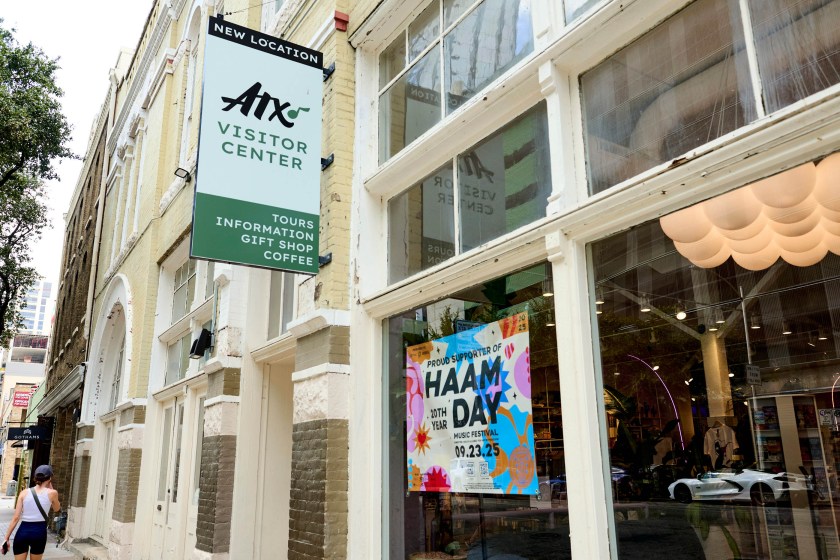
That community connection is vividly displayed each year during the HAAM Day Music Festival, a massive citywide fundraiser where hundreds of local bands perform in unconventional spaces ranging from grocery store lobbies to the steps of the Texas Capitol.

Spreading the Model: Regional Adaptations and Cross-Sector Expansion
The success of the Austin model has not gone unnoticed. Other American cities renowned for their rich musical heritage—such as Seattle, New Orleans, and Nashville—have long maintained organizations dedicated to artist wellness, historically focusing on navigating complex medical billing or providing direct clinical care. Following Austin’s lead, however, other regions are beginning to experiment with direct financial assistance.
In 2017, HAAM helped establish a parallel initiative in Denton, a vibrant college town north of Dallas known for nurturing talent ranging from jazz greats to indie rock acts. The Denton Music and Arts Collaborative takes a slightly different operational approach, connecting members with an independent insurance agent to identify optimal plans while providing a flat $100 monthly subsidy.
Jennifer Kapinos, president of the Denton collaborative, noted that the program is vital for preserving the town’s distinct cultural identity. “More and more people were maybe graduating college and leaving and going to find better opportunities in other places,” Kapinos said. “People who had lived here a long time suddenly were finding it harder and harder to afford to be here.”
The framework is also migrating to entirely different labor sectors. In 2025, Good Work Austin, a nonprofit advocating for food service and restaurant workers, launched a pilot program in collaboration with Central Health. Modeled after the musician initiative, the program helps local hospitality workers enroll in Sendero plans and bridges the gap on their monthly premiums.
Navigating Federal Headwinds and Surging Costs
Despite these local innovations, the broader healthcare landscape remains volatile. The 2026 plan year brought unprecedented financial pressures, with ACA marketplace premiums jumping by an average of 58% nationwide. Insurers cited soaring medical and prescription drug costs, prompting Sendero to raise its own rates by an average of 16%.
Concurrently, Congress allowed pandemic-era enhanced premium tax credits to expire, stripping away crucial federal support that millions of marketplace enrollees had depended upon. A national report released mid-year indicated that approximately 5 million Americans dropped their ACA coverage as a result of the expiration.
For Austin’s music community, the blow was severe. “Our premiums for our members went up 60% from one year to the next,” Blair said.
While HAAM aggressively ramped up its fundraising campaigns heading into 2026, the influx of capital was not enough to meet surging demand. The organization was forced to turn away hundreds of qualified applicants who sought financial aid. Nevertheless, for existing members already enrolled in the program, the partnership held firm.
“We’re going to make sure their monthly premium is paid every month,” Spelce affirmed, highlighting the commitment of Central Health and HAAM to buffer their community against external economic shocks.
The Limits of the Model: The Medicaid Expansion Deficit
Even with its remarkable reach, the HAAM and Central Health model faces a structural limitation imposed by state-level politics. Under the design of the Affordable Care Act, marketplace subsidies are intended for low- and middle-income individuals, while those living in extreme poverty—earning below 100% of the federal poverty level, or roughly $15,000 annually for an individual—were supposed to be absorbed by an expansion of Medicaid.
Texas remains one of 10 states that has consistently chosen not to expand Medicaid. Consequently, the poorest tier of Austin’s musician population falls into a coverage gap, ineligible for marketplace tax credits and unable to access standard subsidies.
To mitigate this systemic shortfall, local agencies have been forced to engineer workarounds. Central Health utilizes its Medical Access Program (MAP), an alternative healthcare network that connects uninsured, low-income residents with local providers without utilizing traditional insurance. HAAM has similarly forged direct partnerships with primary care clinics to treat its uninsured members.
Yet, administrators readily admit these localized safety nets are imperfect substitutes for the comprehensive coverage that federal Medicaid expansion would provide.
“It’s not a very sustainable solution, especially when there’s a really good alternative,” Blair said, pointing to the ongoing political debate surrounding state healthcare policy.
As Austin continues to grapple with explosive growth, skyrocketing housing costs, and the economic pressures of a changing urban landscape, the survival of its creative class remains tightly bound to these local interventions. For artists like Zack Morgan, who balance creative aspirations with the harsh mathematics of modern healthcare, the hybrid model offered by HAAM and Central Health is not merely a social service—it is the fragile bridge keeping the Live Music Capital of the World alive.