The Paradox of American Disagreement: How Deepening Polarization Coexists with Surface Consensus in Modern Civic Life

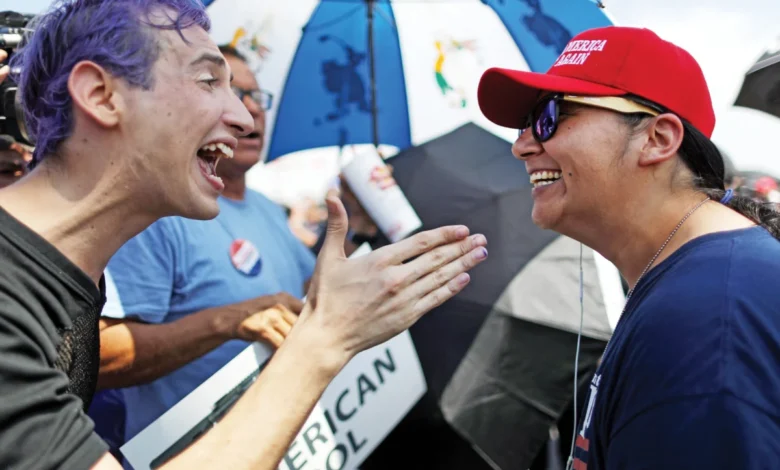
Americans disagree about almost everything. We argue about very little.
In the contemporary landscape of American civic and cultural life, an apparent paradox defines the national discourse: a populace deeply fractured along ideological, partisan, and cultural fault lines can simultaneously display striking uniformity in how it processes information, engages with media, and perceives fundamental societal threats. This dichotomy has become a defining characteristic of twenty-first-century democracy, shaping everything from legislative gridlock to daily interpersonal interactions. To understand the modern United States is to navigate this complex terrain where intense polarization over policy coexists with a peculiar, overarching consensus regarding the mechanics of modern public life.
The Anatomy of Modern Political Polarization
The breadth of ideological disagreement in the United States has been well-documented by sociologists, political scientists, and polling organizations over the past two decades. Pew Research Center data, Gallup trends, and academic studies consistently indicate that the ideological distance between the average self-identified Democrat and Republican has widened significantly since the turn of the millennium.
This widening chasm is no longer confined to traditional fiscal policy or the scope of federal governance. Instead, polarization has permeated nearly every facet of American existence, including lifestyle choices, geographic settlement patterns, religious affiliation, and consumption habits. Issues that once sat comfortably outside the partisan arena—such as public health protocols, environmental stewardship, educational curricula, and historical interpretation—have been thoroughly absorbed into the culture wars.

Political scientists often attribute this hyper-polarization to a combination of structural, technological, and sociological factors. The sorting of political parties—where the conservative wing of the Democratic Party and the liberal wing of the Republican Party have largely vanished—has created ideologically homogenous political blocs. When party alignment correlates tightly with cultural and geographic identity, political compromise is frequently perceived by constituents as an existential defeat rather than a routine legislative negotiation.
The Architecture of the Echo Chamber
Compounding this ideological divergence is the modern media ecosystem, which has fundamentally transformed how citizens consume news and form opinions. The transition from legacy broadcast journalism and print media to algorithmic, digital-first platforms has accelerated the fragmentation of shared factual realities.
Social media networks utilize engagement-driven algorithms designed to maximize user retention by promoting emotionally resonant, often sensationalized content. Consequently, individuals are systematically funneled into digital echo chambers where their preexisting beliefs are continually reinforced, and opposing viewpoints are either distorted or entirely omitted. This structural environment nurtures a high degree of affective polarization—a phenomenon where partisans do not merely disagree with their opponents’ policies, but increasingly view them with moral disdain and personal distrust.
Data from longitudinal studies on media consumption reveal that a growing percentage of Americans rely primarily on partisan outlets or peer-to-peer social media feeds for their daily news. This shift has diminished the role of neutral arbiters of information, making it exceedingly difficult for the electorate to deliberate on the basis of a universally accepted set of facts. When citizens inhabit divergent informational universes, even basic economic or social indicators become subjects of intense dispute.
Paradoxical Consensus: What Americans Agree On
Despite the pervasive friction characterizing modern political and cultural debates, sociologists note that beneath the turbulent surface lies a surprising degree of underlying agreement on foundational principles and daily aspirations. Public opinion polling consistently demonstrates broad bipartisan consensus on several broad topics, even if the proposed solutions to achieve them remain deeply contested.

For instance, majorities across the political spectrum express a desire for economic stability, affordable healthcare, safe communities, and robust educational opportunities for their children. Public sentiment polls frequently show widespread support for infrastructural investment, veterans’ care, and government accountability measures. The disagreement typically arises not from the desirability of the end goal, but from the allocation of resources, the role of government oversight, and the philosophical framework required to reach those objectives.
Furthermore, a shared commitment to the democratic process—at least in principle—remains a unifying thread, even as trust in specific democratic institutions faces historic lows. While confidence in Congress, the judiciary, and the executive branch fluctuates wildly depending on which party holds power, the foundational belief in the importance of civic participation and constitutional governance endures across demographic divides.
The Societal Impact of Chronic Division
The coexistence of intense ideological disagreement and superficial consensus creates significant challenges for governance and social cohesion. Legislative gridlock has become the default mode of operation in Washington, D.C., as lawmakers calculate that bipartisan cooperation carries a heavy political penalty from primary voters and activist bases. This paralysis extends to state legislatures, where polarized districts incentivize performative politics over pragmatic policymaking.
Beyond institutional dysfunction, the cultural cost of this environment is manifested in strained interpersonal relationships. Family gatherings, workplaces, and community organizations are increasingly vulnerable to political friction. A growing body of psychological research indicates that chronic exposure to polarized media and political hostility contributes to heightened levels of societal stress, anxiety, and a generalized erosion of trust in fellow citizens.
Economically, the persistent uncertainty driven by political polarization can influence market behavior, corporate governance, and consumer confidence. Businesses are routinely forced to navigate a complex labyrinth of consumer expectations, employee activism, and shifting regulatory landscapes tied directly to cultural and political flashpoints.

Pathways Toward Constructive Engagement
As policymakers, academics, and civic leaders grapple with the implications of this enduring divide, attention has increasingly turned toward structural and cultural interventions designed to foster more constructive public discourse.
Proposals for electoral reform, such as ranked-choice voting, nonpartisan primaries, and independent redistricting commissions, are frequently championed as mechanisms to reduce the incentives for hyper-partisan posturing and to encourage candidates to appeal to a broader median electorate. Proponents argue that by altering the institutional incentives, politicians will be more inclined to seek pragmatic, compromise-driven solutions.
At the community level, grassroots initiatives focused on bridging ideological divides have gained traction. Organizations dedicated to civil discourse, community dialogue programs, and cross-partisan civic engagement aim to humanize political opponents and rebuild social trust from the ground up. These programs emphasize listening rather than debating, helping participants recognize the complex human values underlying opposing policy positions.
Conclusion
The contemporary American landscape remains a study in contrasts. The friction of ideological divergence touches nearly every public debate, ensuring that citizens remain deeply divided over the direction of the nation. Yet, the persistent underlying threads of shared human aspirations and civic identity suggest that the polarization is not entirely absolute. Navigating this reality requires both an acknowledgment of the deep-seated disagreements that define modern politics and a deliberate effort to cultivate the spaces where consensus remains possible.