Why Elizabeth Smart Says There’s Still Reason to Have Hope in Nancy Guthrie Disappearance Case

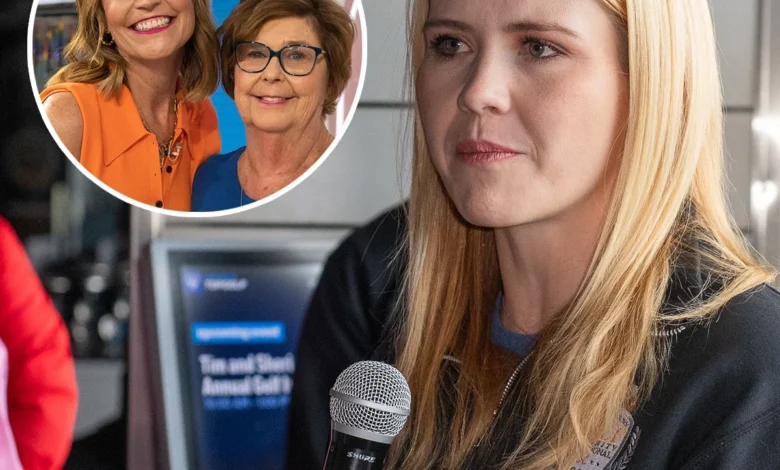
Elizabeth Smart, a prominent advocate for victims and a survivor of a harrowing kidnapping, is lending her voice to the ongoing search for Nancy Guthrie, the mother of NBC News anchor Savannah Guthrie. Smart, who was abducted and held captive for nine months as a teenager in 2002, expressed her deep empathy for the Guthrie family and reiterated the importance of maintaining hope in cases where a victim has not been found.
"I would remind people that we don’t know all the details," Smart shared in an exclusive interview with E! News. "I certainly hope that the investigators have more details than we do, and I certainly hope that they’re making more progress." Smart, now 38, highlighted that the absence of definitive evidence, such as a confirmed body, offers a crucial "reason to have hope that she is alive and that we shouldn’t give up until we find her."
Nancy Guthrie was last seen at her home in Arizona on the evening of January 31st. Her family reported her missing the following day. Authorities are investigating the disappearance as a potential abduction, a suspicion fueled by surveillance footage that captured a masked individual at her residence. The investigation has now surpassed 170 days, a significant period that understandably weighs heavily on the family and those following the case.
Smart urged the public to extend "all the compassion and grace for the entire Guthrie family" during this deeply challenging time. She emphasized the potential impact of even the smallest pieces of information, stating, "If anyone knows anything or seen anything, or the smallest detail that might seem insignificant can make all the difference, just report it." This plea underscores the critical role community awareness and reporting play in such investigations.
The Nancy Guthrie Disappearance: A Timeline of Events
The disappearance of Nancy Guthrie has cast a shadow over her family and prompted extensive investigative efforts. Understanding the sequence of events is crucial to appreciating the complexities of the case and the continued hope for her safe return.
- January 31, 2024: Nancy Guthrie, 84, is last seen at her Arizona home.
- February 1, 2024: The family reports Nancy Guthrie missing.
- February 2, 2024: Police release details about the disappearance, including surveillance footage showing a masked individual at Nancy’s door. Investigators begin to treat the case as a potential abduction.
- Ongoing: Extensive searches, public appeals, and investigative work by local law enforcement and federal agencies continue. The FBI releases images of a potential subject of interest related to the surveillance footage.
- Present: More than 170 days have passed since Nancy Guthrie was last seen, with no confirmed whereabouts. Elizabeth Smart, a survivor of a high-profile kidnapping, offers words of encouragement and emphasizes the importance of continued hope.
Elizabeth Smart’s Journey: From Victim to Advocate
Elizabeth Smart’s own experience of being abducted at age 14 from her Salt Lake City home in 2002 and held captive for nine months has uniquely positioned her to understand and empathize with the anguish of families facing similar circumstances. Her eventual rescue in March 2003, after her younger sister Mary Katherine recognized their abductor, Brian David Mitchell, marked the beginning of a new chapter for Elizabeth.
The years following her rescue were dedicated to healing, reclaiming her life, and transforming her trauma into a powerful force for advocacy. She has become a globally recognized voice for victims, sharing her story and working to raise awareness about child abduction, sexual assault, and the importance of victim support.
Smart’s current initiatives, including her new podcast, The Survivor Files with Elizabeth Smart, are a testament to her commitment to empowering others. "It’s about resilience, hope and finding the inner strength to keep going when everything is against them," she explained about her new project. "It’s important to hear stories from survivors’ perspective because—from an outside perspective—you don’t necessarily always understand why a victim chose to do something or why they made the decisions that they did." By providing a platform for survivors to share their narratives in their own words, Smart aims to foster greater understanding, compassion, and a deeper appreciation for the human spirit’s capacity to endure and overcome.
Her personal journey has also included embracing physical strength and self-acceptance, notably through bodybuilding. "It’s taught me to let go of the shame that I felt after everything that I experienced," Smart revealed. "It taught me that my body is beautiful and I need to be ashamed of it, I can embrace it." This personal growth underscores her broader message of healing and reclaiming agency.
The Investigation into Nancy Guthrie’s Disappearance
The investigation into Nancy Guthrie’s disappearance has been multifaceted, involving local law enforcement and federal agencies. The initial focus on surveillance footage of a masked individual at her home points towards a possible targeted abduction. The lack of forced entry, coupled with the presence of this individual, has led investigators to explore various avenues.
The length of time since Ms. Guthrie has been missing presents significant challenges. Law enforcement agencies often face dwindling leads and increased difficulty in gathering new information as time progresses. However, Smart’s message emphasizes that hope should not be extinguished until all possibilities have been exhausted. The absence of a confirmed body, as she rightly points out, is a critical factor that keeps the possibility of a living victim alive.
Broader Implications and the Role of Community
The disappearance of Nancy Guthrie resonates beyond her immediate family due to her connection to Savannah Guthrie, a prominent public figure. This high-profile aspect can unfortunately sometimes overshadow the broader issue of missing persons, particularly elderly individuals who are vulnerable.
Elizabeth Smart’s advocacy highlights the universal need for vigilance and support in all such cases. Her own ordeal, which involved extensive investigation into her family and the complexities of identifying and apprehending her abductor, Brian David Mitchell, serves as a stark reminder of the arduous nature of these investigations.
In the Smart case, investigators meticulously examined all possibilities, including domestic involvement, a standard procedure in missing persons cases. Police captain Cory Lyman, a lead investigator on the Smart case, recounted in the Netflix documentary Kidnapped: Elizabeth Smart the thoroughness of their inquiry, which included in-depth interviews and the seizure of electronic devices from the Smart family. Ultimately, the family was cleared.
The Smart family’s experience also illustrates the psychological toll such events can have. Ed Smart, Elizabeth’s father, spoke of being overwhelmed to the point of being committed to a psychiatric ward amidst the intense scrutiny. The case also involved challenges with witness identification, as seen with Mary Katherine Smart’s recollection of their abductor, and the eventual death of a prime suspect, Richard Ricci, in custody, which significantly complicated the investigation.
The persistence of the Smart family, particularly their decision to hold their own press conference and release a sketch of the abductor against police recommendations, ultimately led to tips that aided in Elizabeth’s rescue. This highlights the critical, albeit sometimes controversial, role families and the public can play in bringing attention and information to bear on difficult cases.
Sustaining Hope and Supporting Families
Elizabeth Smart’s message for the Guthrie family and the public is one of enduring hope, grounded in the absence of definitive negative evidence. Her launch of The Survivor Files with Elizabeth Smart podcast aims to amplify such messages of resilience and hope, drawing from her own experiences and those of other survivors.
"It’s important to hear stories from survivors’ perspective because—from an outside perspective—you don’t necessarily always understand why a victim chose to do something or why they made the decisions that they did," Smart stated. "But when you hear it from the victim’s perspective, it makes a lot more sense overall with the true crime genre." This approach seeks to humanize victims and foster greater empathy and understanding within the public discourse surrounding crime.
The advice Smart offers – to report even the smallest detail – is crucial for any ongoing investigation. In cases like Nancy Guthrie’s, where the circumstances remain unclear, every piece of information, no matter how seemingly insignificant, could be the key to unlocking the truth and, hopefully, to her safe return. The unwavering support and continued focus of the public and law enforcement are vital in ensuring that cases like this remain at the forefront until a resolution is found.