European Automotive Market Surges in June as Electric Vehicle Adoption and Chinese Competition Reshape the Industrial Landscape

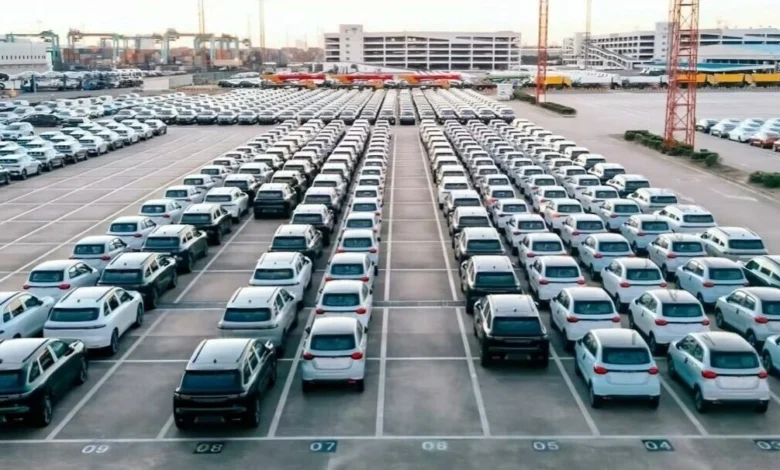
The European automotive sector witnessed a significant transformation in June 2026 as new-car registrations climbed 13% year-on-year to reach 1.41 million units, marking the most substantial growth period since late 2023. According to the latest data released by the European Automobile Manufacturers’ Association (ACEA), this surge was primarily fueled by an aggressive shift toward battery-electric vehicles (BEVs), which saw a 51% increase in registrations compared to the same period last year. This momentum has pushed the combined market share of plug-in vehicles—encompassing both BEVs and plug-in hybrids (PHEVs)—to 33.8%, a figure that now comfortably exceeds the combined market share of traditional gasoline and diesel internal combustion engine (ICE) vehicles.
The June figures represent more than just a seasonal spike; they signal a fundamental structural shift in the European transport economy. Just twelve months ago, the market dynamics were inverted, with gasoline and diesel vehicles commanding a 36.8% share of the market, while plug-in alternatives trailed at 26.1%. The rapid reversal of these fortunes highlights the dual pressure of government intervention and geopolitical volatility. While the expansion of subsidy programs in France and Germany provided the initial spark for June’s performance, the underlying driver for many consumers has been the sustained escalation of global fuel prices. These price hikes, largely attributed to the ongoing regional instability and the US-Israeli conflict involving Iran, have rendered traditional ICE ownership increasingly uneconomical for the average European commuter.
A Decisive Shift in Powertrain Preferences
The breakdown of June’s registration data reveals a market in the midst of a rapid technological transition. BEVs alone accounted for 23.6% of the total market share, rising from 16.7% in June 2025. Plug-in hybrids showed more modest growth, edging up to 10.1% from 9.4% a year prior. However, the most dominant category remains the regular hybrid (HEV), which continues to serve as the primary bridge for consumers hesitant to commit to full electrification. Regular hybrids captured 35.2% of the market in June. When aggregated, electrified models of all types—BEVs, PHEVs, and HEVs—now represent a staggering 68.9% of all new car sales in Europe.
This transition is even more pronounced when examining the first half (H1) of 2026. Total EU registrations for the first six months of the year rose by 5.7%. During this period, the BEV share reached 20.7%, a significant jump from the 15.6% recorded in H1 2025. Conversely, the decline of the internal combustion engine has accelerated in specific regions. France and Spain, traditionally strong markets for small gasoline-powered hatchbacks, saw gasoline car sales plummet by 34.2% and 18.5% respectively. For the first time in the history of the modern automotive era, the combined share of gasoline and diesel vehicles across the EU has fallen below 30%, settling at 29.7% for the first half of the year.
The Ascendance of Chinese Manufacturers
Perhaps the most disruptive element of the June sales data is the continued rise of Chinese automotive brands within the European Union and the United Kingdom. Benefiting from vertically integrated supply chains and a lead in battery technology, brands such as BYD and MG (owned by SAIC) have successfully captured a disproportionate share of the recent market growth. In the United Kingdom, both marques grew their registrations by more than 33% in June. This localized success has contributed to a broader European trend where Chinese brands now hold a 5.4% market share, up from 3.4% in the previous year.
The growth trajectories of newer entrants are even more startling. Data indicates that BYD, Chery, and Leapmotor are currently recording sales volumes between three and six times higher than their June 2025 levels. Chery’s Jaecoo 7 has become a symbol of this shift, having established itself as the UK’s best-selling car overall as early as March 2026. The ability of these manufacturers to offer feature-rich electric vehicles at price points that legacy European manufacturers struggle to match has forced a defensive realignment across the continent’s industrial base.
Legacy Manufacturers Face a Dual Crisis
The positive registration figures for June mask a deeper crisis facing Europe’s traditional "Big Three" automakers: Volkswagen Group, Stellantis, and Renault. While these companies saw registration gains between 3.6% and 7.3% in June, these figures are largely the result of heavy discounting and expanded incentive programs designed to clear inventory and maintain market share against Chinese rivals. Industry analysts suggest that these gains are "hollow," as the cost of maintaining these sales volumes is eroding profit margins at a time when these companies need capital to fund their own EV transitions.
The situation is most acute at Volkswagen. Despite the uptick in June deliveries, the German giant is moving forward with a massive restructuring plan. Internal memos suggest the company is weighing an additional 50,000 job cuts on top of the 50,000 already announced earlier in the year. Furthermore, the company is considering the unprecedented step of closing up to four manufacturing plants in Germany. In a bid to streamline operations and reduce R&D overhead, Volkswagen also intends to halve its current lineup of 150 models.
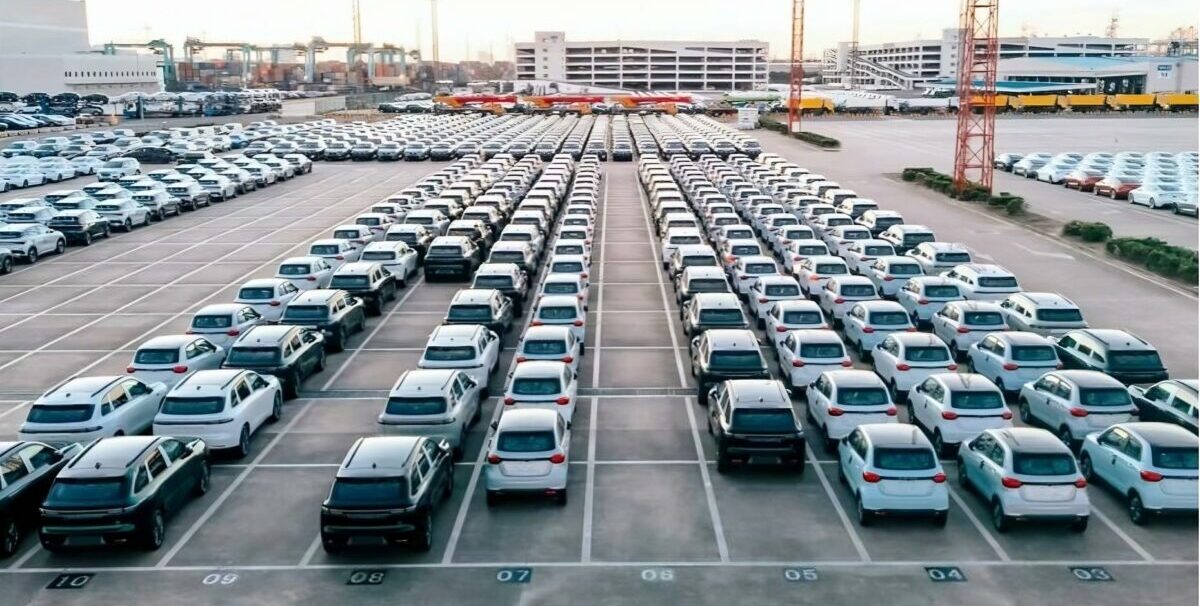
Volkswagen is not alone in its struggles. BMW, Mercedes-Benz, and Renault are all pursuing aggressive efficiency programs. The central challenge for these legacy firms is that the growth in the market is concentrated exactly where they are most vulnerable: in the entry-level and mid-market BEV segments where Chinese brands have a clear cost advantage. The June data, which shows the best registration figures in nearly three years, has ironically made the case for radical restructuring more urgent. As one industry consultant noted, "You cannot look at a 13% growth rate and call it a recovery when that growth is being handed to your competitors or bought through unsustainable subsidies."
A New Era of Cross-Border Partnerships
In response to the "Chinese squeeze," the boundary between European and Chinese automotive interests is becoming increasingly blurred. Rather than competing head-on, many legacy OEMs are opting for "if you can’t beat them, join them" strategies. This has led to a flurry of joint ventures and manufacturing agreements that would have been unthinkable five years ago.
For instance, Ford has recently entered into a joint manufacturing agreement with Geely to utilize its Spanish facilities. Stellantis has taken an even more radical approach by opening its European factory doors to Leapmotor and Dongfeng, effectively becoming a contract manufacturer for its own rivals to keep its plants running at capacity. Meanwhile, BYD is bypassing potential tariffs by constructing its own dedicated manufacturing hub in Hungary. In a further sign of the changing times, both BYD and Xpeng are reportedly in advanced negotiations to acquire "brownfield" sites—older, shuttered factories—from Stellantis and Volkswagen, respectively.
Regional Disparities and the Road Ahead
While the overall European trend is toward electrification, the pace of change is not uniform. Every European market posted higher BEV sales in June with the sole exception of Poland, where a lack of charging infrastructure and the absence of robust consumer incentives continue to hamper adoption. In contrast, the heavy lifting was done by France and Germany, where "social leasing" programs and direct purchase grants were renewed in late spring to combat a temporary slowdown in EV demand seen in Q1.
The chronology of the last 18 months suggests that the European market has reached a point of no return. The timeline of the transition can be traced back to the energy price shocks of late 2024, which acted as a catalyst for consumers to abandon diesel. By mid-2025, the arrival of affordable Chinese models like the MG4 and the BYD Atto 3 provided a viable alternative for the mass market. Now, in mid-2026, the convergence of high fuel prices, maturing EV technology, and industrial desperation has created the current landscape.
Implications for the European Economy
The long-term implications of the June sales data are profound. The European Union’s goal of banning the sale of new ICE vehicles by 2035 appears more achievable from a consumer demand perspective, but the industrial cost is becoming clearer. The shift toward BEVs requires fewer labor hours per vehicle compared to complex internal combustion engines, which, combined with the loss of market share to foreign brands, threatens the millions of jobs tied to the traditional automotive supply chain.
Furthermore, the reliance on Chinese battery technology and partnerships creates a new set of geopolitical dependencies. As legacy OEMs shrink their footprints and focus on "deeper efficiencies," the very nature of the European car industry is changing from a global exporter of engineering excellence to a contested battleground for digital-first, electric mobility.
In conclusion, while the June registration jump of 13% is a positive sign for market activity, it serves as a stark reminder of the volatility and transformation defining the decade. The "recovery" is a bifurcated one: a boom for electric vehicles and new entrants, and a period of painful contraction for the traditional titans of European industry. As the second half of 2026 begins, the focus will shift from whether consumers will buy electric cars to whether Europe’s historic brands can survive the transition in a recognizable form.