Unraveling the Mathematical Universe: The Quest for the Grand Unified Theory of Mathematics

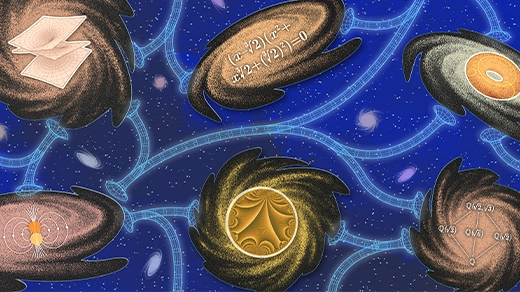
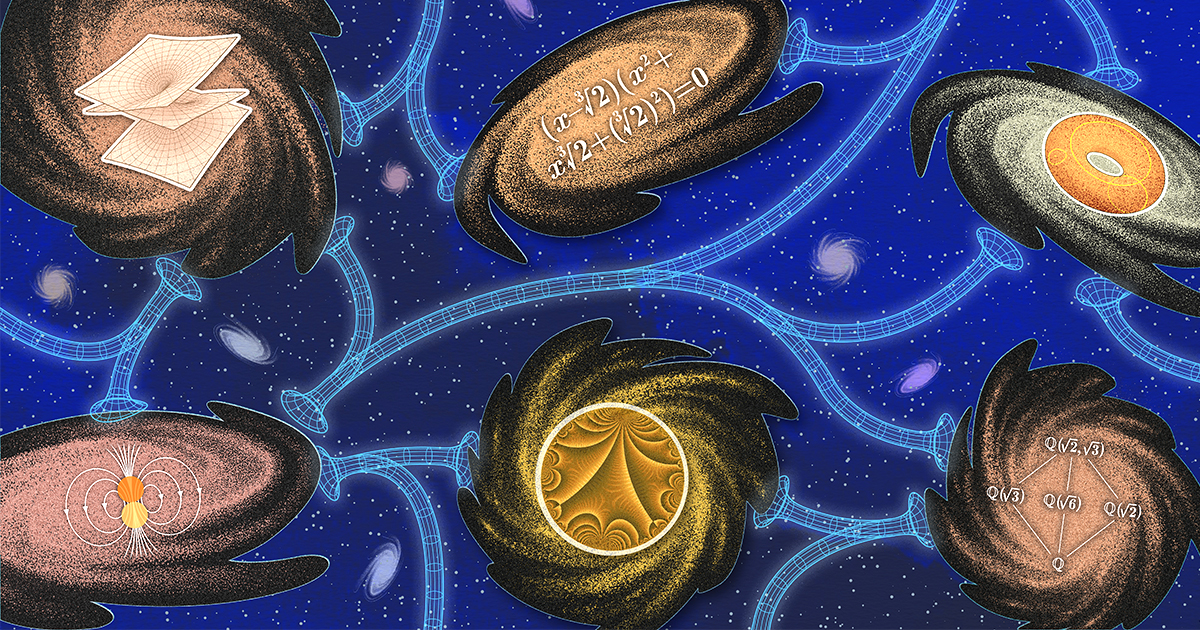
For centuries, the mathematical universe has expanded organically, fracturing into distinct, specialized domains that often operate in intellectual isolation. Researchers examining the pure logic of numbers and equations have traditionally worked far removed from those studying the geometry of shapes and spaces, or the continuous variables of change and probability. Each subfield developed its own unique nomenclature, methodologies, and core questions, rarely intersecting with its neighbors. Yet, every so often, mathematicians stumble upon astonishing, direct connections—conceptual wormholes linking distant intellectual galaxies.
These deep structural bridges are known as Langlands correspondences. For decades, a global community of hundreds of researchers has dedicated their careers to mapping, extending, and exploiting these relationships through what is formally called the Langlands program. Often described by popular science writers and theoretical researchers alike as a grand unified theory of mathematics, the program suggests that the vast, heterogeneous universe of mathematical truth possesses an underlying, hidden unity. However, translating this sweeping architecture into clear, universally understood language remains one of the greatest challenges in contemporary science.
Origins and Architecture of the Langlands Program
The ambitious project traces its roots back to 1967, when Canadian mathematician Robert Langlands, then working out of Albert Einstein’s former office at the Institute for Advanced Study in Princeton, New Jersey, penned a visionary, handwritten letter to French mathematician André Weil. In that correspondence, Langlands outlined profound, unexpected connections between two seemingly unrelated realms of mathematics: number theory, which deals with the properties of integers and polynomial equations, and harmonic analysis, the mathematical study of signals, waves, and frequencies.
Langlands conjectured that a vast family of correspondences existed, matching algebraic objects—specifically, representations of Galois groups derived from polynomial equations—with analytic objects, such as automorphic forms. To understand the magnitude of this proposal, one must look at how simple arithmetic structures can generate profound complexity.
Consider the set of rational numbers, denoted as $mathbbQ$, which encompasses all numbers expressible as fractions. While these numbers form a closed field under basic arithmetic operations, introducing simple polynomial equations like $x^2 – 2 = 0$ forces mathematicians to expand their horizons. The solutions to this equation are irrational numbers ($pmsqrt2$), which extend the rational number line into a two-dimensional number field, $mathbbQ(sqrt2)$. This expanded field possesses a natural symmetry: swapping $sqrt2$ and $-sqrt2$ leaves the structural integrity of the field completely intact.
The collection of these symmetries forms what is known as a Galois group, named after the 19th-century French mathematical prodigy Évariste Galois. For $x^2 – 2 = 0$, the Galois group is "abelian," meaning that the order in which symmetries are executed does not change the outcome. However, slightly more complex equations, such as $x^3 – 2 = 0$, yield "non-abelian" Galois groups, designated as $S_3$, where the sequence of transformations fundamentally alters the result. These symmetries can be mapped using matrices, creating a rigorous algebraic representation.
The Langlands miracle lies in the fact that these algebraic matrices do not exist in a vacuum. Through the Langlands correspondence, every such Galois representation generates a specific sequence of data that dictates the coefficients of a completely different mathematical construct: a modular form, which lives in the entirely separate galaxy of harmonic analysis. The coefficients of prime-numbered powers within a modular form’s infinite series precisely mirror the traces of the matrices governing the Galois group’s symmetries in modular arithmetic. This bridge between discrete algebraic symmetry and continuous wave-like analysis represents a conceptual leap that defies intuitive explanation.

Milestones, Breakthroughs, and the Quest for Proofs
Over the past half-century, the pursuit of Langlands correspondences has driven some of the most monumental achievements in modern mathematics. The program’s practical power was demonstrated most famously in 1994, when British mathematician Andrew Wiles successfully proved Fermat’s Last Theorem—a 357-year-old mathematical conundrum positing that no three positive integers $a$, $b$, and $c$ satisfy the equation $a^n + b^n = c^n$ for any integer value of $n$ greater than 2.
Wiles achieved this breakthrough by establishing a special case of a Langlands-type relationship known as the Taniyama-Shimura-Weil conjecture. By demonstrating that a hypothetical counterexample to Fermat’s theorem (known as a Frey curve) would require an elliptic curve that could not correspond to a modular form, Wiles systematically dismantled the possibility of a counterexample, securing a legendary victory for number theory via harmonic analysis.
The architecture of these correspondences has continued to expand across disciplines, reflecting a prophetic vision laid out by André Weil in a 1940 letter to his philosopher sister, Simone Weil. Weil envisioned a mathematical "Rosetta stone" featuring three distinct columns: number theory, curves over finite fields, and smooth geometric surfaces (Riemann surfaces). Today, each of these pillars boasts its own dedicated branch of the Langlands program, proving that these structural wormholes are a ubiquitous feature of the mathematical landscape.
Recent years have witnessed accelerated progress. In 2024, a collaborative team of mathematicians published a monumental series of papers totaling more than 800 pages, decisively settling a major case of the geometric Langlands conjecture. Such milestones not only validate decades of theoretical speculation but also provide researchers with powerful translation dictionaries. As modern practitioners frequently note, breakthroughs achieved in one mathematical world can be immediately leveraged to deduce solutions and insights in another.

Broader Implications and Intersections with Physics
Despite its extraordinary utility, the foundational "why" behind the Langlands program remains shrouded in mystery. Many leading mathematicians view the correspondences not as isolated mathematical coincidences, but as projections of an even deeper, as-yet-undiscovered reality.
This perspective received profound external validation in the 2000s, when theoretical physicists Anton Kapustin and Edward Witten made a startling discovery: the geometric Langlands correspondence is deeply tied to electric-magnetic duality in quantum field theory. By examining four-dimensional space-time models where two spatial dimensions form a Riemann surface, Kapustin and Witten demonstrated that swapping electric and magnetic fields mathematically mirrors the act of crossing from one side of the geometric Langlands correspondence to the other.
This physical insight suggests that the disparate sides of the Langlands bridge are, in reality, complementary facets of a single, unified underlying system—much like how electric and magnetic fields are unified within the broader framework of electromagnetism. Just as different two-dimensional shadows cast by a three-dimensional object can make distinct shapes appear mysteriously correlated, the various manifestations of the Langlands program may ultimately be understood as projections of a higher-dimensional mathematical reality.
As researchers continue to decode these intricate relationships, the Langlands program stands as a testament to the interconnectedness of human thought. Whether viewed as an extension of Fourier analysis, a grand unifying framework for algebra and geometry, or a mathematical reflection of physical reality, the program continues to lure curious minds deeper into the boundless and heterogeneous universe of mathematics.