Senator Cassidy Defends Trump’s Proposed Tariffs on Generic Drugs, Citing National Security Concerns

Senator Bill Cassidy, a prominent Republican lawmaker on health policy, has voiced support for former President Donald Trump’s controversial proposal to impose steep tariffs on imported generic drugs. While acknowledging that such measures could potentially lead to increased costs for American patients, Cassidy argued that the national security implications of a more robust domestic drug supply chain might justify the economic trade-off.
"The national security might be something worth paying for," Senator Cassidy, the chairman of the Senate Health, Education, Labor, and Pensions (HELP) Committee, stated in an exclusive interview with KFF Health News on July 22. This stance positions him as a key figure navigating the complex intersection of healthcare affordability and national security in the United States.
The context for Trump’s proposal and Cassidy’s endorsement is the persistent issue of drug shortages plaguing the U.S. In recent years, the nation has experienced a growing reliance on foreign countries, particularly China, for the production of active pharmaceutical ingredients (APIs), the core components of many medications. A study published last fall in JAMA Health Forum highlighted this dependency, indicating that China is the primary source for APIs used in numerous antibiotics. This reliance has been exacerbated by the closure of domestic manufacturing facilities or their shift to producing other, potentially more profitable, pharmaceuticals.
Cassidy, who is also a physician, underscored the strategic vulnerability this dependence creates. "Do we want China to have that sort of leverage for these drugs to be produced principally, maybe 99%, over there, and we don’t have access to them if tension rises between the two countries?" he questioned, drawing a direct line between economic reliance and geopolitical risk.
Trump’s proposal, detailed in a social media post on July 21, outlines a phased approach to incentivizing domestic production. Initially, generic drug companies would be granted a two-year grace period to relocate their manufacturing back to the United States. Following this period, the former president threatened to impose a 100% tariff on imported generic drug products, with that figure escalating to 200% in the subsequent year. This policy targets a critical segment of the U.S. pharmaceutical market, as generic drugs constitute an estimated 90% of all prescriptions filled nationwide. The economic ramifications of such tariffs could be substantial, impacting both manufacturers and consumers.
Senator Cassidy’s political career has seen him serve in Congress since 2009. His recent electoral landscape has been marked by a significant political development: in May, he lost his bid for reelection after Trump endorsed a Republican primary challenger, Representative Julia Letlow. This endorsement created a notable intra-party dynamic, underscoring Trump’s influence within the Republican party.
Beyond the drug tariff issue, the interview also touched upon Cassidy’s prior confirmation of Robert F. Kennedy Jr. as head of the Department of Health and Human Services (HHS). More than 16 months after his vote, Cassidy expressed disappointment on CBS News’ "Face the Nation" in June, alleging that Kennedy had broken promises made to him. These alleged broken promises reportedly included assurances that Kennedy would not alter federal recommendations for childhood vaccines.
When questioned about the possibility of summoning Kennedy to his committee for further discussion, Cassidy revealed that he had indeed requested the HHS secretary’s appearance before the Senate HELP Committee. However, he had not yet received confirmation of whether Kennedy would attend. Kennedy had previously appeared before the Senate HELP panel in April to address the Trump administration’s fiscal year 2027 budget request for HHS.
Cassidy elaborated on his decision to vote for Kennedy’s confirmation, stating that he had trusted the nominee’s commitment to uphold his word regarding the non-disparagement of vaccines. "If they agree to guardrails and disregard those guardrails, you can judge me," Cassidy remarked. "You may decide my judgment wasn’t very good, but I don’t think you can say I acted in bad faith." He further reasoned that Kennedy was likely to exert influence on the administration regardless of his official position, suggesting that having him in an official capacity, subject to oversight, was preferable. "I’m pretty sure that RFK was going to have the president’s ear whether he was in office or not," he added.
Meanwhile, the debate surrounding vaccine policy continues amidst concerning public health trends. While Kennedy’s attempts to reverse federal vaccine recommendations have encountered legal challenges, researchers at Johns Hopkins University reported this week that the number of confirmed measles cases in the U.S. in 2026 had already surpassed the total for 2025. This trend marks the highest incidence of measles in the U.S. in 35 years, raising alarm bells about the potential resurgence of preventable diseases.
Shifting focus to another significant legislative achievement, Cassidy, a principal author of the 2020 No Surprises Act, expressed his view that modifications to the law are not presently required, despite recent reports of substantial payouts to healthcare providers through the arbitration system established by the act. The No Surprises Act was enacted with the primary objective of shielding patients from unexpected and often exorbitant medical bills incurred when receiving care outside their health insurance network without prior knowledge.
A recent analysis by The Wall Street Journal revealed that in 2025, providers were awarded nearly $15 billion in disputed claims under the arbitration process. This figure represents more than a threefold increase compared to the $4.08 billion awarded in 2024, fueling concerns about the effectiveness and fairness of the system.
Cassidy’s perspective on addressing rising healthcare costs centers on transparency. "The initial step to make sure that people are getting their best deal is price transparency," he asserted. In line with this philosophy, the Senate HELP Committee overwhelmingly approved the Patients Deserve Price Tags Act on July 22. This bipartisan bill aims to broaden the existing requirements for hospitals, insurers, and other healthcare providers to publicly disclose their prices. A similar bill has also advanced through a House committee with bipartisan support, although the ultimate passage of either measure by the full House and Senate remains uncertain.
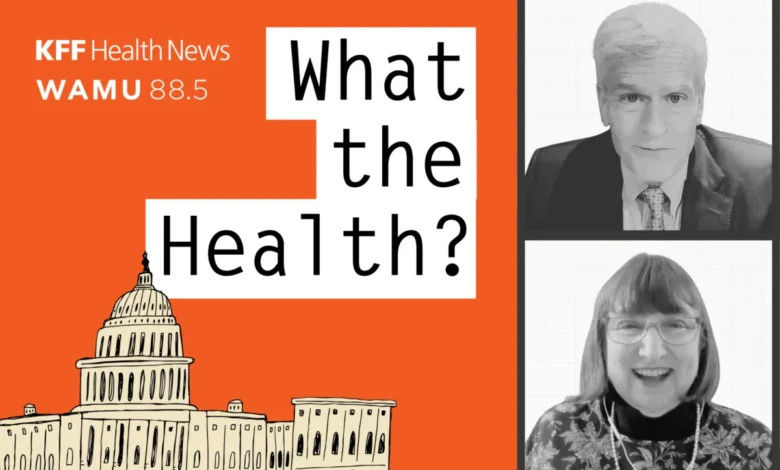
The extensive interview, which also delved into Cassidy’s "Money and Value for Patients" proposal, was part of KFF Health News’ ongoing "How Would You Fix It?" series. This series features Julie Rovner, KFF Health News’ chief Washington correspondent and host of the "What the Health?" podcast. An abridged version of the discussion was broadcast on July 23 as Episode 456 of "What the Health? From KFF Health News," titled "A Shrinking Safety Net."
Background and Context of Proposed Tariffs
The Trump administration’s proposal to impose tariffs on imported generic drugs stems from a broader objective to reshore manufacturing and enhance domestic production capabilities. This initiative is part of a larger trend in U.S. trade policy aimed at reducing reliance on foreign nations for critical goods and services, often framed through the lens of national security and economic competitiveness. The COVID-19 pandemic, which exposed vulnerabilities in global supply chains for medical supplies and pharmaceuticals, further amplified these concerns.
Generic drugs, by their nature, are designed to be more affordable alternatives to brand-name medications. They constitute a significant portion of the U.S. pharmaceutical market, serving millions of patients who depend on them for cost-effective treatment. The proposed tariffs, therefore, carry the potential to disrupt this affordability, raising questions about the balance between national security goals and immediate patient access to essential medicines.
Analysis of Potential Economic and Health Implications
The imposition of 100% to 200% tariffs on imported generic drugs could lead to a significant increase in the cost of these medications. Pharmaceutical companies that import APIs or finished generic drug products would likely pass on these increased costs to wholesalers, distributors, and ultimately, to patients. This could disproportionately affect individuals with chronic conditions who rely on multiple generic medications to manage their health, as well as those with limited health insurance coverage or high deductibles.
However, proponents of the policy, like Senator Cassidy, argue that the long-term benefits of a secure and domestic drug supply chain outweigh the short-term price increases. A more diversified and robust domestic manufacturing base could reduce the risk of supply disruptions caused by geopolitical tensions, natural disasters, or trade disputes. It could also stimulate job creation and economic growth within the U.S. pharmaceutical manufacturing sector.
The economic analysis of such a policy is complex. While tariffs generate revenue for the government, they also act as a tax on imports, potentially leading to higher prices for consumers and reduced purchasing power. The extent to which domestic production can scale up to meet demand within the proposed two-year timeframe is also a critical factor. Without sufficient domestic capacity, the tariffs could simply lead to higher prices without a commensurate increase in U.S.-based production.
Furthermore, the pharmaceutical industry is globalized, with intricate supply chains that involve multiple countries for different stages of production. Shifting the entire manufacturing process back to the U.S. is a monumental undertaking that requires significant investment in infrastructure, workforce training, and regulatory compliance.
Broader Impact on Healthcare Policy Debates
Senator Cassidy’s comments reflect a growing bipartisan recognition of the vulnerabilities within the U.S. healthcare system, particularly concerning supply chain resilience. While the focus on national security is a key driver for the proposed tariffs, it intersects with ongoing debates about healthcare affordability, drug pricing, and the role of government in regulating the pharmaceutical market.
The interview also highlights the intricate political dynamics at play. Cassidy’s support for Trump’s proposal, despite their past electoral contest, underscores the influence of the former president on policy discussions within the Republican party. His willingness to engage with and publicly discuss these complex issues positions him as a significant voice in shaping future healthcare legislation.
The juxtaposition of the drug tariff discussion with the issues of vaccine policy and surprise medical billing demonstrates the breadth of challenges facing the U.S. healthcare system. Each of these areas involves a delicate balance of competing interests, from patient access and affordability to public health and national security. The path forward for addressing these challenges will likely involve continued legislative debate, policy innovation, and a careful consideration of the potential consequences of any proposed solutions.