Rural hospital crisis history reveals a complex and often heartbreaking narrative of challenges faced by these vital community healthcare providers. From the very beginning of their existence, rural hospitals have battled against significant obstacles, including evolving infrastructure needs, fluctuating economic climates, and access to specialists and cutting-edge technology. This journey has been marked by both resilience and setbacks, and this exploration delves into the historical context, economic hurdles, technological limitations, demographic shifts, and policy interventions that have shaped the fate of rural hospitals across the nation.
This exploration traces the historical evolution of rural healthcare delivery, highlighting the unique pressures rural hospitals face compared to their urban counterparts. We’ll delve into the specific economic challenges, the ongoing struggle for specialist access, and the crucial role of community engagement in ensuring continued care for rural populations. Examining the impact of policy and advocacy efforts, alongside illustrative case studies, will paint a comprehensive picture of the rural hospital crisis.
Historical Context of Rural Hospitals
Rural hospitals in the United States have a complex and often challenging history, mirroring the broader evolution of healthcare delivery in the country. Their development has been shaped by factors like population density, economic conditions, and evolving medical knowledge, often lagging behind urban counterparts. This historical overview highlights the unique trajectory of rural hospitals, exploring their infrastructure, services, and the policies that have influenced their existence.Rural healthcare delivery in the United States has historically been a patchwork of solutions, responding to the unique needs of sparsely populated areas.
Early efforts focused on addressing immediate health crises, often relying on traveling physicians and limited facilities.
Early Development of Rural Healthcare
Early rural healthcare systems were largely reactive, addressing immediate medical needs rather than preventative care. This often relied on traveling physicians, midwives, and local healers, particularly in areas with limited access to established medical institutions. Rural communities often lacked the resources to support permanent healthcare facilities, leading to inconsistent and often inadequate medical services.
Evolution of Rural Hospital Infrastructure
The growth of rural hospital infrastructure was a gradual process, significantly impacted by the availability of resources and the need for specialized care. Initially, hospitals were small, often serving a limited geographic area and providing basic medical services. The expansion of these facilities was frequently tied to the development of transportation networks, allowing for easier access to specialists and emergency services.
As technology advanced, the level of medical care provided by rural hospitals evolved, with the introduction of new technologies and procedures. For example, the advent of X-ray machines and specialized surgical equipment gradually became available in rural hospitals, although often with a time lag compared to urban centers.
Legislative and Policy Changes Impacting Rural Hospitals
Federal and state legislation has played a significant role in shaping the development of rural hospitals. Historically, government initiatives focused on expanding access to healthcare in underserved areas, including rural communities. However, the funding mechanisms and the specific regulations governing these initiatives have evolved over time. Key legislation, like the Hill-Burton Act, aimed to expand hospital construction and services, but its impact varied across different regions and communities.
Furthermore, the influence of Medicare and Medicaid on rural hospitals is notable.
Societal Shifts Affecting Rural Populations
Several societal shifts profoundly impacted rural populations and their access to healthcare. Factors like urbanization, agricultural changes, and migration patterns influenced the demographics and healthcare needs of rural communities. The decline in agricultural employment, for instance, impacted the workforce and healthcare demands of rural areas. Changes in population density also had a significant effect on the capacity and scope of services offered by rural hospitals.
Comparison of Rural and Urban Hospital Systems
Rural hospitals, compared to urban counterparts, often faced significant challenges in terms of patient volume, staffing, and access to advanced technologies. Urban hospitals, benefiting from higher population density and greater financial resources, could afford to invest in specialized equipment and highly trained staff. The comparative financial sustainability of rural hospitals often hinged on the availability of public funding and the level of community support.
Key Milestones in the History of Rural Healthcare
| Year | Event | Impact |
|---|---|---|
| 1910s | Early establishment of small, community-based hospitals | Provided basic medical services to rural populations. |
| 1940s | Hill-Burton Act | Stimulated hospital construction, particularly in rural areas. |
| 1960s | Expansion of Medicare and Medicaid | Provided financial support for healthcare services in rural areas. |
| 1980s | Rise of managed care | Rural hospitals faced challenges adapting to new reimbursement models. |
| 2000s | Increased focus on rural health disparities | Prompted research and policy initiatives addressing specific needs. |
Economic Challenges Faced by Rural Hospitals
Rural hospitals, often serving as vital healthcare providers in underserved areas, face unique and persistent economic challenges. These challenges stem from a confluence of factors, including lower patient volumes, limited access to specialized care, and the unique financial realities of operating in geographically isolated locations. Understanding these pressures is crucial for developing effective strategies to ensure the long-term viability of these essential facilities.Rural hospitals have historically struggled with lower patient volumes compared to their urban counterparts.
This lower patient base directly impacts revenue streams, creating a significant financial strain. The factors contributing to this disparity are multifaceted, ranging from geographic isolation to the lack of specialized medical expertise available in the region. This limited access to advanced medical care, in turn, discourages specialized procedures and treatments, further reducing revenue opportunities.
Reimbursement Policies and Sustainability
Reimbursement policies play a critical role in the sustainability of rural hospitals. These policies, often designed with urban facilities in mind, frequently fail to adequately compensate rural hospitals for the unique costs associated with operating in remote areas. For example, the costs of staffing, maintaining infrastructure, and providing specialized services are often higher in rural settings due to the limitations of access to specialized medical staff and supplies.
Rural hospitals frequently incur higher operational costs per patient compared to their urban counterparts. This discrepancy between costs and reimbursement rates contributes significantly to the financial pressures faced by rural hospitals.
Declining Revenues: Contributing Factors
Several factors contribute to the decline in revenue for rural hospitals. Geographic isolation and limited access to specialized care directly impact patient volume. Additionally, the increasing cost of healthcare services, including staffing and equipment, places additional pressure on already strained budgets. The shift towards outpatient care, while beneficial in some cases, may not be as readily accessible or convenient in rural areas.
The need for specialized facilities and equipment for complex procedures also puts an extra burden on resources.
Comparison to Urban Hospitals
The economic situation of rural hospitals differs significantly from that of urban hospitals. Urban hospitals often benefit from higher patient volumes, access to a wider range of specialized care, and more readily available reimbursement mechanisms. Rural hospitals, on the other hand, are frequently forced to provide a wider range of services with fewer resources. The cost of transporting patients to urban facilities for specialized care further adds to the financial burden.
The need for comprehensive care in a limited geographical area leads to higher operating costs and reduced profitability.
Examples of Economic Challenges Across Eras
In the early 20th century, rural hospitals often struggled with limited funding and access to advanced medical technology. The lack of sophisticated diagnostic tools and specialized personnel created a significant hurdle for providing comprehensive care. The mid-20th century saw a rise in the cost of healthcare, which impacted rural hospitals disproportionately. The introduction of new medical technologies and procedures, often requiring specialized personnel, further complicated their financial situation.
The current era presents a complex picture, with increasing regulatory burdens, evolving reimbursement policies, and a growing emphasis on preventative care. These factors, combined with a continued decline in patient volume, put significant pressure on the financial stability of rural hospitals.
Trends in Rural Hospital Operating Costs
| Year | Cost Category | Cost (USD) |
|---|---|---|
| 1990 | Personnel | $100,000 |
| 1990 | Equipment Maintenance | $20,000 |
| 1990 | Utilities | $15,000 |
| 2000 | Personnel | $150,000 |
| 2000 | Equipment Maintenance | $30,000 |
| 2000 | Utilities | $20,000 |
| 2010 | Personnel | $250,000 |
| 2010 | Equipment Maintenance | $50,000 |
| 2010 | Utilities | $30,000 |
| 2020 | Personnel | $350,000 |
| 2020 | Equipment Maintenance | $70,000 |
| 2020 | Utilities | $40,000 |
This table represents illustrative data. Actual figures vary based on factors like the size and type of rural hospital.
Access to Specialists and Technology
Rural hospitals often face significant hurdles in providing the same level of specialized care as their urban counterparts. This disparity stems from a complex interplay of factors, including difficulties in attracting and retaining specialists, limited access to advanced medical technologies, and the evolving role of telemedicine. The impact of these challenges on patient outcomes and overall healthcare access in rural areas is considerable.Rural hospitals frequently struggle to attract and retain specialists due to factors like lower salaries, limited career advancement opportunities, and a lower patient volume compared to urban centers.
These factors make it difficult to build and maintain a dedicated specialist workforce.
Challenges in Attracting and Retaining Specialists
Rural areas often offer fewer opportunities for professional development and networking compared to urban hospitals. This can lead to a sense of professional stagnation and decreased job satisfaction among specialists. Lower salaries in rural areas compared to their urban counterparts are a significant deterrent for specialists seeking to relocate. In addition, the lower patient volume in rural hospitals can make it challenging for specialists to maintain a sufficient caseload to sustain their practice.
Limitations in Access to Advanced Medical Technologies
The cost of purchasing and maintaining advanced medical technologies is often prohibitive for rural hospitals with limited budgets. This financial constraint limits the availability of cutting-edge equipment, such as MRI machines, advanced surgical tools, and specialized diagnostic instruments. Limited access to these technologies can impact the quality of patient care and limit the range of treatments available. Rural hospitals often rely on referrals to urban centers for complex procedures and diagnoses, leading to delays in treatment and potentially compromised patient outcomes.
The Role of Telemedicine in Addressing Access Issues
Telemedicine has emerged as a critical tool for bridging the gap in access to specialists and advanced technologies in rural areas. Through telehealth platforms, rural patients can now access consultations with specialists in urban areas, receive remote monitoring and diagnostics, and participate in virtual rehabilitation programs. The adoption of telemedicine has allowed rural hospitals to offer more comprehensive services without requiring the physical presence of specialists.
However, reliable internet access remains a significant hurdle for many rural communities, limiting the full potential of telemedicine.
Impact of Technological Advancements on Rural Hospital Operations
Technological advancements have had a multifaceted impact on rural hospital operations. Electronic health records (EHRs) have streamlined administrative tasks and improved data management. The implementation of telehealth platforms has broadened access to care and allowed rural hospitals to offer more specialized services. However, the integration of new technologies often requires significant investments in training and infrastructure, which can be challenging for rural hospitals with limited resources.
Examples of Technology Gaps Hindering Rural Healthcare
A notable example of a technology gap is the lack of access to advanced imaging equipment in some rural areas. This can result in delays in diagnosis and treatment for patients with complex conditions. Similarly, the lack of access to specialized surgical equipment can restrict the range of surgical procedures available, potentially requiring patients to travel long distances to urban hospitals for care.
These delays can impact patient outcomes and quality of care.
Comparison of Specialist Availability (Illustrative Example)
| Year | Specialty | Rural Availability | Urban Availability |
|---|---|---|---|
| 2010 | Cardiology | Limited (Consultations only, referrals to urban centers common) | High (Multiple specialists available) |
| 2015 | Oncology | Limited (Limited access to specialized equipment) | High (Comprehensive facilities and services) |
| 2020 | Psychiatry | Increasing (Telemedicine increasing access) | High (Established services and specialists) |
This table provides a simplified illustration and does not reflect the complex nuances of specialist availability in each rural area. Variations exist based on specific geographic location and local hospital resources.
Population Shifts and Demographics
Rural communities have always experienced population fluctuations, driven by various factors, including economic opportunities, access to amenities, and social networks. These shifts significantly impact the healthcare landscape, requiring rural hospitals to adapt to changing needs and preferences. The aging population, a common trend in many rural areas, puts unique strain on the system, requiring hospitals to prepare for increased demand for specific services.
Understanding these demographics is crucial for rural hospitals to ensure they provide appropriate and accessible care.
Demographic Changes in Rural Communities
Rural areas have witnessed various demographic shifts throughout history. Migration from rural to urban areas, driven by employment opportunities, has led to a shrinking population in many rural regions. This, coupled with declining birth rates, can create a demographic imbalance with a higher proportion of older adults and a lower proportion of younger adults. These trends influence healthcare needs, creating a complex interplay between population dynamics and hospital resource allocation.
Impact of Aging Populations on Rural Hospitals
The aging population in rural communities has substantial implications for rural hospitals. Older adults often require more specialized care, such as geriatric services, chronic disease management, and rehabilitation programs. This increased demand for specialized care can strain resources and necessitate investments in training for healthcare professionals. Furthermore, the prevalence of age-related conditions, such as Alzheimer’s disease and cardiovascular disease, places a greater burden on the healthcare system.
Impact of Changing Healthcare Needs and Preferences on Rural Hospitals
Healthcare needs and preferences are constantly evolving, and rural hospitals must adapt to these changes. Patients increasingly demand convenience, accessibility, and personalized care. This shift necessitates exploring telehealth options, improving access to specialists, and developing partnerships with urban hospitals to address complex medical needs. Rural hospitals must adapt to these preferences and potentially embrace innovative models of care delivery.
Comparison of Rural and Urban Populations and Their Healthcare Needs
Rural and urban populations have distinct healthcare needs. Urban populations tend to have higher rates of chronic diseases related to lifestyle factors, while rural populations may face more isolated health issues, such as access to preventative care. Rural residents often experience a greater distance to specialist care, affecting the availability of specialized treatment and increasing the need for efficient referral systems.
These differences in healthcare needs highlight the necessity for targeted interventions and tailored healthcare solutions for rural communities.
Examples of Specific Demographic Trends Affecting Rural Healthcare
One notable demographic trend is the increasing number of older adults in rural communities. This is placing a strain on rural hospitals, requiring them to invest in geriatric care and support services. Another trend is the out-migration of younger populations seeking better employment and educational opportunities. This shrinking workforce can create shortages of healthcare professionals and limit the availability of various services.
The growing reliance on telehealth solutions is crucial in bridging the gap created by these demographic shifts.
Summary of Demographic Changes in a Specific Rural Area (Example)
| Year | Population Size | Age Distribution | Healthcare Needs |
|---|---|---|---|
| 2010 | 5,000 | Median age 45; 15% over 65 | Predominantly acute care; limited access to specialists |
| 2020 | 4,500 | Median age 50; 20% over 65 | Increased demand for chronic disease management; growing need for geriatric care; limited specialist access |
| 2030 | 4,000 | Median age 55; 25% over 65 | Significant increase in geriatric care needs; high demand for telehealth services; continued limited access to specialists; increased need for preventive care |
This table represents a hypothetical example, but it demonstrates the impact of demographic changes on rural healthcare needs over time. The projected increase in the elderly population highlights the need for long-term care planning.
Policy and Advocacy Efforts

Rural hospitals, often facing unique challenges, have relied on advocacy groups and policymakers to address their needs. The historical record shows a complex interplay of successes and failures, with ongoing efforts to ensure these critical facilities remain viable and accessible. This section explores the key players, policy proposals, and outcomes of past interventions.Advocacy groups, such as the National Rural Health Association (NRHA) and numerous state-level organizations, have played a crucial role in raising awareness about rural healthcare disparities and advocating for policy changes.
These organizations have lobbied for funding, policy revisions, and initiatives that address the specific challenges rural hospitals encounter.
History of Advocacy Groups
The history of rural hospital advocacy reveals a gradual evolution of organizations and strategies. Early groups focused primarily on funding and resource allocation. As challenges became more multifaceted, organizations broadened their scope to include issues like staffing, access to technology, and community engagement. The NRHA, for example, has a long history of advocating for policies that support rural healthcare providers.
This includes pushing for legislation that addresses the unique needs of rural areas. Many state-level groups emerged, often reflecting specific local needs and priorities.
The rural hospital crisis has a long and troubling history, marked by dwindling resources and understaffing. It’s a complex issue with deep roots, and unfortunately, parallels can be drawn to the struggles faced by families in similar situations. A recent interview with Sandy Hook father Alex Jones, discussed in the sandy hook father alex jones book interview , highlights the importance of advocating for change in all communities.
This ultimately underscores the critical need for continued action to address the rural hospital crisis and ensure quality healthcare for everyone.
Key Policy Proposals
A variety of policy proposals have been introduced to support rural hospitals. These include initiatives for increased funding for rural healthcare facilities, expansion of telehealth programs, and creation of incentives for healthcare professionals to work in underserved areas. Some proposals focused on consolidating services, and others focused on developing comprehensive community health strategies. The impact of each proposal has varied, influenced by factors like funding availability, political will, and community support.
Successes and Failures of Past Policy Interventions
Past policy interventions have yielded both successes and failures. Successful initiatives often centered on targeted funding for rural infrastructure projects or specialized training programs. These programs, such as those addressing telehealth expansion, can lead to improved access to care and decreased disparities. However, some policies, particularly those that relied on insufficient funding or lacked comprehensive community engagement, have not produced the desired results.
For example, some attempts to incentivize physicians to practice in rural areas proved ineffective due to limited funding and inadequate support systems.
Government Funding and Support
Government funding plays a critical role in sustaining rural hospitals. Federal programs, such as the Rural Health Clinics Act and the Community Health Centers program, have provided crucial funding for facility development, equipment acquisition, and staff recruitment. However, the effectiveness of this funding often depends on consistent allocation and the ability of rural hospitals to effectively utilize these resources.
This includes a need for improved administration and management practices within the hospitals to ensure the funds are used efficiently and effectively.
The rural hospital crisis has a long and complicated history, marked by dwindling resources and a steady decline in services. This struggle is deeply rooted in the changing healthcare landscape, and it’s often exacerbated by factors like a lack of qualified staff and aging infrastructure. Interestingly, the recent news about President Trump firing national security council officials, including Laura Loomer, trump fires national security council officials laura loomer , highlights the broader political context that can sometimes influence the allocation of resources, even impacting crucial healthcare infrastructure in rural areas.
This, in turn, further complicates the existing problems faced by rural hospitals and their patients.
Examples of Successful Policy Initiatives
The expansion of telehealth services has been a key example of a successful policy initiative. Telehealth has enabled rural residents to access specialists and other healthcare professionals without needing to travel long distances. The Rural Health Clinics Act is another example of a policy that has had a positive impact on rural healthcare. This legislation has provided essential funding to support rural clinics, allowing them to expand services and improve access to care.
Evolution of Key Policies
| Policy Year | Policy Details | Outcomes |
|---|---|---|
| 1962 | Establishment of the Rural Health Clinics Act | Provided funding for rural health clinic development, leading to improved access to primary care in rural areas. |
| 1990s | Increased funding for telehealth infrastructure | Facilitated greater access to specialists for rural residents, particularly in remote areas. |
| 2000s | Expansion of the Community Health Centers program | Enhanced access to primary and preventive care, particularly for underserved populations in rural areas. |
| 2010s | Increased focus on community health strategies | Improved coordination of care and enhanced engagement of rural communities in healthcare planning and delivery. |
Community Engagement and Support: Rural Hospital Crisis History
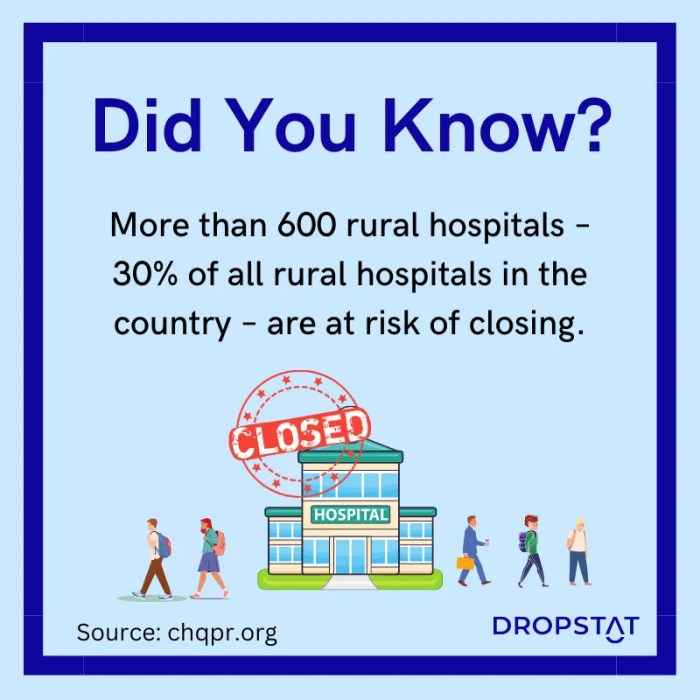
Rural hospitals often face a unique set of challenges, including limited resources and dwindling populations. Successfully navigating these difficulties necessitates strong community support and engagement. A vital component of revitalizing rural healthcare is fostering a sense of shared responsibility and active participation among residents, local leaders, and organizations. This collaborative approach can significantly impact the future of rural healthcare, ensuring access to essential services for all.Community engagement is paramount in addressing the rural hospital crisis.
Without active participation from the local community, hospitals may struggle to secure the resources and support necessary for long-term sustainability. The success of a rural hospital hinges on the collective effort of its surrounding community.
Importance of Community Engagement
Community engagement fosters a sense of ownership and responsibility for the health of the community. It encourages residents to become active participants in their healthcare decisions and outcomes. This active participation can lead to increased financial support for the hospital, improved patient outcomes, and enhanced community well-being. Furthermore, strong community engagement can attract new businesses and residents, contributing to economic growth in the region.
Role of Local Leaders and Organizations
Local leaders and organizations play a crucial role in supporting rural hospitals. They can advocate for funding and policy changes, mobilize community support, and facilitate partnerships between the hospital and other community stakeholders. These individuals and groups often have established networks and connections, enabling them to effectively leverage resources and build consensus around hospital needs. This includes actively engaging with local businesses, non-profit organizations, and government agencies to secure funding, volunteer support, and necessary resources.
Examples of Successful Community-Based Initiatives
Numerous community-based initiatives have demonstrated the effectiveness of collaborative efforts in improving rural healthcare. These include fundraising campaigns to purchase essential medical equipment, volunteer programs to support hospital operations, and community health education programs. Such initiatives not only enhance the hospital’s capacity but also improve the overall health literacy and well-being of the community. For instance, some communities have organized “health fairs” to provide free health screenings and education, fostering a proactive approach to preventative care.
The history of rural hospital closures is a disheartening one, filled with stories of communities losing vital healthcare access. But amidst the struggles and despair, there’s room for hope. Reading through the “hope instead of cynicism essay” hope instead of cynicism essay reminds us that even in the face of seemingly insurmountable challenges, proactive solutions and community-driven initiatives can foster positive change.
This is crucial in the ongoing fight to preserve vital rural healthcare services.
Strategies to Foster Partnerships
Several strategies can effectively foster partnerships between rural hospitals and surrounding communities. Open communication channels, transparent information sharing, and joint decision-making processes are crucial elements. Regular meetings and forums allow for constructive dialogue and the identification of shared goals. Establishing clear roles and responsibilities for each partner ensures a smooth and effective collaboration. Finally, acknowledging and valuing the contributions of each partner strengthens the partnership’s foundation.
Successful Examples of Community Partnerships
Community partnerships are essential for rural hospitals. These collaborations can range from joint fundraising campaigns to volunteer programs. Strong examples demonstrate the tangible benefits of these partnerships. For instance, one rural hospital collaborated with local businesses to establish a community garden that provided fresh produce for hospital meals, enhancing patient nutrition. Another partnership involved local farmers providing fresh produce for the hospital, reducing food costs and supporting local agriculture.
Table of Successful Community Partnerships
| Partnership Details | Participating Organizations | Outcomes |
|---|---|---|
| Community fundraising campaign for new medical equipment | Local businesses, community organizations, and individuals | Successful acquisition of needed medical equipment, increased community pride, and strengthened community bonds. |
| Volunteer program to assist with hospital operations | Local high school students, retired professionals, and community members | Reduced workload for hospital staff, improved patient care, and enhanced community volunteerism. |
| Establishment of a community health clinic in partnership with the hospital | Hospital staff, local physicians, and community health workers | Increased access to primary care services, improved community health outcomes, and cost savings for the community. |
Illustrative Case Studies
The rural hospital crisis isn’t a theoretical problem; it’s a stark reality impacting communities across the nation. Understanding the specific struggles and solutions of individual hospitals provides critical insight into the complexities of the situation and offers valuable lessons for the future. These case studies highlight the human cost of dwindling resources and illustrate the innovative approaches that some rural hospitals are taking to adapt and survive.Rural hospitals face unique challenges, often requiring innovative solutions to maintain their viability and serve their communities.
These challenges can include a limited patient base, attracting and retaining qualified staff, and the difficulty of maintaining up-to-date technology and specialized services. This section explores some illustrative case studies, demonstrating the multifaceted nature of the rural hospital crisis.
Case Study 1: The Ozark Valley Hospital, Rural hospital crisis history
The Ozark Valley Hospital, located in a sparsely populated region of Missouri, faced declining patient volume and an aging physician workforce. Limited access to specialists and advanced technology significantly impacted the hospital’s ability to provide comprehensive care. The hospital’s leadership recognized the need for a multifaceted approach to address these issues.
- Strategic Partnerships: The hospital formed collaborative agreements with neighboring hospitals and clinics to share resources, such as specialists and equipment. This approach helped to bolster the quality of care available while reducing the financial burden on the individual hospital.
- Community Engagement: Ozark Valley Hospital actively engaged with local community groups and health organizations to raise awareness about preventative care and health disparities in the area. They offered free health screenings and education programs, improving community health outcomes.
- Recruitment Initiatives: The hospital implemented targeted recruitment strategies for physicians and healthcare professionals. These initiatives included financial incentives, competitive benefits packages, and an emphasis on a supportive work environment. The hospital recognized the importance of attracting skilled personnel to sustain the hospital’s operations.
The long-term impact of these strategies has been a stabilization of the patient volume, an improved physician retention rate, and an increased community focus on preventive care, demonstrating a shift from crisis management to long-term community health improvement.
Case Study 2: The High Plains Regional Medical Center
The High Plains Regional Medical Center in a remote area of the Dakotas struggled with a significant aging population and a limited pool of qualified healthcare workers. This situation created a shortage of both specialists and general practitioners.
- Telemedicine Integration: The hospital implemented a comprehensive telemedicine program to address the scarcity of specialists. This allowed patients to connect with specialists remotely, improving access to timely consultations and procedures. The use of telemedicine addressed the gap in specialized services.
- Rural Healthcare Workforce Development: The hospital partnered with local colleges and universities to develop specialized training programs for healthcare professionals, such as nursing and physician assistants. This strategy focused on developing a sustainable healthcare workforce for the future.
- Community Outreach: The hospital organized health fairs and community education programs to promote preventive care and wellness, which increased awareness and engagement from the community. This strategy fostered a healthier community.
The sustained long-term impact included improved patient access to specialist care, a more robust local healthcare workforce, and a stronger emphasis on preventive care, leading to improved health outcomes for the region’s population.
Case Study Summary Table
| Hospital Location | Challenges | Solutions | Impact |
|---|---|---|---|
| Ozark Valley Hospital, Missouri | Declining patient volume, aging physician workforce, limited access to specialists and technology | Strategic partnerships, community engagement, recruitment initiatives | Stabilized patient volume, improved physician retention, increased community focus on preventative care |
| High Plains Regional Medical Center, Dakotas | Aging population, limited pool of qualified healthcare workers, shortage of specialists and general practitioners | Telemedicine integration, rural healthcare workforce development, community outreach | Improved patient access to specialist care, more robust local healthcare workforce, stronger emphasis on preventative care |
End of Discussion
In conclusion, the history of rural hospital crises reveals a multifaceted story of struggle and resilience. From historical infrastructure limitations to modern-day economic pressures and technological disparities, the narrative underscores the critical need for sustained support and innovative solutions. Understanding this complex history is essential for developing effective strategies to ensure the future viability and sustainability of these vital community healthcare providers.