Artemis II Crew Returns to Earth, Emphasizing Humanity’s Deep Space Journey and Unifying Perspective from Beyond the Moon

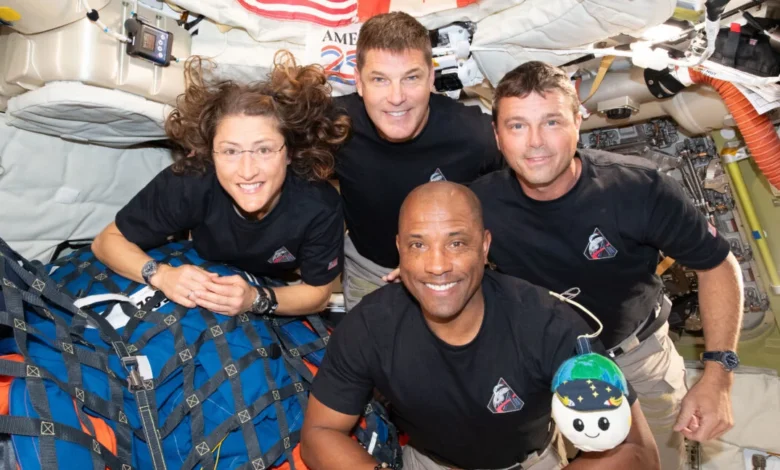
HOUSTON, TX – The four pioneering astronauts of NASA’s Artemis II mission have successfully returned to Earth, concluding a nine-day circumlunar journey that marked humanity’s deepest venture into space in over five decades. Commander Reid Wiseman, Pilot Victor Glover, and Mission Specialists Christina Koch and Jeremy Hansen splashed down safely in the Pacific Ocean off the coast of Southern California on Friday evening, returning to their home base in Houston less than 24 hours later to emotional reunions and a renewed sense of purpose. While the mission yielded crucial technical data for future lunar endeavors, the astronauts’ profound reflections on Earth’s fragility and the shared human experience emerged as the most resonant takeaways.
A Historic Return and Technical Triumphs
The Artemis II mission, launched on April 1, 2026, aboard NASA’s powerful Space Launch System (SLS) rocket, represented a critical step in the agency’s ambitious plan to return humans to the Moon and establish a sustainable lunar presence. The mission saw the Orion spacecraft carry its crew more than 252,000 miles into space, venturing over 4,000 miles beyond the far side of the Moon – a distance unprecedented for human spaceflight. This journey served as the ultimate test of Orion’s systems and the SLS rocket’s capability to transport astronauts safely to deep space and back.

Upon their return to Houston’s Hangar 135 on Saturday afternoon, the astronauts were visibly moved. Mission Commander Reid Wiseman, typically articulate, admitted, “I have absolutely no idea what to say. Twenty-four hours ago, the Earth was that big out the window and we were doing Mach 39, and here we are back… at home.” His sentiment encapsulated the awe and profound shift in perspective experienced by the crew.
From a technical standpoint, the mission was largely a resounding success. The SLS rocket, the most powerful rocket ever built, performed almost flawlessly during launch. The Orion spacecraft proved its mettle in the harsh environment of deep space, demonstrating its ability to sustain a crew, navigate to the Moon, and execute a high-speed re-entry. Engineers will, however, incorporate lessons learned from minor issues encountered during the flight. These included persistent hydrogen leaks on the launch pad, helium leaks within the Orion spacecraft’s propulsion system, and a toilet system that was not consistently available for use. These technical adjustments are considered routine in the iterative process of spacecraft development and will inform modifications for subsequent Artemis missions.
The Human Heart of Exploration: Astronauts’ Profound Reflections
Beyond the engineering marvels, the true essence of Artemis II, as highlighted by the crew themselves, lay in the human experience. NASA’s selection of Wiseman, Glover, Koch, and Hansen three years prior proved to be prescient. Their diverse backgrounds and profound insights have brought a new dimension to space exploration. Christina Koch, an experienced astronaut with a record for the longest single spaceflight by a woman, Victor Glover, the first African American to fly on a long-duration ISS mission, Reid Wiseman, a former Navy aviator and ISS commander, and Jeremy Hansen, the first Canadian to venture to lunar orbit, formed a cohesive and reflective team.
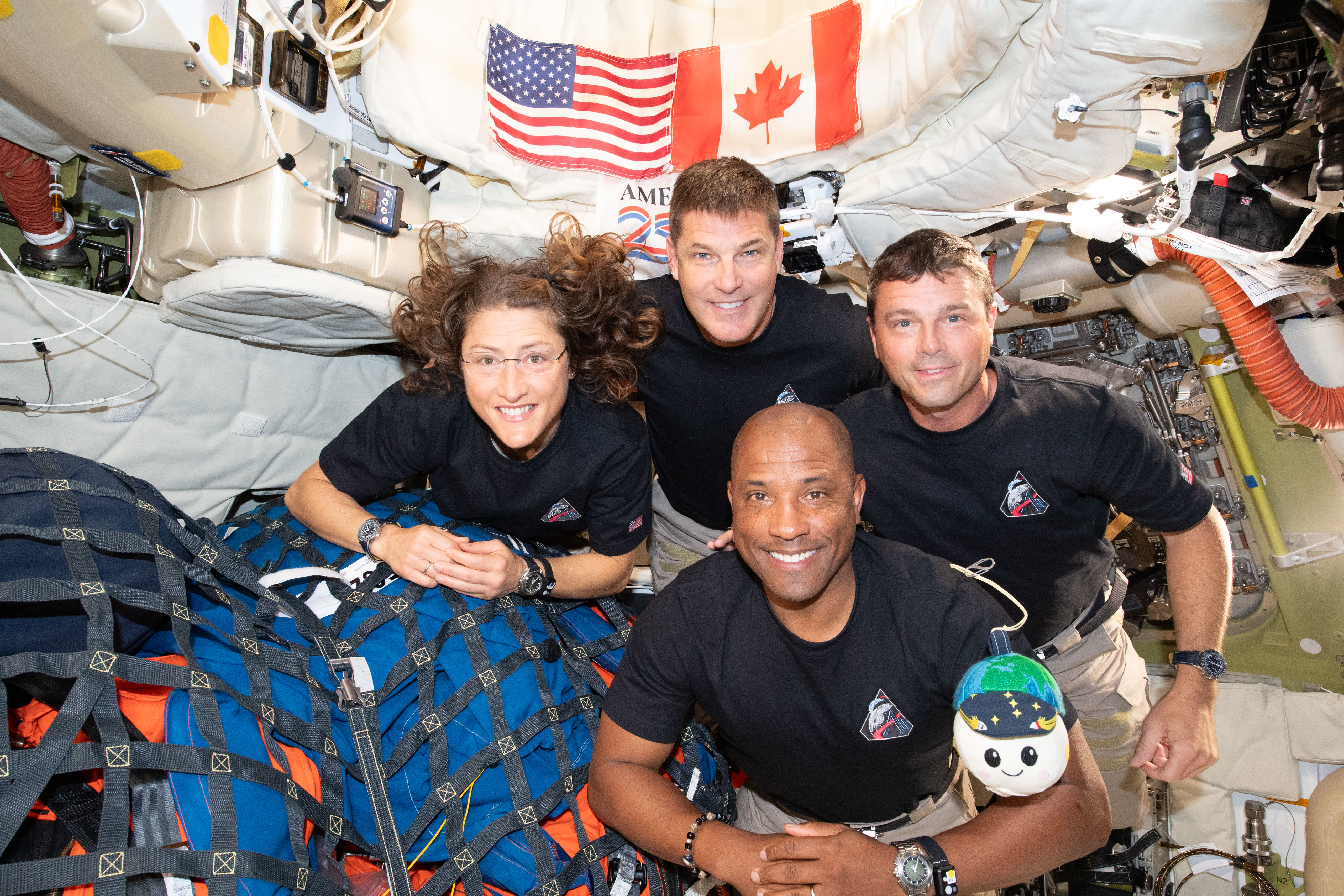
Their emotional homecoming ceremony, though less flashy than their initial announcement, resonated with a deeper significance. The astronauts’ pre-flight expectations had been transformed by the stark reality of seeing Earth from an unimaginable distance. “This was not easy,” Wiseman stated, conveying the immense challenge and emotional toll of being so far from home. “Being 200,000-plus miles away from home, before you launch, it feels like it’s the greatest dream on Earth, and when you’re out there, you just want to get back to your families and your friends. It’s a special thing to be human, and it’s a special thing to be on planet Earth.”
These personal accounts echo the "Overview Effect," a cognitive shift reported by astronauts who view Earth from space, often leading to a profound understanding of the planet as a single, interconnected system, without artificial borders. Pilot Victor Glover articulated this powerful perspective during a virtual interview from Orion on April 4: “One of the really important personal perspectives that I have up here is I can really see Earth as one thing. You guys are talking to us because we’re in a spaceship really far from Earth, but you’re on a spaceship called Earth that was created to give us a place to live in the Universe, in the cosmos.” He implored humanity to recognize its shared existence: “In all of this emptiness—this is a whole bunch of nothing, this thing we call the Universe—you have this oasis, this beautiful place that we get to exist together… we’ve got to get through this together.”
Christina Koch added to this sentiment upon her return: “When we saw tiny Earth, people asked our crew what impressions we had, and honestly, what struck me wasn’t necessarily just Earth. It was all the blackness around it. Earth was just this lifeboat hanging undisturbingly in the Universe… there is one new thing I know, and that is planet Earth, you are a crew.” These statements serve as a poignant reminder of global interdependence and unity, particularly relevant in a world often beset by conflict.
Chronology of a Landmark Mission
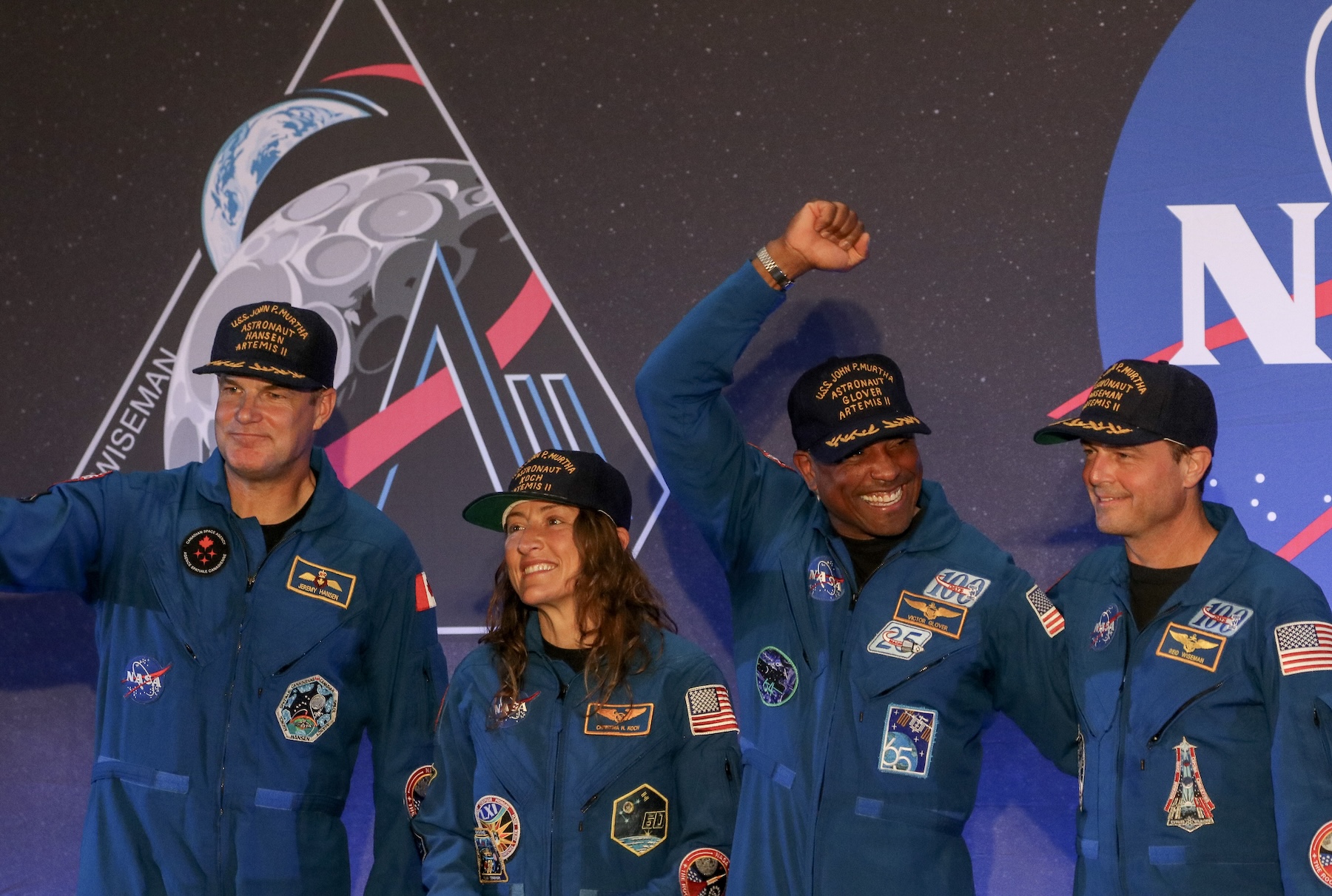
The journey began years before the actual launch, with the crew’s announcement in 2023 at Ellington Field, an event filled with high anticipation and ceremony.
- April 1, 2026: The Artemis II crew departed their quarters at Kennedy Space Center, bidding farewell to loved ones before boarding their transport to the launchpad. The SLS rocket, carrying the Orion spacecraft and its four-person crew, lifted off from Launch Complex 39B at Kennedy Space Center, marking the first crewed flight of the Artemis program.
- Days 1-3: Orion performed critical maneuvers to boost its orbit and departed Earth orbit, heading towards the Moon. The crew conducted in-space checkouts of Orion’s life support, communication, and navigation systems.
- Day 4: Orion performed a lunar flyby, swinging around the far side of the Moon, an area previously unseen by human eyes during the Apollo missions due to orbital mechanics. This maneuver propelled the spacecraft to its maximum distance from Earth.
- April 4, 2026 (Easter Eve): Astronaut Victor Glover provided his reflective interview from the Orion spacecraft, sharing his profound perspective on Earth as a singular entity.
- Days 5-8: The crew continued systems checks and prepared for the journey home, conducting trajectory correction burns. They shared stunning imagery and video of Earth and the Moon, offering a modern perspective on deep space travel.
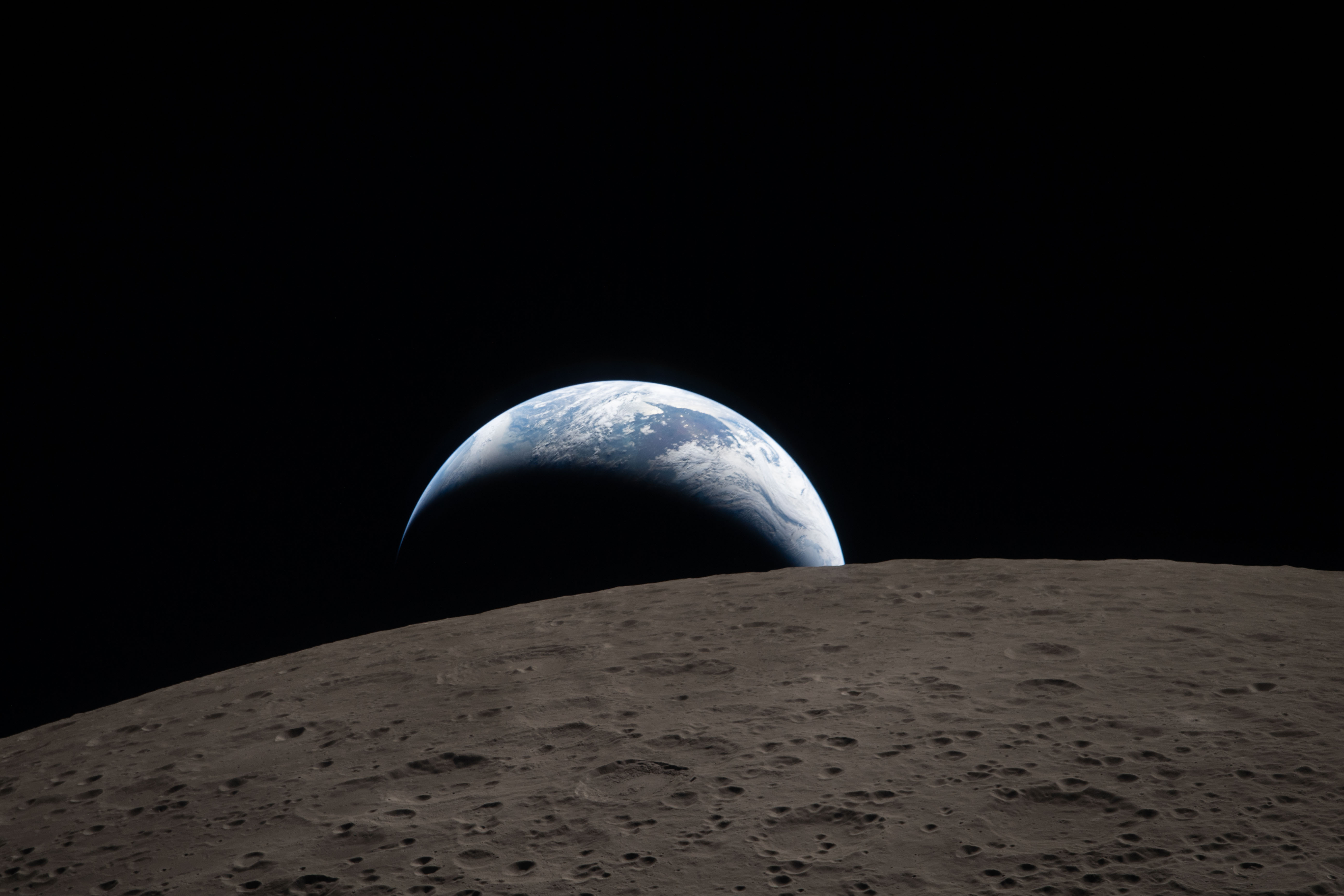
- April 6, 2026: A notable image of a crescent Earth setting behind the Moon’s horizon was captured, a visual testament to the mission’s unprecedented vantage point.
- April 9, 2026 (Friday evening): After nine days in space, the Orion spacecraft executed a precise re-entry, splashing down in the Pacific Ocean. The crew was recovered by a U.S. Navy vessel and spent the night undergoing initial medical checks.
- April 10, 2026 (Saturday afternoon): The astronauts flew via helicopter and NASA jet back to Houston, where they were reunited with their families and greeted by an appreciative public and NASA officials.
Artemis Program: A New Era of Lunar Exploration
The Artemis program represents NASA’s long-term vision for lunar exploration, building upon the legacy of Apollo while aiming for sustainable presence and preparing for future Mars missions. Artemis I, an uncrewed test flight, successfully orbited the Moon in late 2022, proving the SLS and Orion systems could withstand deep space conditions. Artemis II’s primary objective was to validate these systems with a human crew, ensuring their safety and operational readiness for the more complex Artemis III mission.
Artemis III, currently slated for a future launch, aims to land astronauts on the Moon’s South Pole, including the first woman and first person of color to walk on the lunar surface. This mission will utilize a human landing system (HLS) and lay the groundwork for a permanent lunar base and the Gateway lunar orbiting outpost, facilitating sustained scientific research and technological development.

The long gap between Apollo and Artemis underscored the challenges of deep space human exploration. While robotic missions like Voyager, Cassini, New Horizons, and Mars rovers have revolutionized our understanding of the solar system, revealing new landscapes and answering profound questions, Artemis II reasserted the irreplaceable value of human presence. The unique ability of astronauts to observe, interpret, and articulate their experiences—such as the "Overview Effect"—adds a dimension to exploration that robotic probes, for all their utility, cannot replicate.
NASA continues to balance its portfolio, recognizing the strengths of both human and robotic endeavors. While human missions inspire and offer unparalleled adaptability, robotic missions like the upcoming Dragonfly rotorcraft to Saturn’s moon Titan in 2028 push the boundaries of scientific discovery in environments too extreme or distant for human explorers.
Broader Implications and the Path Forward
The Artemis II mission’s success and the astronauts’ powerful messages carry significant implications. It underscores the technical prowess required for such ambitious undertakings and the meticulous planning that goes into ensuring human safety. The minor technical issues highlight that space exploration is an ongoing learning process, with each mission providing invaluable data for refinement.
Crucially, the mission reinforced the importance of international collaboration, with Canada playing a vital role through Jeremy Hansen. The Artemis Accords, a series of bilateral agreements guiding responsible space exploration, further solidify this global partnership.
Ultimately, the Artemis II mission was more than just a test flight; it was a testament to humanity’s enduring drive to explore and a powerful reminder of our shared home. As Jeremy Hansen eloquently stated, “You haven’t heard us talk a lot about the science, the things we’ve learned, and that’s because they’re there, and they’re incredible, but it’s the human experience that is extraordinary for us… When you look up here, you’re not looking at us. We are a mirror reflecting you, and if you like what you see, then just look a little deeper. This is you.”
The successful return of the Artemis II crew marks a pivotal moment, not just for NASA and its international partners, but for all of humanity. It reignites the collective imagination, inspiring future generations to look skyward and ponder our place in the cosmos, while simultaneously fostering a deeper appreciation for the precious "lifeboat" we call Earth. The lessons from Artemis II—both technical and philosophical—will guide us as we continue our journey back to the Moon and, eventually, to Mars.