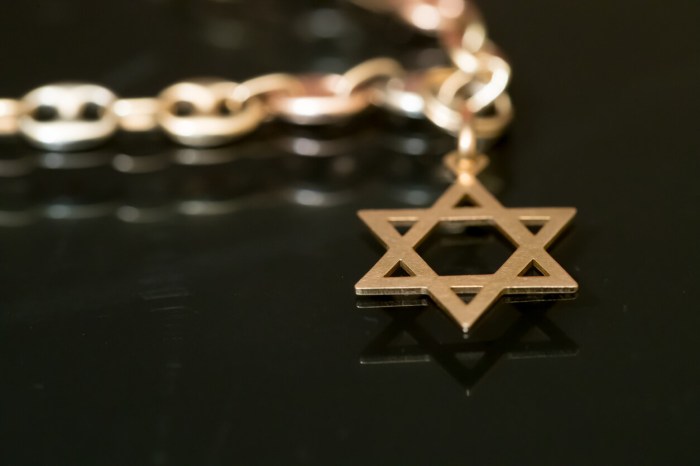
Jewish identity symbols antisemitism is a complex and deeply historical relationship. From the Star of David to modern interpretations of Jewish tradition, symbols hold profound meaning for Jewish people, but have often been distorted and used to fuel antisemitism throughout history. This exploration delves into the diverse array of Jewish symbols, examining their evolution and significance, and how they have been targeted and manipulated by antisemitic actors.
This discussion will trace the evolution of antisemitic attitudes and actions, highlighting the ways in which stereotypes and misrepresentations of Jewish symbols have been employed to incite hatred and violence. We’ll also look at how Jewish communities have responded to these pressures, and the enduring strength of Jewish identity in the face of hostility. Furthermore, the modern expressions of antisemitism, including online hate speech, will be analyzed.
Defining Jewish Identity Symbols
Jewish identity, deeply rooted in history and tradition, is expressed through a rich tapestry of symbols. These symbols, spanning religious, cultural, and national spheres, have evolved over centuries, reflecting the diverse experiences and beliefs of Jewish communities worldwide. Understanding these symbols provides valuable insight into the enduring spirit and resilience of Jewish people. From the iconic Star of David to the everyday rituals, each symbol carries layers of meaning, reflecting a shared heritage and a unique cultural identity.
Traditional and Contemporary Symbols
Jewish symbols, both ancient and modern, act as visual representations of core beliefs, historical experiences, and cultural values. These symbols communicate the continuity of Jewish tradition across generations, while also adapting to contemporary contexts. This evolution is a testament to the enduring strength of Jewish identity.
- Religious Symbols: These symbols are central to Jewish religious practice and belief. Examples include the mezuzah, a small scroll containing Jewish scripture, placed on doorposts, signifying the presence of God in one’s home. The tallit, a prayer shawl, is donned during prayer services, embodying the connection to the divine. The Torah, the foundational text of Judaism, serves as a central symbol of religious authority and is meticulously preserved and read in synagogues.
Jewish identity symbols, like the Star of David, are often targeted in antisemitic attacks. It’s a disturbing trend, unfortunately, and one that sadly connects to broader societal issues. The recent passing of Wink Martindale, a beloved game show host and a figure known for his work on the game show Gambit, reminds us of the diverse ways that people can be affected by prejudice and hate.
Sadly, this kind of hateful behavior is a persistent threat to the safety and well-being of individuals and communities, and it is critical to remember this context when looking at the symbols of Jewish identity. wink martindale death obituary game show host gambit elvis presley. We need to work towards a society where everyone feels safe and respected, regardless of their background or beliefs.
It’s a complex issue, but one worth continually addressing.
The menorah, a candelabra with multiple branches, symbolizes the enduring light of faith and is prominently featured during Hanukkah.
- Cultural Symbols: These symbols represent the rich cultural heritage and traditions of Jewish communities. The kippah, a head covering worn by Jewish men, is a common cultural symbol signifying respect for God and Jewish tradition. Jewish cuisine, with its unique dietary laws and regional variations, is a powerful cultural symbol reflecting diverse traditions. Jewish music and art, often inspired by religious themes and historical events, are expressions of the enduring cultural spirit.
The diversity of Jewish cultural symbols across the globe is a powerful testament to the adaptability and resilience of the Jewish people.
- National Symbols: While Jewish identity is primarily religious and cultural, national symbols, such as the State of Israel and its flag, have emerged in modern times. The State of Israel’s flag, with its blue and white stripes and Star of David, is a powerful national symbol, representing the aspiration for a Jewish homeland. The Israeli national anthem, Hatikvah, expresses the yearning for a Jewish state and a shared national identity.
Historical Evolution of Symbols
The meaning and significance of Jewish symbols have evolved over time, reflecting changing historical circumstances and cultural contexts. The symbols themselves have also been adapted to accommodate new experiences and expressions.
- The Star of David, while frequently associated with Jewish identity, did not become a widespread symbol until the modern era. Its adoption as a symbol of Jewish identity is a relatively recent phenomenon. In earlier periods, other symbols, like the menorah and the mezuzah, were more prevalent in expressing Jewish identity.
- The development of specific Jewish rituals and practices in different geographic locations has resulted in unique interpretations of existing symbols and the emergence of new ones. This reflects the rich diversity of Jewish experiences across different communities and historical periods.
Diverse Interpretations of Symbols
The meanings and interpretations of Jewish symbols are not always uniform across different Jewish communities and individuals. The significance of a symbol can vary depending on its context, historical period, and the individual’s personal beliefs and experiences. For example, the Star of David, while widely recognized as a symbol of Jewish identity, can hold different meanings for different individuals.
Symbol Table
| Symbol | Category | Historical Context | Modern Significance |
|---|---|---|---|
| Star of David | National/Cultural | Initially not a widespread symbol, adopted more prominently in modern times, often associated with the Zionist movement and the establishment of Israel. | Represents Jewish identity, particularly for those associated with the State of Israel, or for those seeking a sense of shared identity and heritage. |
| Mezuzah | Religious | Ancient practice, signifying God’s presence in the home. | Continues to be a significant symbol of Jewish faith and tradition, reminding individuals of their religious obligations and connection to God. |
| Kippah | Cultural | Worn by Jewish men, signifying respect for God and Jewish tradition. | Continues to be a common cultural practice, representing Jewish identity and religious observance. |
| Torah | Religious | Foundational text of Judaism, central to religious practice and belief. | Essential to Jewish religious life, representing the core teachings and principles of Judaism. |
Manifestations of Antisemitism

Antisemitism, the hatred and prejudice directed at Jewish people, has manifested in various insidious forms throughout history. From religious persecution to political ideologies, it has always sought to dehumanize and demonize Jewish individuals and communities. Understanding these manifestations is crucial to recognizing and combating this enduring form of bigotry.Antisemitism has evolved over centuries, adapting its tactics and justifications to fit prevailing social and political climates.
While religious prejudice played a significant role in earlier eras, the 20th century saw the rise of more sophisticated and insidious forms, often intertwined with nationalist and political agendas. This evolution reveals a pattern of consistent hostility towards Jewish people, fueled by false narratives and distorted interpretations of history.
Religious Persecution
Early forms of antisemitism often stemmed from religious differences and anxieties. Accusations of deicide, ritual murder, and economic conspiracies were frequently used to justify persecution and violence against Jews. These accusations, often based on misinformation and fear-mongering, fueled pogroms and forced conversions throughout Europe and beyond. The medieval period saw the emergence of numerous antisemitic texts and tracts that perpetuated these harmful stereotypes.
One notable example is the blood libel, a false accusation that Jews murdered Christians for ritual purposes, which has led to horrific violence and discrimination against Jews for centuries.
Political Ideologies
The 20th century witnessed the rise of antisemitism as a central component of various political ideologies, most notably Nazism. The Nazi regime systematically dehumanized Jewish people, using propaganda and rhetoric to create a climate of fear and hatred. The Nazi propaganda machine employed a variety of methods, including inflammatory speeches, posters, and films, to demonize Jewish people and portray them as a threat to the nation.
This resulted in the Holocaust, the systematic genocide of six million Jews. Other political ideologies, including fascism and communism, have also utilized antisemitic rhetoric at different points in history.
Examples of Antisemitic Rhetoric and Propaganda
Antisemitic propaganda frequently relies on scapegoating and conspiratorial theories. These narratives portray Jews as controlling global finance, orchestrating world events, or being inherently disloyal to the nation. Such rhetoric aims to create a sense of fear and distrust, thereby justifying discriminatory policies and actions. A classic example is the Protocols of the Elders of Zion, a fraudulent text purporting to reveal a Jewish plot to dominate the world, which has been circulated and used to justify antisemitism for decades.
Key Historical Events and Figures
The Dreyfus Affair, the Holocaust, and the ongoing conflict in the Middle East are just a few examples of significant events in which antisemitism played a pivotal role. Figures like Adolf Hitler, responsible for the Holocaust, epitomize the dangerous culmination of antisemitic ideologies. The historical context surrounding these events reveals a recurring pattern of prejudice and discrimination that continues to impact the world today.
Table of Manifestations of Antisemitism
| Type of Antisemitism | Historical Period | Examples | Impact |
|---|---|---|---|
| Religious Persecution | Medieval Europe | Blood libel accusations, forced conversions, expulsions | Widespread persecution, displacement, and violence against Jewish communities |
| Political Ideologies | 20th Century | Nazi propaganda, fascist rhetoric, communist scapegoating | Genocide (Holocaust), widespread discrimination, and ongoing conflict |
| Economic Conspiracy Theories | Throughout History | Accusations of Jewish control of finance, conspiracy to manipulate markets | Justification for economic discrimination, social unrest, and violence |
| Cultural Stereotypes | Present Day | Negative portrayals in media, harmful caricatures in cartoons and literature | Perpetuation of negative images and harmful stereotypes that can impact social interactions and public perception |
Relationship Between Symbols and Antisemitism
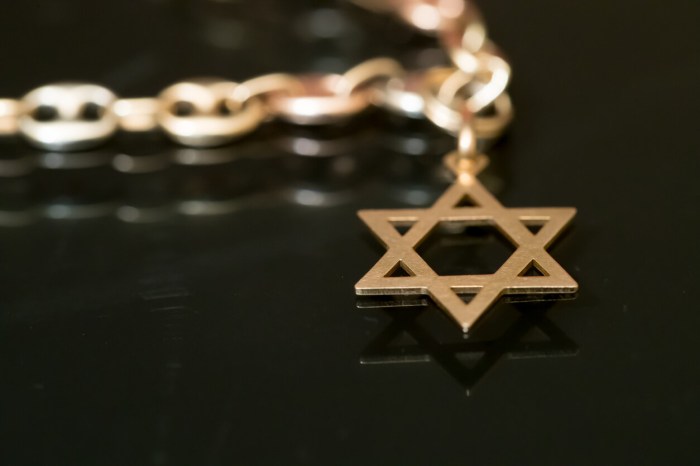
Jewish symbols, deeply rooted in tradition and faith, have unfortunately become targets of antisemitic manipulation. These symbols, often representing centuries of history and cultural identity, have been distorted and used to fuel hatred and prejudice against Jewish people. This manipulation has a devastating impact on Jewish communities, creating an environment of fear and hostility.The use of Jewish symbols in antisemitic discourse is not simply an abstract concept.
It has tangible consequences, manifesting in acts of violence and discrimination. Understanding this relationship is crucial for recognizing and combating antisemitism.
Targeted Symbols and Manipulation
Antisemitic actors frequently target specific Jewish symbols, exploiting their cultural significance to create a distorted narrative. This manipulation often involves the misrepresentation of symbols, associating them with negative stereotypes. The Star of David, for example, a symbol of Jewish faith and identity, has been distorted into a symbol of supposed Jewish power or conspiracy. This manipulation is often used to justify acts of violence and discrimination.
Stereotypes and Misrepresentations in Antisemitic Discourse
Antisemitic discourse frequently employs stereotypes and misrepresentations of Jewish symbols. The image of the “greedy Jew” or the “Jewish conspiracy” are often intertwined with specific symbols, creating a powerful association between the symbol and the negative stereotype. This association is then used to justify discrimination and prejudice. For example, the portrayal of Jewish ritual objects, such as the Torah or the menorah, in a way that suggests sinister or exploitative motives is a common tactic in antisemitic propaganda.
Incitement of Hatred and Violence
Antisemitic actors have historically used Jewish symbols to incite hatred and violence. By associating Jewish symbols with negative stereotypes, antisemitic groups create a climate of fear and hostility, which can escalate into physical attacks. The deliberate desecration of synagogues, the destruction of Jewish cemeteries, and the targeting of Jewish individuals are often preceded by antisemitic rhetoric that uses symbols to demonize Jewish people.
Comparative Analysis of Symbol Interpretations
Different Jewish symbols have been interpreted and reacted to in varying ways by antisemitic groups. The Star of David, a symbol of faith and unity, has been particularly targeted. It is frequently used in antisemitic imagery to represent a perceived threat or conspiracy. Other symbols, such as the kippah (skullcap), have also been distorted to create a negative association.
The response to these symbols demonstrates the consistent pattern of antisemitism, focusing on the distortion of meaning and the creation of a hostile environment for Jewish people.
Impact on Jewish Communities, Jewish identity symbols antisemitism
The targeting of Jewish symbols by antisemitic actors has a profound impact on Jewish communities. The constant threat of violence and discrimination created by these distorted interpretations creates an atmosphere of fear and insecurity. This can lead to social isolation, economic hardship, and psychological trauma. The constant reminder of antisemitic interpretations of Jewish symbols can make Jewish individuals feel unsafe in their own communities and identities.
Table: Jewish Symbols, Antisemitic Interpretations, and Impact
| Jewish Symbol | Antisemitic Interpretation | Impact on Jewish Communities |
|---|---|---|
| Star of David | Symbol of Jewish power, conspiracy, or global control | Increased fear, anxiety, and social isolation within Jewish communities. |
| Kippah (Skullcap) | Symbol of oppression, subservience, or cultural insensitivity | Can lead to discrimination and harassment in public spaces. |
| Mezuzah | Symbol of a hidden agenda, or a sign of an insidious plot | Leads to vandalism and damage to Jewish homes and property. |
| Torah Scroll | Symbol of Jewish greed, exploitation, or deceit | Can fuel anti-Jewish sentiment and create a hostile environment for religious practice. |
Modern Expressions of Antisemitism: Jewish Identity Symbols Antisemitism
Modern antisemitism manifests in diverse and insidious ways, often leveraging the anonymity and reach of the internet and social media. This evolution from traditional forms necessitates a keen understanding of contemporary tactics and their impact on Jewish communities worldwide. While historical expressions of antisemitism still resonate, contemporary manifestations utilize new technologies and narratives, making them often harder to detect and counter.
Contemporary Manifestations of Antisemitism
Contemporary antisemitism is characterized by a disturbingly broad range of expressions, encompassing online hate speech, acts of violence, and the insidious spread of conspiracy theories. The accessibility and pervasiveness of social media platforms have created fertile ground for the propagation of antisemitic content, often amplified by algorithms that prioritize engagement over factual accuracy. This environment allows for the rapid dissemination of hateful messages, reaching a vast audience and normalizing harmful stereotypes.
Online Hate Speech and Its Impact
Online platforms have become breeding grounds for antisemitic hate speech, often employing coded language, memes, and fabricated narratives to target Jewish individuals and communities. The anonymity afforded by the internet allows perpetrators to spew hateful rhetoric without fear of immediate repercussions, fostering a sense of impunity. This environment fuels a climate of fear and intimidation, leading to increased feelings of vulnerability among Jewish individuals and communities.
Acts of Violence and Their Impact
Acts of violence, motivated by antisemitic beliefs, continue to plague Jewish communities worldwide. These acts can range from vandalism and property damage to physical assaults and even murder. The perpetrators often exploit pre-existing tensions or grievances, sometimes leveraging religious or political ideologies. These acts have a profound impact, shattering a sense of security and safety, fostering feelings of isolation and anxiety within Jewish communities.
The potential for escalating violence underscores the importance of addressing the root causes and responding to such incidents decisively.
Social Media’s Role in Spreading Antisemitic Content
Social media platforms, while offering numerous benefits, have also become potent tools for spreading antisemitic content. Algorithms designed to maximize engagement often inadvertently prioritize controversial or inflammatory content, leading to the amplification of antisemitic narratives. This creates a feedback loop, further normalizing harmful stereotypes and fostering a climate of hostility. The anonymity afforded by these platforms enables individuals to spread hateful messages without accountability.
Examples of Modern Antisemitic Incidents
Numerous examples illustrate the contemporary manifestations of antisemitism. For instance, coordinated campaigns of online harassment targeting Jewish individuals, often employing hateful imagery and derogatory language, have become increasingly common. Furthermore, acts of vandalism against Jewish community centers and synagogues, often accompanied by antisemitic graffiti, demonstrate the persistence of violence.
Impact on Jewish Communities, Jewish identity symbols antisemitism
The cumulative effect of these incidents is profound. Jewish individuals and communities experience increased anxiety, fear, and a sense of vulnerability. The constant barrage of online hate speech and acts of violence can lead to a breakdown in social cohesion and a chilling effect on public discourse. The impact on mental health and well-being is substantial, necessitating community support and resources to address these challenges.
Table of Modern Antisemitic Expressions
| Form of Antisemitism | Platform | Examples | Impact |
|---|---|---|---|
| Online Hate Speech | Social Media (Twitter, Facebook, etc.) | Coordinated campaigns of harassment, use of hateful memes, coded language | Increased fear, anxiety, vulnerability, breakdown of social cohesion |
| Acts of Violence | Public Spaces, Community Centers | Vandalism, property damage, physical assaults, murders | Loss of security, isolation, trauma, impact on mental health |
| Conspiracy Theories | Online Forums, Social Media | Fabricated narratives, spreading false information | Distrust, erosion of trust in institutions, misinformation |
The Impact of Antisemitism on Jewish Identity
Antisemitism, a persistent and insidious form of prejudice, has profoundly shaped Jewish identity and practices across centuries. From forced conversions and expulsions to systematic persecution and genocide, the historical experience of Jews has been marked by a constant struggle against hatred and discrimination. This struggle, however, has also fostered a unique resilience and a powerful sense of community among Jews, ultimately influencing the very fabric of their cultural and religious heritage.The history of antisemitism isn’t simply a catalog of violence and oppression; it’s a complex interplay of historical events, social structures, and cultural interpretations that have molded Jewish identity.
Jewish identity symbols, like the Star of David, are often targets of antisemitism, sadly. This hateful targeting can manifest in various ways, impacting individuals and communities. Understanding the benefits of pulmonary rehab for respiratory health, especially for those with asthma, is crucial for overall well-being, just as recognizing and combating antisemitism is essential for a healthy society. pulmonary rehab benefits respiratory health asthma Ultimately, both issues underscore the importance of respect and tolerance in our world.
The constant threat of persecution has often served as a catalyst for strengthening Jewish traditions and creating a shared sense of belonging, a critical factor in maintaining a distinct Jewish identity in the face of external pressures. Jewish communities have developed intricate coping mechanisms, spiritual practices, and cultural expressions as a result of this ongoing struggle.
Historical Shaping of Jewish Identity
Jewish identity, forged in the crucible of persecution, has evolved over centuries. Early forms of antisemitism, often rooted in religious or economic anxieties, led to the development of distinct Jewish communities with their own social structures and cultural norms. The rise of Christian dominance in Europe, coupled with evolving societal anxieties, fostered further antisemitism, culminating in pogroms, expulsions, and the Holocaust.
These events, horrific in their scale and impact, deeply affected Jewish identity, leading to a profound emphasis on survival and communal solidarity. This history has created a profound sensitivity and awareness among Jews regarding their vulnerability and the importance of community.
Strategies for Coping with Antisemitism
Jewish communities have employed a wide array of strategies to navigate and resist antisemitism. These strategies have spanned generations and encompassed diverse approaches, from maintaining distinct cultural practices to establishing self-governing communities. Maintaining religious observance, preserving cultural traditions, and developing robust educational systems became vital tools in preserving a unique identity in the face of constant pressure. These responses often involved creating and maintaining close-knit communities, fostering a sense of belonging, and providing support for those who faced hardship.
This fostered a strong sense of shared experience and resilience, acting as a cornerstone of Jewish identity.
Reinforcement of Jewish Identity
Antisemitism, far from eroding Jewish identity, has often served as a powerful catalyst for its reinforcement. The constant threat of persecution, the need for communal support, and the preservation of cultural traditions have become central to Jewish identity. The shared experience of hardship, particularly during periods of intense persecution, has strengthened the bonds of Jewish communities and created a deep sense of collective memory.
This resilience, fostered by the necessity to survive and maintain identity, has become a cornerstone of Jewish culture and identity. Jewish institutions, organizations, and communities, established and rebuilt throughout history, played a critical role in fostering a collective identity.
Jewish Resilience in Maintaining Identity
Jewish resilience, the ability to adapt, endure, and thrive in the face of overwhelming adversity, is deeply intertwined with Jewish identity. Generations of Jews have demonstrated remarkable resilience, maintaining their cultural and religious traditions in the face of persecution, discrimination, and exile. The enduring strength of Jewish identity lies in its capacity to adapt and persevere in the face of constant challenges.
This resilience is evident in the continued practice of Judaism throughout the world, despite the historical hardships endured. From the rebuilding of Jewish communities after the Holocaust to the thriving of Jewish life in contemporary society, the resilience of the Jewish people has been a powerful force in maintaining their identity.
Jewish identity symbols, like the Star of David, are unfortunately often targets of antisemitism. This prejudice, unfortunately, isn’t isolated. The suppression of Pro-Palestine protests in some democratic countries, as seen in pro palestine protests suppressed democratic countries , raises questions about the balance between free speech and societal anxieties surrounding these sensitive issues. This all unfortunately connects back to the larger issue of how easily prejudice and fear can lead to the targeting of symbols of identity.
Table: Historical Periods, Antisemitic Pressure, and Jewish Responses
| Historical Period | Antisemitic Pressure | Jewish Responses |
|---|---|---|
| Medieval Europe | Religious persecution, economic restrictions, forced conversions | Development of distinct Jewish communities, preservation of religious practices, creation of self-governing institutions |
| Modern Europe | Rise of nationalism and anti-Semitic movements, pogroms, discrimination | Strengthening of communal bonds, establishment of Zionist movement, increased efforts in cultural preservation |
| 20th Century | The Holocaust, widespread discrimination | Rebuilding communities after the Holocaust, emphasis on education and community support, increased vigilance against antisemitism |
Symbols in Contemporary Jewish Life
Jewish symbols, deeply rooted in tradition, continue to hold significant meaning in the lives of contemporary Jews. From religious observances to cultural celebrations and community building, these symbols serve as powerful expressions of identity and connection to a shared heritage. Modern interpretations and adaptations of these symbols reflect the diverse experiences and perspectives of Jews worldwide. This exploration delves into the multifaceted ways in which Jewish symbols are utilized in contemporary life, highlighting their enduring relevance.Contemporary Jews utilize symbols in a multitude of ways, demonstrating their enduring power in maintaining Jewish identity.
These expressions range from the familiar to the innovative, showcasing the adaptability and relevance of these symbols in the modern world.
Religious Observance
Jewish religious observance remains a central context for the use of symbols. Ritual objects like the mezuzah, a small scroll affixed to doorposts, and the tallit, a prayer shawl, are tangible reminders of Jewish faith and practice. The use of the Torah, the foundational text of Judaism, during services and study underscores its importance in religious life. The intricate design of synagogues and their furnishings, with symbols like the Star of David and menorahs, further contribute to the ritualistic and aesthetic experience.
Cultural Celebrations
Jewish holidays and festivals are replete with symbolic acts and objects. Hanukkah’s menorah, the Seder plate’s symbolic foods during Passover, and the colourful decorations during Sukkot all serve to reinforce the cultural significance of these occasions. These symbols evoke memories, transmit traditions, and strengthen community bonds.
Community Building
Jewish symbols play a crucial role in fostering community. The Star of David, a prominent symbol, can be found in synagogues, Jewish centers, and personal attire, serving as a visual marker of Jewish identity. Participation in Jewish events and celebrations, marked by shared symbols, creates a sense of belonging and connection among individuals. Jewish organizations and communal activities further utilize symbols to strengthen group cohesion and emphasize shared heritage.
Contemporary Interpretations and Adaptations
Modern interpretations of traditional symbols are common. Contemporary artists often incorporate Jewish symbols into their work, reinterpreting their meaning and significance. For example, contemporary artists have used the Star of David to represent resilience and solidarity, creating artwork that speaks to the challenges and triumphs of Jewish communities.
Examples in Art, Literature, and Music
Jewish symbols are prominent in contemporary Jewish art, literature, and music. A poignant example in literature is the recurring motif of the exodus in modern novels and poetry. In music, composers incorporate themes of Jewish history and culture, sometimes using specific symbols as inspiration. Contemporary Jewish artists use symbols to reflect their individual perspectives and experiences.
Symbol Usage Table
| Symbol | Modern Context | Use | Impact on Jewish Identity |
|---|---|---|---|
| Star of David | Clothing, jewelry, artwork | Identification, connection, solidarity | Reinforces Jewish identity, fosters a sense of belonging |
| Menorah | Hanukkah celebrations, homes, public spaces | Commemoration, celebration, display of faith | Connects individuals to tradition, highlights Jewish history |
| Mezuzah | Doorposts of homes | Reminder of Jewish faith, protection | Connects individuals to their faith, establishes a spiritual presence |
| Torah | Synagogues, study groups | Religious text, study, observance | Foundation of Jewish practice, spiritual guidance |
Strategies to Combat Antisemitism
Combating antisemitism requires a multifaceted approach, acknowledging its complex nature and persistent manifestations. Addressing this pervasive prejudice necessitates a combination of educational initiatives, advocacy efforts, and community-building initiatives. Effective strategies must also recognize the critical role of interfaith dialogue and media literacy in fostering understanding and countering harmful narratives.Strategies for combating antisemitism must be proactive, responsive, and sustainable.
This requires a commitment to continuous learning, adaptation, and collaboration amongst individuals, groups, and institutions. It also requires recognizing that the fight against antisemitism is not just the responsibility of Jewish communities, but of all those committed to a just and equitable society.
Education Initiatives
Education plays a pivotal role in combating antisemitism by fostering critical thinking and challenging stereotypes. Effective educational programs should expose individuals to diverse perspectives, historical context, and the complexities of Jewish identity. This includes providing accurate information about Jewish history, culture, and beliefs, countering misinformation and harmful stereotypes. By promoting understanding and empathy, educational initiatives contribute to a more tolerant and inclusive society.
Advocacy Efforts
Advocacy efforts are crucial in holding perpetrators of antisemitism accountable and advocating for policies that protect Jewish communities. This involves working with policymakers, law enforcement, and other stakeholders to ensure that antisemitic incidents are taken seriously and that appropriate measures are in place to prevent and address them. Advocacy efforts also encompass raising public awareness about antisemitism and promoting legislation that protects religious freedom and human rights.
Community Building
Strengthening Jewish communities fosters resilience and provides support networks for individuals facing antisemitism. This includes organizing social events, cultural programs, and support groups that allow individuals to connect with others who share similar experiences and values. Strong communities can provide a sense of belonging and empowerment, enabling individuals to resist prejudice and discrimination.
Interfaith Dialogue
Interfaith dialogue fosters mutual understanding and respect among different religious communities. By engaging in open and respectful conversations, individuals from various faiths can learn from each other’s perspectives and work together to combat prejudice and discrimination. This can involve joint projects, educational programs, and shared experiences that promote empathy and understanding. For example, joint celebrations of holidays or educational workshops can create opportunities for interfaith dialogue.
Media Literacy
Media literacy is essential in combating online antisemitism. Educating individuals on how to critically evaluate information online and identify harmful content is crucial. This involves recognizing misinformation, propaganda, and hate speech, and developing critical thinking skills to discern credible sources from those disseminating disinformation. By empowering individuals with the tools to navigate the online landscape responsibly, we can mitigate the spread of antisemitism and promote online safety.
Resources for Combating Antisemitism
- The Anti-Defamation League (ADL): A leading organization dedicated to combating antisemitism and all forms of hate. They provide educational resources, advocacy programs, and support for victims of antisemitism.
- The Jewish Virtual Library: A comprehensive online resource providing information on Jewish history, culture, and religion. It serves as a valuable tool for countering misinformation and promoting accurate knowledge about Judaism.
- The Simon Wiesenthal Center: Dedicated to Holocaust remembrance and fighting antisemitism. They provide resources and educational programs on the dangers of antisemitism and the importance of Holocaust remembrance.
- Local Jewish Community Centers and Synagogues: These communities often offer educational programs, support groups, and resources tailored to local needs.
Conclusion
In conclusion, the relationship between Jewish identity symbols and antisemitism is a multifaceted and enduring one. Understanding this history, from ancient times to the present, is crucial for combating antisemitism and promoting a more just and inclusive world. The resilience of Jewish communities and their continued use of symbols to express and maintain identity is a testament to their enduring spirit.