Prehistoric Hand Axes Crafted to Incorporate Fossils and Geodes Reveal Ancient Human Symbolism

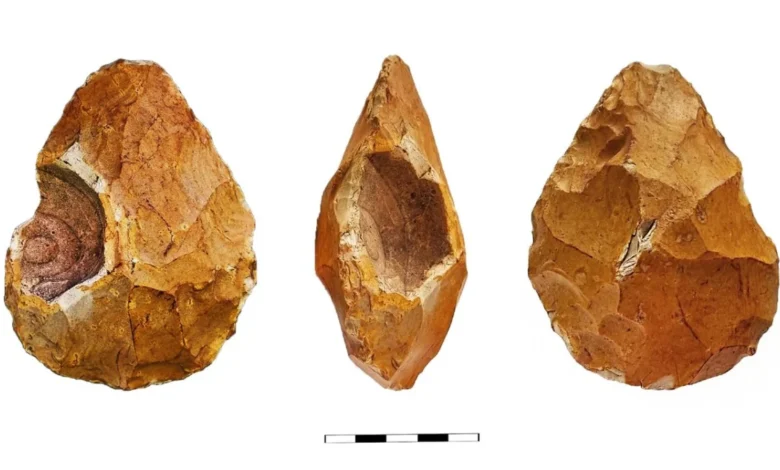
Archaeologists in Israel have unearthed a collection of ten exceptionally rare prehistoric stone hand axes, meticulously crafted to deliberately incorporate geological features such as fossils and geodes. This remarkable discovery, detailed in a new study, suggests a profound level of symbolic thought and a unique relationship with the natural world among early humans. The hand axes are estimated to have been created by Homo erectus between 500,000 and 200,000 years ago. Researchers propose that these early hominins may have imbued these objects with potency and cosmic significance, a notion that is sparking debate within the archaeological community regarding the extent of abstract thinking in our ancient ancestors.
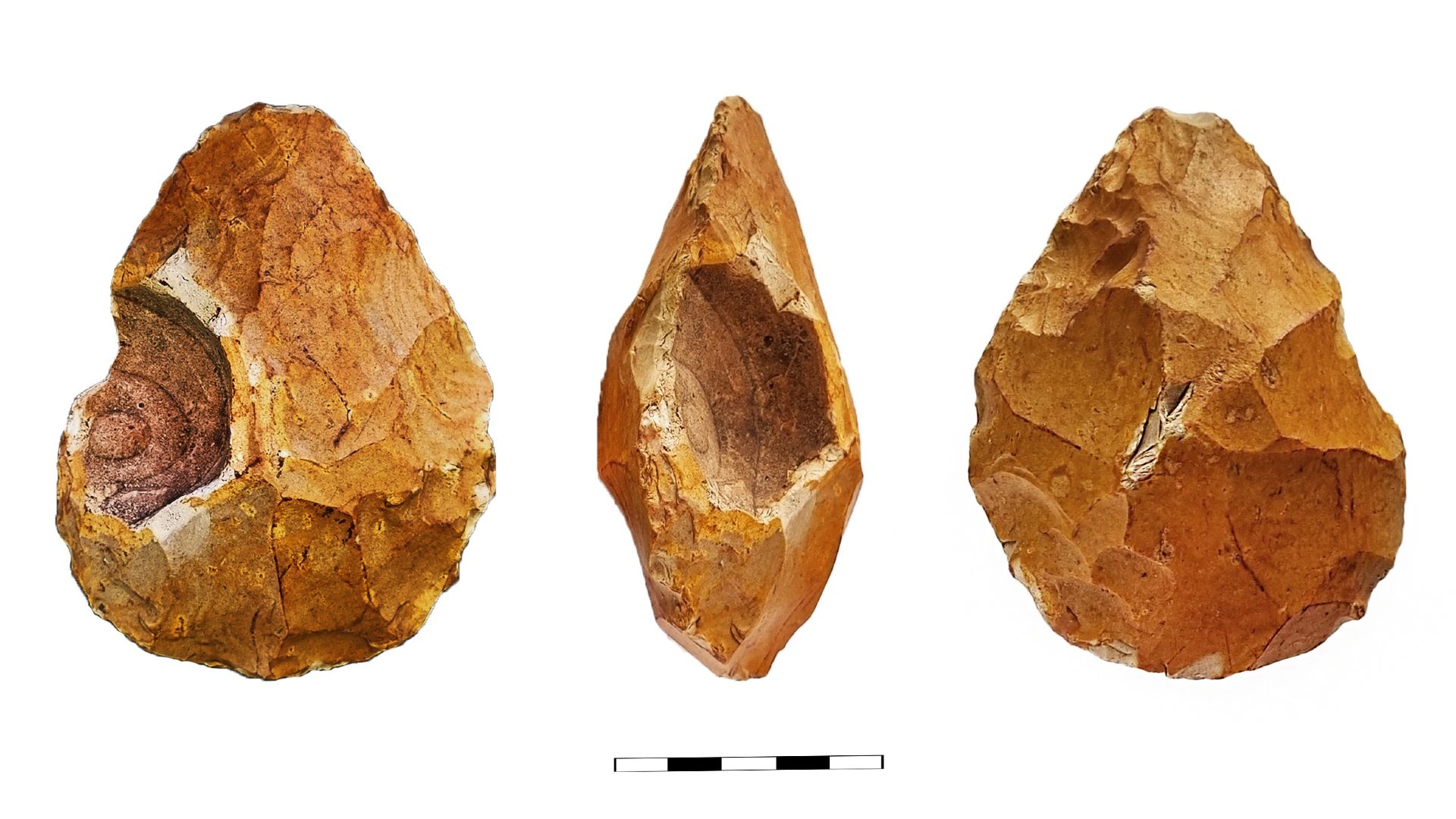
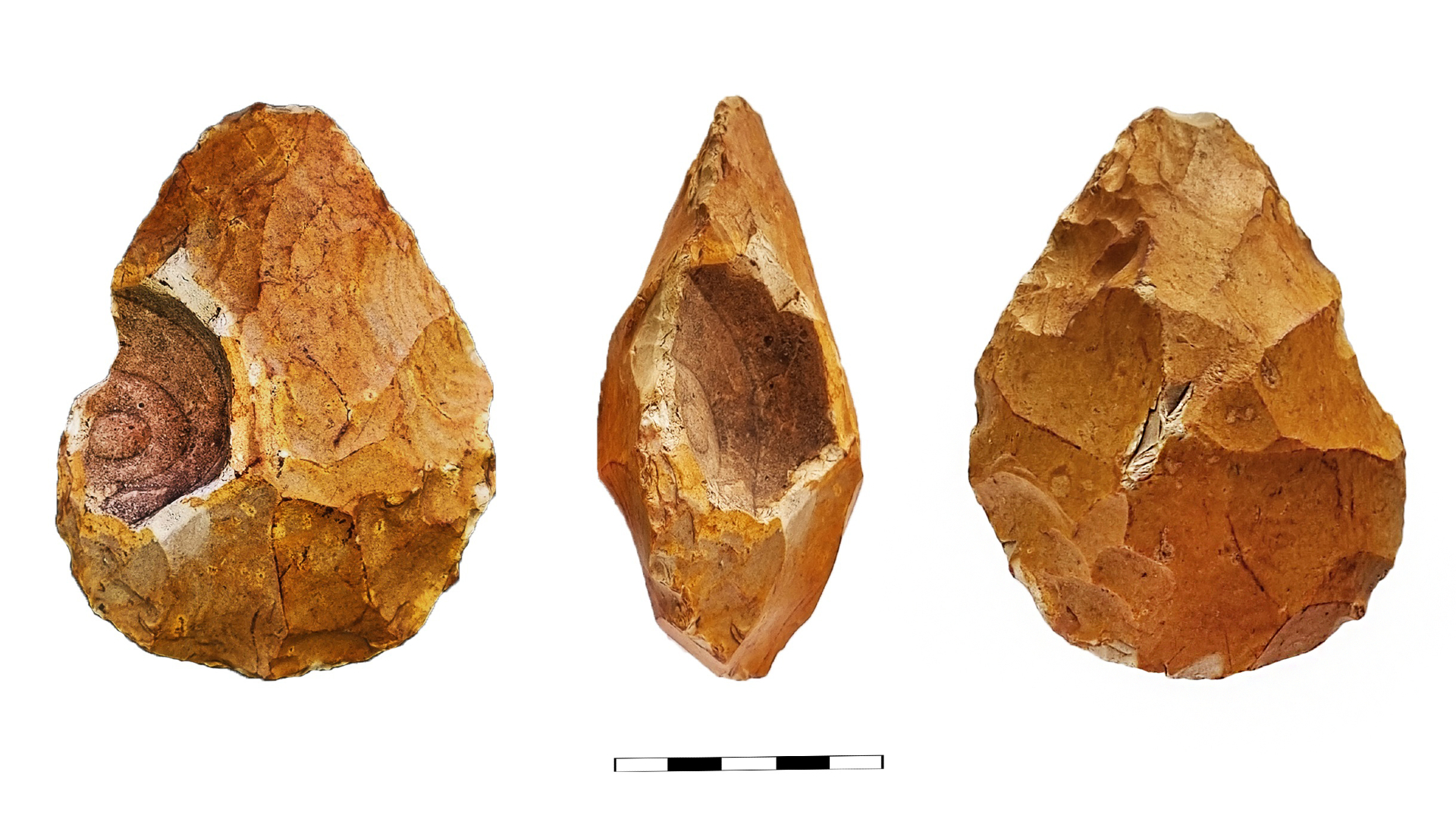
The extraordinary finds were made in the Sakhnin Valley, a region in northern Israel known for its rich prehistoric record. The initial discovery was made by local resident and study co-author Muataz Shalata, who stumbled upon several seemingly ordinary hand axes during explorations between 2024 and 2025. Recognizing the potential significance of his finds, Shalata alerted Professor Ran Barkai, a leading archaeologist at Tel-Aviv University. This notification initiated a more comprehensive survey of the Sakhnin Valley in 2025, which ultimately yielded over 200 hand axes. Among this substantial collection, ten axes stood out due to their unusual integration of natural geological elements. These included the fossilized remains of ancient organisms, sparkling geodes, and unique stone concretions that formed intriguing patterns, such as ripple-like features or hollows resembling miniature caves.
Professor Barkai, the lead author of the study, emphasized the rarity of such artifacts. "These tools are unique because until now such items were singularly found, only one extraordinary piece here and there," he stated in an email to Live Science. This scarcity highlights the exceptional nature of the Sakhnin Valley discovery, where multiple tools exhibiting this deliberate incorporation of geological features were found in close proximity.
A Deliberate Craftsmanship Challenging Previous Assumptions
The presence of fossils and geodes within these hand axes has reignited a long-standing debate among archaeologists: did early humans consciously recognize and incorporate such geological features into their tools, or was their inclusion merely a matter of accidental procurement? The sheer number of these distinct artifacts discovered at the Sakhnin Valley site strongly suggests a deliberate and intentional act on the part of the toolmakers.
The researchers argue that incorporating these natural elements presented significant challenges to the stone workers and users. The presence of fossils or the brittle nature of geodes would have made the shaping process more difficult and potentially compromised the tool’s structural integrity. "Incorporating these fossil-carrying rocks into tools created ‘true obstacles towards the stone worker and user’," Barkai explained. The fact that Homo erectus persevered through these difficulties to create these tools strongly indicates a purpose beyond mere utilitarian function. This deliberate effort to integrate naturally occurring, potentially symbolic, elements into tools designed for practical use suggests a sophisticated level of cognitive ability and a nascent understanding of abstract concepts.
Imbued with Potency and Cosmological Significance: The Symbolic Interpretation
The prevailing theory put forth by the researchers is that early humans were not simply selecting aesthetically pleasing rocks, but were drawn to these unusual geological features for reasons that transcended the practical. They propose that these ancient hominins may have believed these incorporated elements held metaphysical importance, imbuing the tools with a special potency or connecting them to the cosmos. This interpretation aligns with observed human behavior across cultures and throughout history, where unusual or striking natural objects are often attributed with special powers or symbolic meaning. This curiosity about extraordinary objects, the researchers suggest, may be an ancient trait, potentially observable even in other primate species.
The study authors cautiously propose that early humans may have perceived these fossils as "traces of a primordial time and place," and consequently, ascribed a special significance or "potency" to them. This perspective suggests that the act of crafting a hand axe was not merely about producing a functional implement, but also about engaging with deeper cosmological beliefs.
The hand axes themselves were primarily used for butchering large animals, including elephants and their extinct relatives. These megafauna played a crucial role in the survival of early human populations, providing essential resources for sustenance and fueling the development of larger brains. The study further elaborates on this connection by noting that replicas of stone hand axes were sometimes fashioned from broken elephant bones. This practice reinforces the hypothesis of a profound and multifaceted relationship between early humans, elephants, and the creation of hand axes.
The "Holy Triad": Elephants, Stone, and Water
Historical evidence, including previous studies, indicates that early human tool production sites were often strategically located along elephant migration routes and in close proximity to water sources. This observation has led researchers to conceptualize a "holy triad of elephants, stone, and water," underscoring the deep interdependence between these elements in the lives of early humans.
The researchers speculate that the decline of elephant populations in the Levant region during this period may have precipitated significant societal stress for early human communities. In such times of pressure, the symbolic potency attributed to objects like these hand axes may have become even more critical, serving as a source of comfort, connection, or perceived assistance from the cosmos.
Further supporting the notion of symbolic value beyond utility, the study points to the meticulous shaping of a stone ball from a geode. This process would have been time-consuming and served no apparent practical purpose. The dedication of significant effort to such a non-utilitarian task strongly suggests that Homo erectus perceived inherent value in these natural features, a value that extended beyond their material properties.
"Early humans were more and more desperate for the potency of the cosmos to come to their assistance," Professor Barkai remarked. He articulated a compelling vision of early humans not merely as manipulators of natural resources, but as beings engaged in a profound ritualistic practice. "I believe that humans were not just manipulating ‘natural resources’ by using stone tools, but were doing this while paying respect to these entities… thus the stone tools were always conceived as mediators between humans and the cosmos."
A Need for Further Evidence and Future Research
While the findings from the Sakhnin Valley are undeniably significant and offer compelling new insights into the cognitive capabilities of early humans, some experts advocate for a cautious approach to the interpretation of symbolic behavior. Dr. Sarah Wurz, a professor of archaeology at the University of the Witwatersrand in South Africa, who was not involved in the study, acknowledged the importance of the discovery. "These extraordinary hand axe finds are noteworthy and provide new evidence of the perceptive abilities of past humans," she stated. However, she also emphasized the need for "further inferential scaffolding [evidence] to strengthen the interpretation of symbolic behavior."
Professor Barkai and his team are committed to pursuing this line of inquiry. Future excavations at the Sakhnin Valley site are planned, with the goal of uncovering artifacts from pristine archaeological contexts. This approach will allow for more rigorous analyses and potentially provide the additional evidence required to solidify the symbolic interpretations of these remarkable tools. "The artifacts that have been retrieved by now are from the surface only," Barkai noted. "We plan to conduct excavations at the site in the future, and will surely run these kinds of analyses on items recovered from pristine archaeological context, as we did in the past with very good results."
The ongoing research at the Sakhnin Valley promises to shed further light on the complex minds of our ancient ancestors, challenging our understanding of early human cognition and their relationship with the natural and perhaps spiritual worlds. The deliberate incorporation of fossils and geodes into hand axes suggests a rich inner life and a capacity for abstract thought that may have been far more developed than previously assumed for Homo erectus.