Geopolitical Tensions and Trade Uncertainties Cast Shadow on the Growing Market for Spanish Automotive Classics

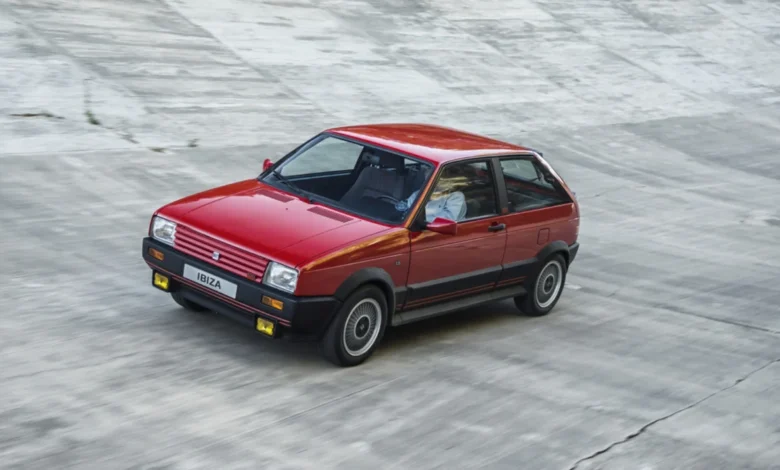
The intersection of automotive history and modern international diplomacy has reached a complex juncture as enthusiasts of European classic cars face potential hurdles in the importation of historic Spanish vehicles. Central to this burgeoning interest is the SEAT Ibiza Mark 1, a vehicle that represents a pivotal moment in European industrial design and engineering. While the first-generation Ibiza has long been a staple of European roads, its status as a desirable collector’s item in the United States is currently being weighed against a backdrop of deteriorating trade relations between Washington and Madrid. The friction stems from divergent foreign policy objectives in the Middle East and Spain’s accelerating economic partnership with China, creating a volatile environment for the international trade of secondary goods, including vintage automobiles.
The Genesis of a Spanish Icon: The SEAT Ibiza Mark 1
To understand the cultural and mechanical significance of the SEAT Ibiza, one must look back to the early 1980s, a period when the Spanish automaker was seeking to establish its independence after a long-standing partnership with Fiat. The Ibiza, launched in 1984, was the first vehicle developed by SEAT as an independent company, though it leveraged an extraordinary "dream team" of European collaborators. The car’s exterior was penned by Giorgetto Giugiaro’s Italdesign. In a twist of automotive irony, the sharp, folded-paper aesthetic of the Ibiza was originally proposed to Volkswagen as the successor to the Golf Mark 1. When Volkswagen opted for a more conservative, in-house evolution for the Golf Mark 2, SEAT seized the opportunity to adopt Giugiaro’s vision.
The engineering of the Ibiza was equally distinguished. SEAT commissioned Karmann for the development of the interior and body structure, while the powertrain was the result of a lucrative contract with Porsche. The "System Porsche" engines—ranging from 1.2 to 1.7 liters—featured the German firm’s expertise in combustion chamber design and cylinder head efficiency. The flagship SXi model, equipped with a 1.5-liter fuel-injected engine producing approximately 100 horsepower, became the quintessential Spanish hot hatchback. It offered a blend of Italian style, German engineering, and Spanish affordability that resonated across the continent, leading to the production of over 1.3 million units between 1984 and 1993.
Geopolitical Friction and the Threat of Trade Embargoes
The prospect of importing these vehicles into the United States has recently been complicated by a sharp shift in diplomatic rhetoric. The current U.S. administration has expressed significant dissatisfaction with Spain’s foreign policy stance, particularly regarding military cooperation and the conflict in the Middle East. Tensions have escalated over the use of Spanish military bases, such as Rota and Morón, for U.S. operations. Reports suggest that the U.S. executive branch has considered drastic measures, including the possibility of trade restrictions, in response to what it perceives as a lack of alignment from a NATO ally.
The rhetoric reached a peak last month when President Donald Trump suggested that the United States might seek to decouple its economy from Spain, stating that the nation offered little in the way of essential commodities. While the legal framework of the European Union (EU) generally prohibits the singling out of a member state for a full trade embargo by a non-member nation—as the EU acts as a single customs union—the threat of targeted tariffs or administrative barriers remains a concern for importers. Such measures could theoretically target specific sectors, including the movement of "non-essential" luxury goods and classic vehicles, effectively ending the dream for many American collectors of Spanish machinery.
The China Pivot: Prime Minister Sánchez’s Diplomatic Strategy
While relations with Washington have cooled, Spanish Prime Minister Pedro Sánchez has actively sought to diversify Spain’s economic dependencies. In a recent high-profile visit to Beijing, Sánchez engaged in extensive discussions with President Xi Jinping. The meeting focused on strengthening trade ties and seeking Chinese mediation in global conflicts, specifically the ongoing crises in Lebanon, Gaza, and Iran.
This "pivot to the East" is seen by analysts as a strategic hedge against American isolationism. By positioning Spain as a primary European partner for Chinese investment—particularly in the electric vehicle (EV) sector and green energy—Madrid is asserting its autonomy within the Western bloc. However, this rapprochement with Beijing has further agitated U.S. policymakers, who view Spain’s cooperation with China as a security risk and an affront to the coordinated Western economic strategy. For the automotive enthusiast, this means the SEAT Ibiza is no longer just a car; it has become a minor pawn in a larger struggle for global influence.
Technical Specifications and Market Positioning
The SEAT Ibiza Mark 1 occupied a unique "Supermini" niche that defied traditional categorization. While larger than the Ford Fiesta or the Opel Corsa of its era, it was more compact than the Volkswagen Golf or the Ford Escort. This "in-between" sizing provided a level of interior airiness and spaciousness that was rare for its price point.
Key Specifications of the 1988 SEAT Ibiza SXi:
- Engine: 1.5-liter "System Porsche" Inline-4, Bosch LE2-Jetronic Fuel Injection.
- Power Output: 100 hp at 5,900 rpm.
- Transmission: 5-speed manual.
- Weight: Approximately 925 kg (2,039 lbs).
- Top Speed: 184 km/h (114 mph).
- Design: Three-door hatchback with distinctive black plastic cladding and SXi-specific red pinstriping.
Despite the prestigious "System Porsche" branding, the Ibiza was not without its flaws. Period reviews and modern retrospective tests by outlets such as Autocar have noted that the steering rack was notably slow, requiring significant physical effort for tight maneuvers. The gear throw was often described as long and imprecise. However, for the modern collector, these idiosyncrasies contribute to the vehicle’s "pleasant gait"—a term used to describe its relaxed, mechanical feedback that stands in stark contrast to the digitized, heavy feel of contemporary vehicles.
The Logistics of Importation and the 25-Year Rule
In the United States, the importation of non-conforming foreign vehicles is governed by the "25-Year Rule," which allows cars that were never officially sold in the U.S. market to be imported once they reach a quarter-century in age. The SEAT Ibiza Mark 1 has long surpassed this threshold, making it legally eligible for entry under National Highway Traffic Safety Administration (NHTSA) and Environmental Protection Agency (EPA) exemptions.
However, the logistics of sourcing an Ibiza from Spain are becoming increasingly fraught. Beyond the potential for trade barriers, the survival rate of these vehicles in their home country has dwindled. While they were ubiquitous on Spanish streets as recently as twenty years ago, many succumbed to the "Plan PIVE"—a government-funded scrappage scheme designed to remove older, polluting cars from the road in favor of modern, efficient models. Consequently, the remaining "System Porsche" Ibizas are often located in the hands of dedicated collectors in other European nations, such as France or Germany, where trade relations with the U.S. remain on more stable, if still complex, footing.
Analysis of Economic and Cultural Implications
The potential loss of trade with Spain would have implications far beyond the niche classic car market. Spain is a major exporter of agricultural products, pharmaceuticals, and automotive components to the United States. Conversely, the U.S. is a primary provider of liquefied natural gas (LNG) and defense technology to Spain. A total breakdown in trade would disrupt supply chains and increase costs for consumers in both nations.
From a cultural perspective, the SEAT Ibiza represents a specific era of European optimism. It was a car designed to modernize a nation that was still finding its footing in the post-Franco era. The exclusion of such vehicles from the American enthusiast landscape due to modern political disagreements would represent a loss of shared industrial heritage.
The current situation highlights a growing trend where the "Youngtimer" car market—comprising vehicles from the 1980s and 1990s—is increasingly susceptible to the whims of global trade policy. As enthusiasts move away from mainstream classics like the Volkswagen GTI or the BMW E30 in search of more esoteric experiences like the Ibiza SXi, they find themselves navigating a minefield of international relations and shifting alliances.
Conclusion
The SEAT Ibiza SXi remains a testament to a unique era of cross-border collaboration, blending Italian flair with German mechanical rigor and Spanish industrial ambition. While the vehicle itself is a relic of the 1980s, its future in the international market is being dictated by the headlines of the 2020s. As the United States and Spain navigate a period of significant diplomatic tension, the fate of trade between the two nations remains uncertain. For those seeking to preserve the "pleasant gait and wonderful airiness" of the original Ibiza, the window of opportunity may be narrowing, forced by a geopolitical climate that prioritizes strategic alignment over the free exchange of cultural and automotive history. Whether the Ibiza will eventually find a home on American soil or remain a forbidden fruit of the Iberian Peninsula depends largely on the resolution of conflicts far removed from the world of internal combustion.