Trump Administration Weighs Future of Major Cosmetology Accreditor in High-Stakes Test of Federal Oversight


The Trump administration is currently confronting a high-stakes decision regarding the future of the National Accrediting Commission of Career Arts and Sciences (NACCAS), an organization responsible for overseeing approximately 1,300 beauty, cosmetology, and career arts schools across the United States. These institutions collectively serve more than 120,000 students who rely heavily on federal funding to complete their professional training. This pending determination represents a significant test of how the administration intends to apply its broader initiative to overhaul higher education accreditation. While much of the administration’s early focus on accreditation reform has centered on rooting out diversity, equity, and inclusion (DEI) mandates and political bias at traditional universities, the NACCAS review forces federal regulators to navigate complex questions regarding institutional compliance, student debt loads, and vocational education standards.
President Donald Trump famously promised during his 2024 presidential campaign to aggressively target what he described as radical left accreditors, calling accreditation his "secret weapon" against higher education institutions that he argued had lost their way politically. Following his return to office, the administration launched broader efforts to scrutinize federal student aid distribution, crack down on fraud such as "ghost students," and evaluate the trillion-dollar federal education bureaucracy. However, the regulatory battle facing NACCAS is rooted in different statutory obligations. Rather than centering on ideological clashes or DEI requirements, the current proceedings involve technical compliance with Department of Education (DoE) regulations, operational oversight, and financial metric standards set by the federal government for career-focused schools.

Understanding the Mechanics of Federal Accreditation Recognition
To comprehend the gravity of the ongoing review, it is necessary to understand the vital role that accrediting agencies play in the American educational ecosystem. Under federal law, the U.S. Department of Education does not directly accredit schools. Instead, it relies on independent, recognized accrediting bodies to serve as gatekeepers. These agencies evaluate schools to ensure they meet established standards of educational quality, financial stability, and administrative capability. Recognition by a DoE-approved accreditor is legally required for institutions to participate in Title IV federal student financial aid programs, including Pell Grants and federal student loans. Without this recognition, schools lose their ability to process federal financial aid, effectively shutting down operations for the vast majority of working-class and lower-income students who depend on these funds to pay for tuition, books, and living expenses.
The federal recognition process is cyclical and rigorous. Accrediting agencies are reviewed every five years to determine whether they continue to meet the strict criteria established by the secretary of education. This review operates through a structured, three-step evaluation framework:

- Initial Staff Review: Career civil servants and professional staff within the Department of Education conduct a comprehensive audit of the accreditor’s practices and issue an initial recommendation.
- Advisory Committee Evaluation: The National Advisory Committee on Institutional Quality and Integrity (NACIQI), an independent and bipartisan panel of experts appointed by federal leaders, holds public hearings and votes on its own independent recommendation.
- Final Determination: A senior Department of Education official reviews the findings, the staff recommendation, and the NACIQI advice before making a binding, final judgment.
Chronology of the NACCAS Review and Competing Recommendations
The current regulatory clash over NACCAS began its formal ascent through the federal pipeline following routine audits and evaluations conducted by Department of Education career staff. During this review phase, department officials identified several administrative and operational deficiencies within NACCAS. However, rather than calling for the agency’s immediate termination, DoE staff recommended a measured approach: allowing NACCAS to retain its federal recognition under strict probationary conditions. Under this proposal, the accreditor would be prohibited from taking on any new institutions until it proved full compliance, would be mandated to complete corrective actions within a strict 12-month window, and would be subjected to heightened monitoring and frequent reporting requirements.
The trajectory of the review shifted dramatically during the July public meetings of the National Advisory Committee on Institutional Quality and Integrity (NACIQI). Eschewing the more lenient approach proposed by department staff, the independent advisory panel took a hardline stance against the beauty school accreditor. Driven by concerns regarding student debt outcomes, institutional compliance failures, and post-graduation earning power, former Obama administration Department of Education official Zakiya Smith Ellis introduced a motion to recommend the total denial of renewed recognition for NACCAS. The motion was seconded by committee member Michael Poliakoff and ultimately passed by a 9-3 vote.

The vote laid bare ideological and philosophical divisions within the advisory body. Notable dissenting votes included Robert Eitel, a seasoned education attorney who previously served in senior policy roles within the Department of Education during Donald Trump’s first term. Eitel and two other members argued that outright termination of the accreditor was disproportionate and counterproductive, advocating instead for the corrective action plan proposed by career civil servants to prevent catastrophic disruption across the vocational education sector. Despite the committee’s vote, the final decision rests solely with the leadership of the Department of Education, which has thus far declined to comment on the ongoing deliberations or provide a specific timeline for a final ruling.
Human Realities and Student Perspectives
While Washington policy analysts and federal regulators debate the finer points of administrative law and institutional compliance, the uncertainty has generated profound anxiety among students and recent graduates who view cosmetology and beauty training as a vital economic ladder. For many individuals entering the field, particularly working mothers and non-traditional students, career arts education offers a unique combination of professional skill-building and scheduling flexibility that traditional four-year universities simply cannot match.
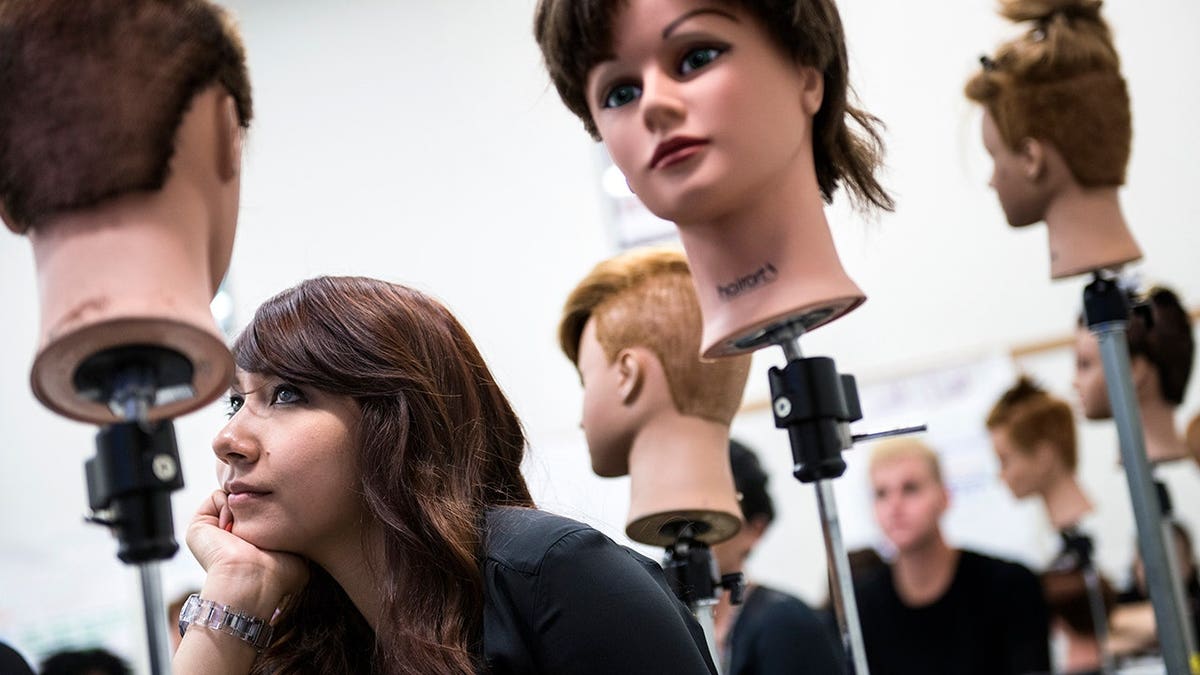
Aliyah Fernandez, a recent graduate of the Hollywood Institute of Beauty and a mother working as a salon assistant, emphasized that federal financial aid was the sole reason she was able to pursue her education. "I could not have afforded beauty school without federal financial aid," Fernandez noted in interviews. Explaining her motivation for entering the industry, she highlighted the desire to build a sustainable career while remaining an active presence in her daughter’s formative years. "I knew that if I worked full-time 9 to 5, I wouldn’t barely have any time to see her grow up," Fernandez said. "I really just wanted to be there for her, to financially support her and be present in her life at the same time."
Similarly, Blythe Fields, an expectant mother currently balancing salon work with rigorous night classes in cosmetology, described the immense financial sacrifices required to enter the field. Having previously depleted her savings to pay out of pocket for esthetician school—an experience she described as leaving her financially strained—Fields relied on federal aid to sustain her current training. Operating on demanding 12-hour schedules that combine daytime work and nighttime instruction, Fields stressed that the flexibility inherent in the beauty industry is essential for working parents. "The first year is so important, and I need to be able to have that flexibility to raise a child," she said.
Recognizing the existential threat that a denial of federal recognition would pose to their schools and future peers, Fernandez, Fields, and other students joined in organizing grassroots petitions urging the Department of Education to reject the NACIQI’s termination recommendation. Instead, the petition echoes the staff-recommended approach: granting NACCAS a structured, monitored improvement period to rectify its administrative deficiencies while maintaining institutional continuity. While acknowledging that the federal government has legitimate oversight concerns regarding accrediting bodies, these students argue that dismantling the accreditation framework entirely would unfairly punish thousands of aspiring professionals. When asked what message she would convey directly to President Trump ahead of the final decision, Fields offered a grounded perspective: "I would ask him who cuts and colors his hair and how did they get there?"
Broader Implications for Vocational Education and Accreditation Reform
The unfolding NACCAS case highlights a fascinating intersection between the Trump administration’s aggressive reform agenda and the practical realities of the American vocational training sector. On one hand, the administration has consistently signaled a desire to hold educational institutions and accrediting bodies to higher standards of accountability, demanding transparency regarding student outcomes, financial integrity, and debt repayment rates. On the other hand, vocational schools—including cosmetology, barbering, culinary arts, and technical trade academies—cater largely to non-traditional student populations seeking rapid entry into the workforce.
Observers note an interesting contrast between the current NACCAS proceeding and the broader ideological battles outlined in executive orders targeting higher education. While the administration’s high-profile directives have primarily focused on rooting out ideological bias and unlawful discrimination under the banner of DEI, the NACCAS review is fundamentally grounded in regulatory compliance, administrative oversight, and financial metrics. This technical focus has placed bipartisan figures and former administration officials on different sides of the debate, as seen in the split vote within NACIQI.
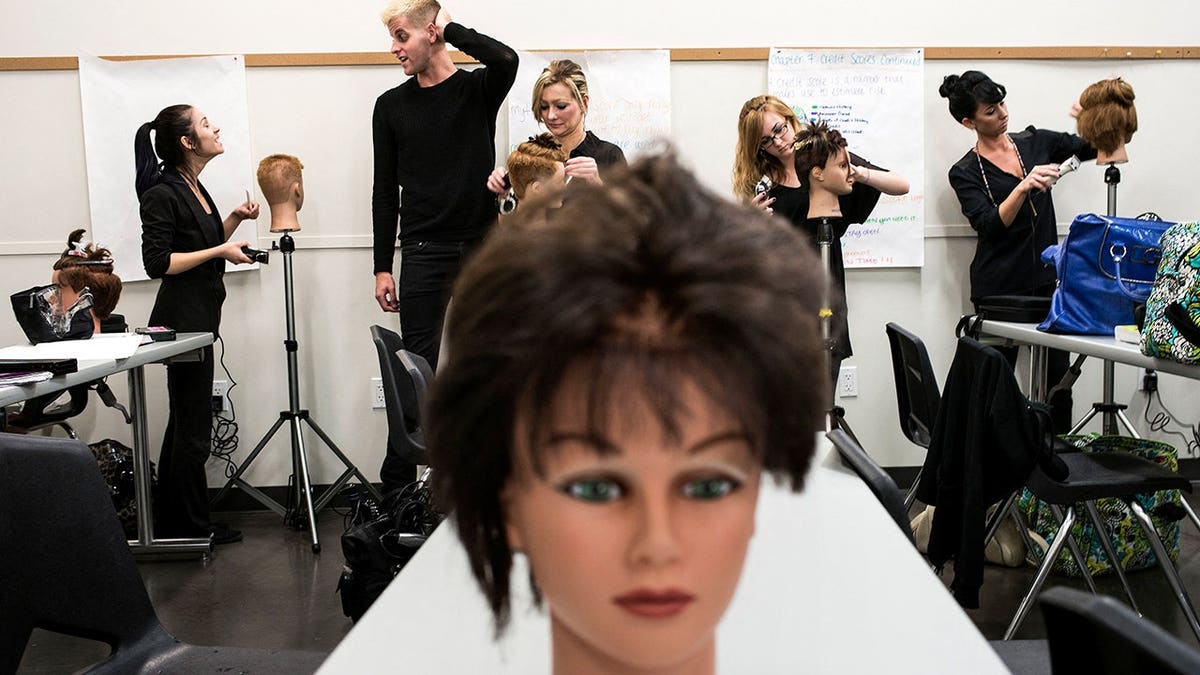
Furthermore, students and advocates have pointed to a persistent cultural bias that often downplays the economic significance of beauty and cosmetology compared to traditionally male-dominated skilled trades such as welding, plumbing, or electrical work. Fields noted that public perception frequently dismisses beauty schools as simplistic, failing to recognize them as rigorous professional training grounds that require substantial dedication, state board licensure, and continuous skill refinement.
As the Department of Education prepares to issue its final determination, the stakes remain exceptionally high. A decision to uphold the advisory committee’s recommendation of denial would trigger widespread disruption, forcing roughly 1,300 schools to scramble for alternative accreditors or risk losing access to federal student aid, thereby displacing tens of thousands of students. Conversely, adopting a monitored compliance plan would signal a pragmatic approach that balances federal oversight with the preservation of access to vocational education. Ultimately, the administration’s choice will serve as a definitive indicator of how its broader campaign to reshape American education will impact the foundational institutions serving the nation’s trade and career arts students.