Joe Concha Predicts Vice President JD Vance Will Focus on Iran Economic Crisis During White House Briefing

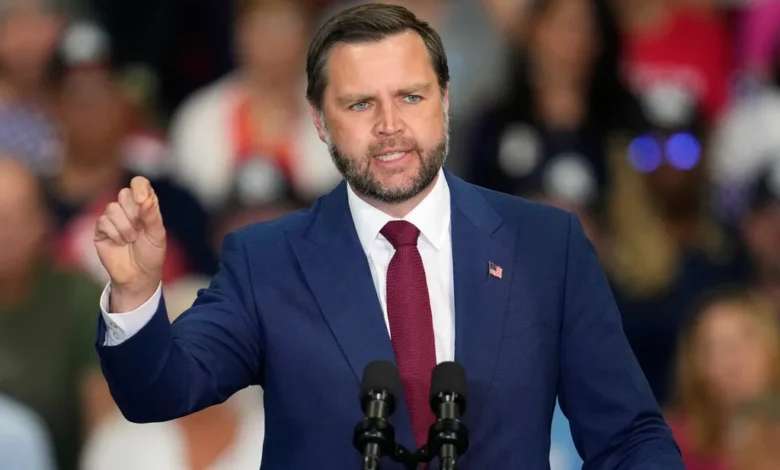
Washington Examiner columnist Joe Concha appeared on Fox News to outline his expectations for an upcoming White House press briefing led by Vice President JD Vance. Speaking on the morning program Fox and Friends First, Concha pointed to severe economic instability inside Iran as a primary focal point for the administration’s messaging, highlighting skyrocketing inflation and critical shortages in basic food items.
The anticipated briefing comes at a time of heightened geopolitical friction and domestic economic scrutiny. According to political analysts, the administration’s decision to elevate discussions regarding foreign economic pressures serves a dual purpose: addressing international adversaries while framing broader global economic trends within the context of current U.S. foreign policy. As administration officials prepare to step behind the podium, observers are closely watching how the White House connects international developments to its broader diplomatic and economic strategy.
Economic Turmoil in Iran: The Core of the Anticipated Briefing
During his appearance on Fox and Friends First, Concha emphasized the severity of the economic crisis currently unfolding within the Islamic Republic of Iran. Citing recent financial data, the Washington Examiner columnist noted that Iran’s overall inflation rate has surged by approximately 100%, while specific basic necessities—particularly food commodities—have seen price increases as high as 400%.
"Iran’s inflation rate is up 100% right now, it’s up 400% on some food items," Concha stated during the morning broadcast.
These figures reflect years of compounding economic distress driven by a combination of international sanctions, structural mismanagement, corruption, and the persistent devaluation of the Iranian rial. Independent economic monitors and international financial institutions have long reported that ordinary Iranian citizens bear the brunt of these compounding crises, facing hyperinflation that has severely eroded purchasing power. By bringing these specific metrics to the forefront during a high-profile White House briefing, Vice President Vance is expected to spotlight the tangible failures of Tehran’s governance and the suffocating impact of sustained international economic pressure.
Background and Context: U.S.-Iran Relations and Economic Statecraft
The decision by the administration to underscore Iran’s domestic economic struggles is rooted in a long-standing strategy of utilizing economic statecraft as a primary tool of foreign policy. Over the past several decades, successive U.S. administrations have implemented comprehensive sanctions targeting Iran’s energy sector, banking system, and access to international financial networks.
These measures are formally designed to restrict Tehran’s ability to fund regional proxy networks, advance its nuclear ambitions, and support destabilizing activities across the Middle East. However, administration critics and defenders alike frequently debate the direct correlation between sweeping sanctions and changes in regime behavior. While proponents argue that economic isolation deprives the regime of vital revenue, critics often point out that authoritarian governments frequently shield themselves from the worst effects of sanctions while shifting the economic burden entirely onto the civilian population.
The upcoming press briefing represents an opportunity for the executive branch to articulate how current economic conditions inside Iran validate the efficacy of existing U.S. and allied policies. Furthermore, by quantifying the inflation rates and food price spikes, the administration seeks to demonstrate that the pressure campaign is yielding measurable domestic challenges for the Iranian leadership, potentially stoking internal discontent.
Chronology of Events Leading to the Briefing
To understand the context of Vice President Vance’s scheduled remarks, it is helpful to examine the recent sequence of diplomatic, economic, and security developments involving the United States and Iran:
- Early 2026: Regional tensions remain elevated following a series of maritime incidents in the Persian Gulf and ongoing concerns regarding regional proxy conflicts involving groups backed by Tehran.
- Mid-2026: International financial monitors release updated economic assessments indicating a dramatic acceleration of inflation within Iran, exacerbated by structural deficiencies and tightening enforcement of global trade restrictions.
- Late August 2026: White House officials announce an upcoming press briefing featuring Vice President JD Vance to address key domestic and international policy updates.
- September 3, 2026 (Morning): Media commentators, including Joe Concha on Fox News, analyze the upcoming briefing, predicting that foreign economic crises—specifically Iran’s soaring inflation—will dominate the discussion.
- September 3, 2026 (Scheduled Afternoon): Vice President Vance delivers the White House press briefing, addressing national media representatives.
Official Responses and International Reactions
While foreign capitals have not yet issued formal rebuttals to the specific talking points anticipated from the White House, historical precedent indicates that Tehran routinely dismisses Western commentary regarding its domestic economy. Iranian state media and government officials typically attribute local financial hardships to what they term "illegal economic terrorism" by the United States and its allies, rather than acknowledging internal policy failures or the costs of regional military interventions.
Meanwhile, European allies and regional partners in the Middle East maintain a close watch on Washington’s messaging regarding Iran. Nations within the Gulf Cooperation Council (GCC) share concerns regarding Tehran’s regional posture, though they often balance security alignment with the United States against the need to manage diplomatic channels with their larger neighbor. Observers note that any public emphasis on Iran’s economic vulnerability by high-ranking U.S. officials is invariably interpreted by international markets as a signal of sustained, unyielding pressure.
Fact-Based Analysis of Broader Implications
The decision to spotlight a foreign adversary’s domestic economic indicators during a White House briefing carries several notable implications for domestic politics and international relations:
- Strategic Communications and Narrative Control: By highlighting a 100% inflation rate and a 400% surge in food costs within Iran, the administration aims to frame the adversarial government as unstable, incompetent, and deeply unpopular among its own citizens. This narrative seeks to undermine the legitimacy of the regime on the global stage.
- Intersection of Domestic and Foreign Policy: Economic anxiety is a potent theme in domestic American politics. By discussing soaring inflation abroad, administration officials subtly draw a contrast with domestic economic management, though analysts caution that drawing direct parallels between U.S. and Iranian economic metrics can be politically fraught.
- Justification of Sanctions: Detailed public discussions regarding the economic distress of an adversary serve to build public and legislative consensus for the continuation—and potential escalation—of economic sanctions. Demonstrating that sanctions are producing acute financial strain helps the administration defend its policy choices against arguments that such measures are ineffective.
- Signaling to Tehran: High-level public focus from figures like Vice President Vance sends a direct diplomatic signal to Iranian leadership that Washington is closely monitoring their internal vulnerabilities and remains committed to maintaining maximum pressure.
As the White House press briefing commences, media analysts, foreign policy experts, and international markets will be scrutinizing every detail of the vice president’s remarks to gauge the future trajectory of U.S. policy in the Middle East and the administration’s ongoing strategy toward Tehran.
Related posts: