Salena Zito Challenges ‘No Kings’ Protest Efficacy, Citing Stagnant Demographics and Coalition Deficiencies

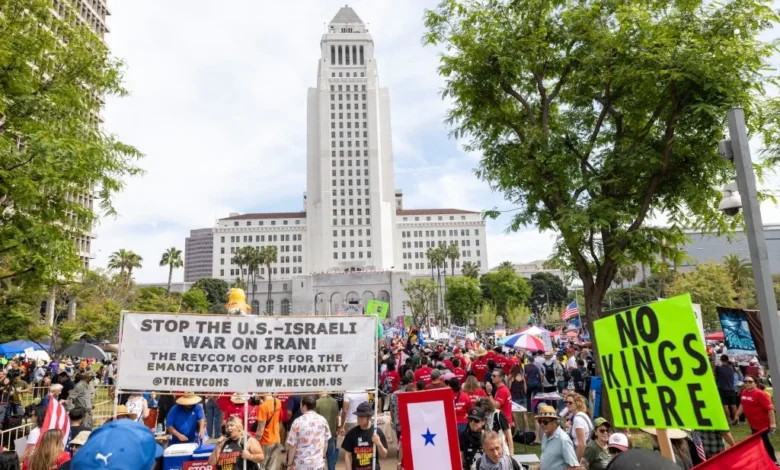
Washington Examiner columnist Salena Zito has cast a critical eye on the recent "No Kings" protests against the Trump administration, asserting that the demonstrations are failing to attract new participants and thus hindering the development of a broader political coalition. Her observations, shared during an appearance on the Hugh Hewitt Show, highlight a significant challenge for opposition movements seeking to translate passionate dissent into widespread electoral or policy influence. This critique comes as the "No Kings" movement, an organized series of demonstrations expressing opposition to perceived overreach or authoritarian tendencies within the Trump administration, held its third nationwide protest on a recent Saturday.
Zito, known for her insights into American political sentiment, particularly among working-class voters, characterized the protests as "so dumb" in their approach but quickly pivoted to a "really important" point derived from her observation of two specific rallies in Pennsylvania — one in Pittsburgh and another in Mount Lebanon. Her analysis suggests a fundamental flaw in the movement’s strategy: a reliance on an existing, familiar base rather than an active effort to expand its reach.
The "No Kings" Movement: Origins and Objectives
The "No Kings" protests emerged within a broader landscape of public dissent that coalesced following the 2016 presidential election. Rooted in a spirit of opposition to the Trump administration’s policies, rhetoric, and perceived challenges to democratic norms, these demonstrations represent a segment of "the Resistance" movement. The slogan "No Kings" itself is laden with historical resonance, echoing the American Revolutionary spirit of rejecting monarchical authority and asserting popular sovereignty. It signifies a profound concern among participants that the executive branch, under President Trump, was overstepping its constitutional bounds or exhibiting traits inconsistent with republican ideals.
These protests are not isolated incidents but rather part of a more extensive, though sometimes disparate, network of activism that has characterized the post-2016 political environment. Earlier movements, such as the Women’s Marches, which drew millions globally, established a precedent for large-scale public demonstrations as a primary form of expressing opposition. The "No Kings" protests, while perhaps not reaching the sheer scale of the initial Women’s Marches, nonetheless aim to maintain a visible and vocal presence, signaling ongoing disapproval and attempting to exert pressure on the administration and its allies. Their objectives typically encompass a range of issues, from specific policy reversals to broader calls for accountability and adherence to democratic principles. The movement’s ability to mobilize for a "third nationwide" protest underscores a degree of organizational capacity and sustained commitment from its core participants.
Zito’s Analysis: Demographics and Coalition Building Challenges
Zito’s central critique revolves around the demographic composition of the protest crowds. While watching footage of the Mount Lebanon protest, where former Democratic Pennsylvania Rep. Conor Lamb spoke, she observed, "I know almost everyone" there. This personal familiarity led her to a broader conclusion: "There’s no one new in this crowd. They’re the same crowd regurgitated every time." She acknowledged the "sizable" nature of the crowds but emphasized, "But they’re not new."
This observation is crucial for understanding the efficacy of protest movements in achieving long-term political goals. Political science and social movement theory often underscore the importance of expanding a base beyond existing sympathizers. A movement that consistently draws from the same pool of activists, while demonstrating commitment, risks becoming an echo chamber rather than a force for broader societal change. To build a robust coalition capable of influencing elections or shifting public opinion, Zito stressed, a movement needs to bring in "new" people. Her contention is that the "No Kings" attendees represent "the same voters they had in 2024," implying a static base that has not grown since the last major election cycle. This aspect, she argued, "really needs to be driven home" to those involved in opposition organizing.
Beyond the lack of new faces, Zito also highlighted a perceived deficit in "cultural diversity," specifically noting an absence of working-class individuals among the protesters. This observation touches upon a long-standing challenge for the Democratic Party and its aligned movements: reconnecting with working-class voters, many of whom have shifted their allegiance to the Republican Party in recent decades. A protest movement that appears predominantly composed of a specific demographic, often characterized as more affluent or highly educated urban and suburban liberals, risks reinforcing existing political divides rather than bridging them. For a movement aiming to effect widespread political change, the ability to resonate across socioeconomic and cultural lines is paramount. If a significant segment of the population, particularly the working class, feels unrepresented or alienated by the movement’s demographics, messaging, or perceived priorities, its potential for broad impact is significantly diminished.
Chronology of "No Kings" and Broader Protest Activity
While specific dates for the "No Kings" protests are not fully detailed in the original report, the mention of a "third nationwide" event indicates a deliberate, recurring strategy. This places the movement within a continuum of organized anti-administration activism. The first major wave of resistance following the 2016 election saw the Women’s March on Washington and concurrent global marches on January 21, 2017, just one day after Trump’s inauguration. This was followed by numerous other demonstrations focusing on issues like immigration, healthcare, climate change, and judicial appointments.
The "No Kings" iteration likely emerged as a more focused expression of concern over executive power, possibly in response to specific actions or statements by the administration. The sustained effort to organize nationwide protests, even if drawing from a consistent pool of participants, demonstrates a level of commitment and infrastructure among the organizing groups. These events often require significant planning, coordination across multiple locations, and effective communication channels to mobilize attendees. The timing of these protests is often strategic, coinciding with significant political developments, legislative debates, or perceived threats to democratic institutions.
Supporting Data and Broader Context for Protest Demographics
Zito’s observations resonate with broader academic research and polling data concerning political activism and protest demographics. Studies consistently show that participants in political protests often share certain characteristics: they tend to be more politically engaged, possess higher levels of education, are frequently urban or suburban residents, and often lean left-of-center politically. While such individuals are crucial for mobilizing initial dissent, the long-term success of a movement often hinges on its ability to transcend these typical profiles.
For instance, Pew Research Center data and analyses from organizations like the Carnegie Endowment for International Peace often highlight the demographic divides in political participation. While large-scale protests can generate significant media attention and energize a base, their effectiveness in shifting public opinion or influencing policy can be limited if they do not demonstrate broader appeal. Historically, movements that successfully expanded their reach, such as the Civil Rights Movement or, on the conservative side, the Tea Party, managed to articulate grievances and propose solutions that resonated with diverse segments of the population, including those not typically predisposed to activism. The Tea Party, for example, successfully tapped into economic anxieties and libertarian leanings among a diverse, often rural and exurban, conservative base, significantly impacting Republican politics.
The challenge for the "No Kings" movement, as suggested by Zito, is whether it is effectively engaging beyond its core constituency. Recent polling on public sentiment towards the Trump administration, while showing significant opposition, also reveals a highly polarized electorate. While a segment of the population is firmly against, another segment is firmly supportive, and a crucial swing bloc often remains less engaged in overt protest activity. The ability to sway this latter group is often critical for electoral success. If protests primarily serve to galvanize those already committed, their utility in persuading undecided voters or converting opponents might be limited.
Reactions and Counterarguments to Zito’s Critique
While Salena Zito’s commentary offers a pointed critique, organizers and supporters of the "No Kings" protests would likely present counterarguments. They might emphasize that:
- Sustained Engagement is a Form of Pressure: Even if the same individuals participate, their consistent presence sends a message of unwavering opposition, demonstrating that dissent is not fading. This sustained pressure can be seen as crucial for maintaining morale within the opposition and for keeping issues in the public discourse.
- Protests Serve Multiple Purposes: Beyond recruiting new members, protests are vital for community building among like-minded individuals, offering a sense of solidarity and shared purpose. They can also serve as a media spectacle, drawing attention to issues that might otherwise be overlooked, even if the primary audience is not "new" participants.
- Moral Imperative: For many, participating in these protests is a moral imperative, a way to stand up for perceived injustices or threats to democracy, regardless of the immediate strategic gains. The act of protest itself is seen as a civic duty.
- Indirect Influence: Protests might not directly recruit new voters but could indirectly influence public opinion by shaping media narratives, prompting discussions, and subtly shifting the political climate over time.
However, political strategists and academic experts often concur with Zito’s underlying premise regarding the necessity of expansion for long-term political effectiveness. A movement that cannot grow its base risks becoming politically marginalized, no matter how passionate its core adherents.
The "Contrived" Critique: Joe Concha and Authenticity
Further compounding the discussion around the efficacy and perception of the "No Kings" protests, fellow Washington Examiner columnist Joe Concha added his own critique, describing the events as "contrived." Concha’s assessment stems from an investigation suggesting that "around 500 groups" were behind the protests, which he felt contributed to a manufactured rather than organic feel.
This critique raises important questions about authenticity in large-scale political movements. While coordination among multiple groups is often necessary for nationwide mobilization, an overly managed or centrally orchestrated appearance can sometimes detract from the perception of grassroots spontaneity. For Concha, this perceived artificiality was further highlighted by the presence and performance of prominent speakers, such as actor Robert De Niro. Concha specifically noted De Niro "tripping all over his script" when speaking in New York City.
The role of celebrities in political activism is a double-edged sword. While celebrity endorsements can draw significant media attention and potentially motivate some segments of the population, they can also alienate others who perceive such involvement as out-of-touch, inauthentic, or indicative of an "elite" agenda. When a celebrity struggles with their delivery, as Concha suggested De Niro did, it can further undermine the message and reinforce the "contrived" label, particularly for audiences already skeptical of the protest’s legitimacy. The challenge for organizers is to leverage visibility without sacrificing the genuine, grassroots feel that often gives protest movements their power and credibility.
Analysis of Implications: For the Movement and Electoral Politics
The critiques from Salena Zito and Joe Concha carry significant implications for the anti-Trump movement and for broader electoral politics.
For the "No Kings" and similar opposition movements, Zito’s observation about stagnant demographics suggests a potential "preaching to the choir" phenomenon. While energizing the base is critical, a movement that consistently draws from the same pool of supporters may struggle to broaden its appeal to independent voters, swing voters in crucial states, or disaffected segments of the population. If the goal is not merely to express dissent but to effect electoral change or policy shifts, then the ability to persuade and mobilize individuals beyond the already converted becomes paramount. Failure to do so risks isolating the movement and limiting its impact on the wider political landscape.
In terms of electoral politics, particularly concerning future presidential cycles, the lack of new recruits could signal a strategic vulnerability for the opposition. Winning national elections often requires expanding beyond core partisan demographics, capturing the votes of those who may not be deeply entrenched in either party. If the energy and visibility of protest movements do not translate into a broader, more diverse coalition of voters, their ability to influence election outcomes may be limited to mobilizing an existing base rather than expanding the electorate. This raises questions about the long-term effectiveness of protest as a primary tool for political change if it does not actively feed into broader voter registration, education, and outreach efforts targeting new demographics.
The "contrived" label also underscores a challenge in media perception and public trust. In an era of deep political polarization, movements are scrutinized for their authenticity. If a protest is perceived as overly managed or dominated by celebrity figures, it can become easier for critics to dismiss its legitimacy and for fence-sitters to remain disengaged. Maintaining a genuine, grassroots image, even for large, coordinated events, is essential for a movement to be taken seriously by a skeptical public and to avoid being caricatured by political opponents.
Ultimately, the observations from Zito and Concha highlight a critical tension in modern political activism: the balance between passionate core activism and the strategic imperative of broad-based coalition building. While consistent protest is a vital component of a healthy democracy, its efficacy in achieving overarching political goals may be contingent upon its ability to transcend its initial base, attract new voices, and resonate with a diverse cross-section of society. The future success of movements like "No Kings" may well depend on their capacity to address these strategic challenges and demonstrate a tangible expansion of their appeal.